Strangely enough, our first blog is going to be based outside of America, on our recent trip to Spain (July 2016) while we were returning back to Mumbai from Seattle. This is our most recent vacation, and also amongst our absolute favorites. The only disclaimer is that we travelled with our 6 month old son, so we tried keeping the itinerary relatively easy; we will detail what else could be done.
9-day itinerary of Spain
What we basically did was 1 day transit in Madrid + 5 days Andalusia + 3 days Barcelona
General tips:
Getting around: Spain has great public transport and can easily be covered without renting a car. We however rented one for part of the trip for convenience with our baby, and probably also because we were late to book the cheaper ‘early-bird’ Eurorail/ Renfe tickets.
Flights: Veuling Airlines offers tickets priced at 35-40 Euros in between major cities. Athough it is infamous for flight delays and cancelled flights, we personally had no complaints. If you are getting Iberia for a similar price, prefer Iberia in all cases; these two airlines share their flights with Iberia ticket holders getting first preference and Veuling passengers getting offloaded if overbooked.
Driving: Most places in downtown areas have extremely narrow streets- smaller cars are easier to drive. Street parking is not always easy to find- it is a good idea to call the hotel beforehand and ask them for parking tips and then drive directly to the garage suggested.
Tickets: Most museums and cathedrals have an entry ticket and audio guides for rent; we preferred these over guided tours. It’s a good idea to purchase tickets in advance for the museums/cathedrals to save time; most also offer student discounts.
Food: Spain is heavenly for foodies, and we found excellent vegetarian food throughout our trip. We found Tripadvisor rather than Yelp more helpful for finding restaurants and the reviews were spot on.
The restaurants in some cities (Ronda and Granada) often do not serve tap water even on request; they will only serve bottled water at 2-3 Euros each. Carry your own water. Tap water in Spain is safe for drinking.
Cellular service: Spain has several cellular carriers and from what we learned, all of them have good coverage and are relatively inexpensive. We were very happy with the Vodafone prepaid connection we used which cost us only 10 Euro for a 2GB plan (a promotional offer was going on with the regular cost being 20 Euros for the same).
We are sharing our itinerary and vegetarian restaurants we recommend, amongst other titbits, on our google maps page. Here is the link: https://drive.google.com/open?id=19SJaI5kG6-Ad6l3pJR5xsYbg-d4&usp=sharing. Select the label ‘Spain’.
Day 1: Madrid
Itinerary: We landed at Madrid at 9 am from Seattle. After an early check-in to the hotel, we headed straight to downtown Madrid. We started at Parque de El Retiro and walked to the Royal Palace, exploring the city as we moved along. We went to the Cathedral (20-30 min) and Royal Palace (takes at least 2-3 hours); both recommended. We then went to the airport car rentals to get our car (saved a day of rent) and retired to the hotel.
Food: Lunch at Yerbabuena in downtown Madrid (great food; recommended).
Tips: The piece de resistance of Madrid is the Prado museum, which takes most of the day. We didn’t do it for lack of time and a 6 month old but would totally recommend it. Another definite place to visit is Toledo, a previous Spanish capital, for a day trip. We plan to return to Madrid and explore these and north Spain sometime later.
Day 2: Madrid-Cordoba-Seville
Itinerary: We checked out after breakfast at 10 am and drove to Cordoba (4-4.5 hours) to see the absolutely fabulous mosque-cathedral. The cathedral opened in the afternoon at 4 pm; so we had a leisurely late lunch before venturing in and enjoying its beauty until it closed at 7 pm (2-2.5 hours are required). The streets of Cordoba have beautiful shops selling exclusive designer jewelry and the very famous Andalucian ceramics. We then then drove to Seville (1.5 hours drive).
Food: Lunch in Cordoba at Restaurante Amaltea (extraordinary food and decor; especially recommend the dryfruit-rich couscous).
Tips: We parked at Parking La Mezquita de Córdoba; expensive but basically the only convenient option and within 5 min walk of the cathedral. We would suggest using this as the GPS address as it is not easy to find otherwise.
Day 3: Seville
Itinerary: We started the day with an excellent free 2-hour walking tour offered by Sevilla Free Tours’ at 10 am (recommended). It gave a great idea about the history and culture of this marvelous city. We then explored the Seville Cathedral (third largest in the world; 1-2 hours) and the Alcatraz (complex of palaces, 2-3 hours), both are must do’s. We were back at the hotel by 8 pm.
Food: We chanced along Amorino, a gelato chain, on this hot day, and its Cream of Pistachio gelato is the best pistachio dish we have ever had. We ended up eating in Amorino twice this day as also in Barcelona, always clubbing pistachio with another flavor in a grande cup. Ofcourse, we also tried a lot of lovely stand-alone gelatos scattered throughout all the cities.
Tips: Other beautiful places to see in Seville include Plaza Espana (the walking tour ends here) and the Maria Luisa park opposite it, and Metropol Parasol (we couldn’t go there, but it looks beautiful and offers great views of Seville). Seville is beautiful and staying there another day to explore it further and in a more relaxed fashion is not a bad idea.
Day 4: Seville-Zahara de la Sierra-Grazalema-Ronda
Itinerary: We left Seville at around 10 am after breakfast and drove to Ronda, exploring the white villages (Pueblos blancos) of Zahara de la Sierra and Grazalema en route. Zahara is a very cute village perched on a hill with row of lovely houses, hotels and restaurants along its main street. The highlight there is a tower which gives a magnificent view of the village and the brilliant turquoise blue lake next to it. Grazalema is similar but smaller and mainly a photo-op; can be skipped.
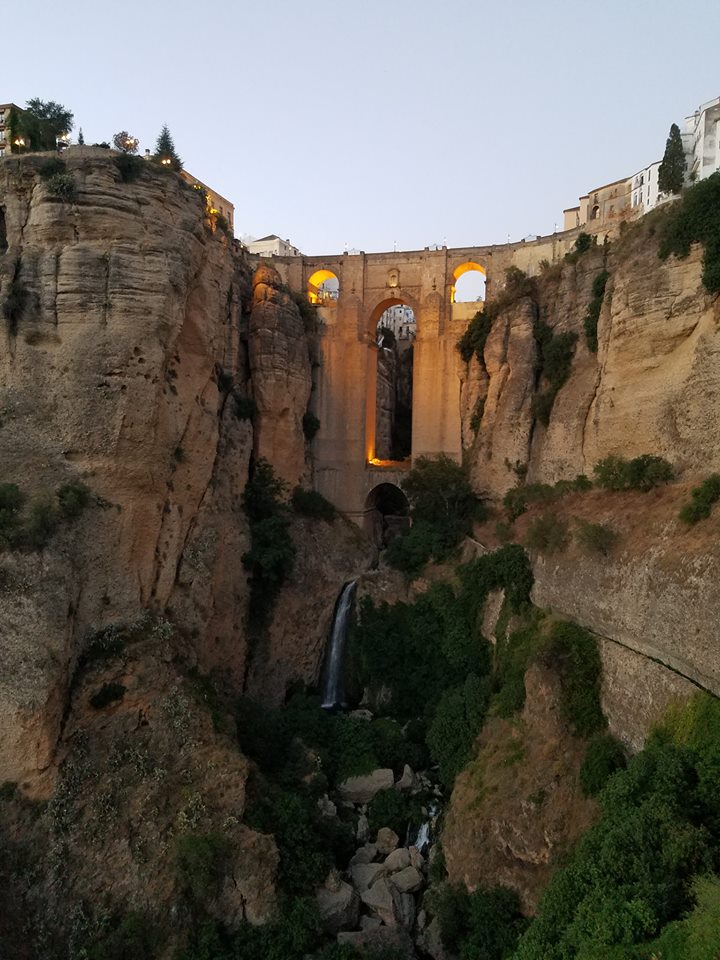
We then went to the Arab public baths at Ronda before checking into the hotel (it has free parking available). These are interesting and not very expensive (3 Euros tickets), but again not a must-do. The bullring at Ronda is supposed to be great; we unfortunately couldn’t see it because of a live show scheduled there that evening. Simply walking along the lanes of Ronda is enchanting; there are dozens of small interesting museums (hunting museum, bandit museum, Lara museum etc), and dozens of tasteful restaurants. The main attraction of course is the New Bridge (Puente Nuevo). The best place to view the sunset colors on Ronda and to get the best view of the bridge is a viewpoint which is a short trek down from Plaza de Maria Auxiliadora (see picture).
Food: Lot of great options; we dined at a nice little Italian restaurant called Asador El Bandolero near Plaza del Socorro.
Tips: We would definitely recommend staying in Ronda for another day if possible; it is an unmatchable experience.
Both Zahara and Grazalema are probably easier to access with a car, although there are buses available as well.
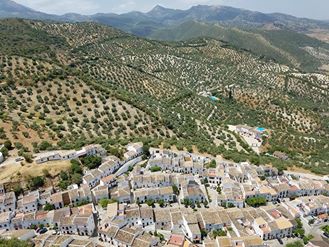
The white village of Zahara de la Sierra

View of Puente Nuevo and the city
Day 5: Ronda-Granada
Itinerary: We drove off to Granada in the morning (2 hour drive) and parked directly next to our hotel in downtown. We had the 1.30 pm slot for the Nasrid palaces at Alhambra. The C3 bus from Plaza Isabel de Catolica in downtown takes you directly to the ticket counter. Taking a cab doesn’t cost more than a few Euros either. Alhambra is an extraordinary group of palaces , and give yourself at least 4 hours if not more. We saw Nasrids palace (absolute favorite), Alcazaba, the Generalife, and the palace of Charles V. Generalife is a 20 min walk from the rest but would completely recommend it. Alcazaba and Palace of Charles V are skippable if you are too tired. After an hours rest, we went to the Church of St Nicolas (Mirador de San Nicolas) at Albaicin (use C1 bus) for an incredible sunset view of Alhambra. There were local artists playing the Spanish guitar and dancing the beautiful Flamenco as well, adding to the entire experience.
Food: Dinner was at one of the many Mediterranean restaurants near Plaza Isabel de Catolica.
Tips: Downtown Granada is worse than Ronda for driving; watch out for very narrow lanes and inaccurate google maps navigation.
The tickets for entry to the Nasrid palace at Alhambra are for a fixed time slot and sell out very soon, so book these as soon as you finalize your days in Granada, preferably at least a month in advance.
Day 6: Granada-Malaga-Barcelona
Itinerary: We did the 11 am walking tour of the old city and lower Albaicin by ‘Feel the City Tours’ (2.5 hours); highly recommend it. This was followed by a fabulous lunch before driving off to Malaga airport (1.5 hours) to take a 8.45 pm flight to Barcelona.
Food: Lunch was at Restaurante Hicuri; delightful set menu and highly recommended.
Tips: We landed at around 10 pm and took the A1 Aerobus bus to our hotel in downtown Barcelona (5.9 Euros one way or 10.2 Euros round trip each). The Aerobus does not operate past midnight, but there are other 24 hour bus routes which may take a longer time. These buses also accept T10, unlike Aerobus.
Purchasing the T10 ticket is the best way to travel in Barcelona; it lets you buy 10 metro/bus rides at less than 1 Euro per ride (a single one-way ticket otherwise is over 2 Euros).
Day 7: Barcelona
Itinerary: We took the 11 am free walking tour of the Gothic quarter offered by Runner Bean (2.5 hours), which should be booked in advance as it is very popular. The tour was terrific and gave a great orientation of the city and the Catalan history.
We then spent the afternoon exploring the Picasso Museum (free for students)-this shows his early works and helps us understand how he slowly moved from being a talented student inspired by the great traditional artists to developing his own unique style. The works on display are his early works from his formative years; less of the abstract art he is famous for, so it would probably be a good compliment to the Prado or other museums displaying his works. We spent the rest of the day exploring the Gothic quarter.
We also liked the Basilica of Santa Maria Del Mar which is very close to the museum; it is supposed to be a local favorite.
Food: Our food experience in Barcelona was extraordinary-it is by far the best city we have eaten vegetarian food in. Lunch was at Rasoterra in the Gothic Quarter. Evening snacks included the lovely desserts at La Colmena bakery (impossible to miss its tantalizing window display) and the terrific empanadas at La Fabrica.
Tips: We would definitely recommend reading the book ‘Cathedral of the Sea’ by Ildefonso Falcones to get a better feel of this city, its history, and especially of Basilica of Santa Maria Del Mar; it is a well-reviewed historical novel with the construction of the cathedral being the background of the story.
Day 8: Barcelona
Itinerary: We went to the Barcelona Cathedral at 10 am (nice and free, but there are only so many cathedrals one can enjoy to the same full extent- Seville and Cordoba are must-sees and this may be skipped). We then took the 11 am Gaudi free walking tour offered by Runner Bean (2.5 hours), which ends at Sagrada Familia (highly recommend it). We subsequently spent a good 2 hours inside Sagrada Familia, and then returned to the hotel. We had planned to go to the Magic Fountain (free half hourly shows from 9.30 to 11 pm in the summer) and Montjuic (lovely view of the city) in the evening, but eventually decided against it as we didn’t want to stretch our little one.
Food: We had a fabulous set lunch at Arc Iris, a 10 min walk from Sagrada. Dinner was at aQistoi (great patatas bravas, but the empanadas were better at La Fabrica).
Tips: Another good option to replace the walking tour is a paid Gaudi tour which also includes the Sagrada ticket and guide within Sagrada. Otherwise, be sure to buy the Sagrada tickets online to skip the line.
Day 9: Barcelona
Itinerary: We went to Caso Batllo in the morning (1-1.5 hours; the tickets are pricey but we would highly recommend it; completely worth it- Gaudi’s vision and how he adapts aspects of nature in his work are inspiring). We then decided to explore La Rambla and Gothic Quarter further and also to do some shopping. You can find beautiful Gaudi, Picasso and Andalusian works in lovely art boutiques scattered throughout this area. The stores run by Asians/Indians may be inviting given the low prices but we are sad that many harbor fakes. Mont Falcon and Art Escudellers were our personal favorites for genuine work. Also, definitely visit a shop called La Basilica Galeria, an eclectic shop with themed jewelry.
Food: We had the best meal of our trip at Teresa Carles for lunch (slightly pricey at around 40 Euros for the two of us; they charged us even for ‘filtered’ tap water). Dinner was at Flax and Kale, owned by the same chef Teresa Carles, and was expectedly brilliant. We also had another round of Amorino and La Colmena, out of sheer respect and nostalgia, not because we were still hungry!
Tips: 3 days is certainly not enough for Barcelona; there are too many things to do. Other attractions we skipped include the Camp Nou experience for soccer enthusiasts, Montserrat, Montjuic and the Magical Fountain, other Gaudi structures like Park Guell and Casa Mila, catching a concert at Palau de la Musica Catalana, taking a dip in the Mediterranean sea, and enjoying a Catalan Flamenco.
Day 10: As much as we wanted to stay for longer, we were excited to fly back home to Mumbai with an early morning flight, taking with us unforgettable memories from our Spanish vacation with our little traveler.
 Travelously yours
Pingback: Top Things to do in Istanbul – Travelously yours
Beautiful travel blog. Thanks for sharing. Totally immersive feeling while going through it. I have been to Barcelona and could completely relate to many of the things. Respect and good wishes
LikeLiked by 1 person