
The ‘Fort’ area of Mumbai is easily its most beautiful and culturally rich neighbourhoods. Its name actually originates from a real Fort built there by the British. The Asiatic Library and Horniman Circle literally were at the heart of the Fort (the zero point of Mumbai used to be here)!
We have all seen the iconic Asiatic Library steps, home to many music concerts, news and debates (remember the Big Fight?), dreamy pre wedding shoots, and engrossing court scenes in movies. Maybe you have been there as well; my first visit was when I went to the then adjacent Five Spice restaurant. But let’s be honest — after taking the mandatory photo on the steps, most of us do not know what to do next and just find the nearest restaurant and call it a day.
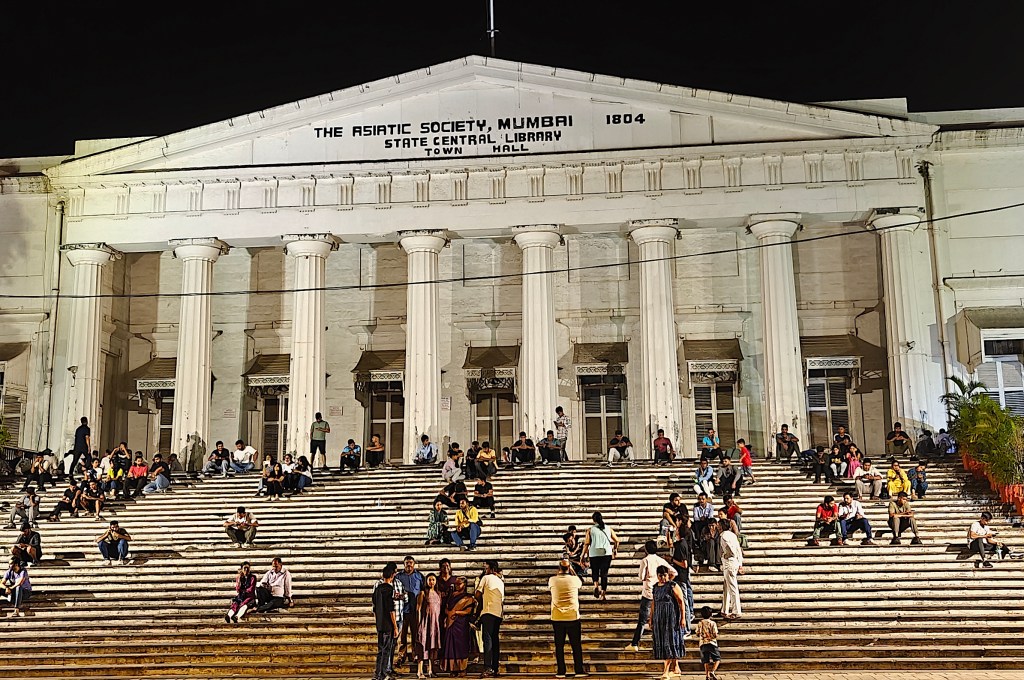
Let’s change that next time you go there! The short 500m walk from Asiatic Library through Horniman Circle to Flora Fountain isn’t just scenic; what you see there has pretty much shaped the heart and soul of present-day Mumbai. So, ready for a stroll through history? Let’s dive in!
The Fort
We all know the famous dowry story of Mumbai. But how did the Portuguese get Mumbai in the first place? Sultan Bahadur Shah of Gujarat ceded the Bombay islands to the Portuguese in 1534 in lieu of peace between the two and protection from the Mughals. These included all of present day Mumbai – the seven islands of south Bombay, Salcette (present day suburban Mumbai), and Bassein (present day Vasai). The seven islands (but not the rest) were granted to the Brits as dowry in 1661 when King Charles II married Princess Catherine of Braganza. The Crown in turn leased them to the English East India Company for a princely sum of…10 pounds a year! Talk of a great investment – it reaped the benefits for centuries ahead.
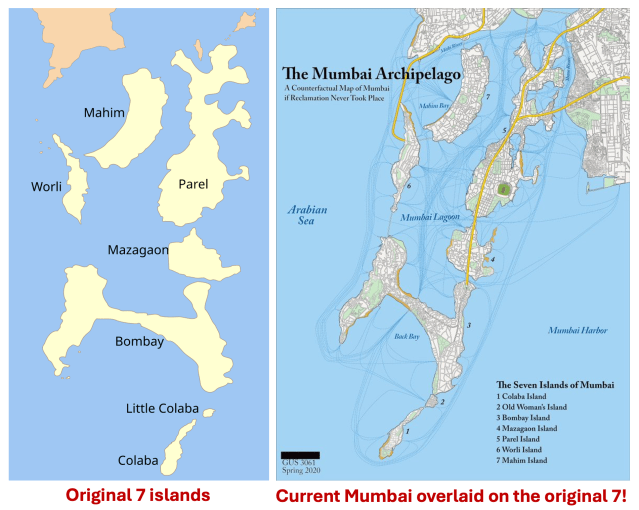
Realizing they needed some solid defenses, the East India Company built a fort on Bombay Island—the largest of the seven. The first element of the Fort, the Bombay Castle, was built on Manor House, the ex residence of Garcia de Orta, a Portuguese physician, and remains within 500 m of the Asiatic Library. It is now within the Naval Dockyards and unfortunately out of bounds.
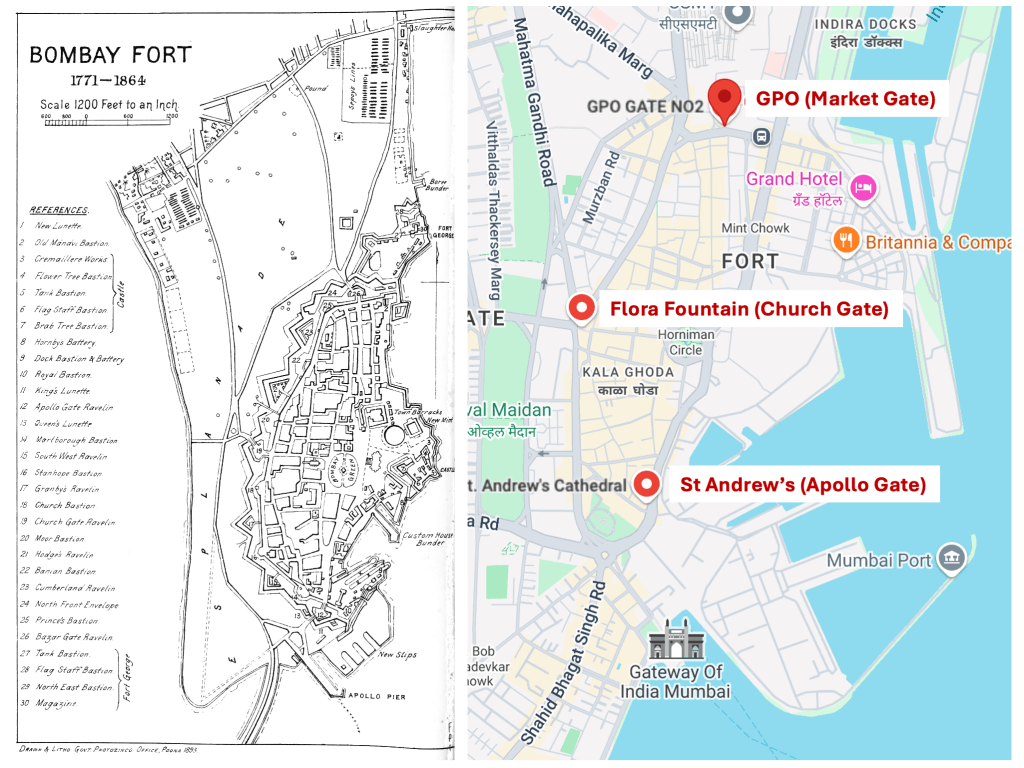
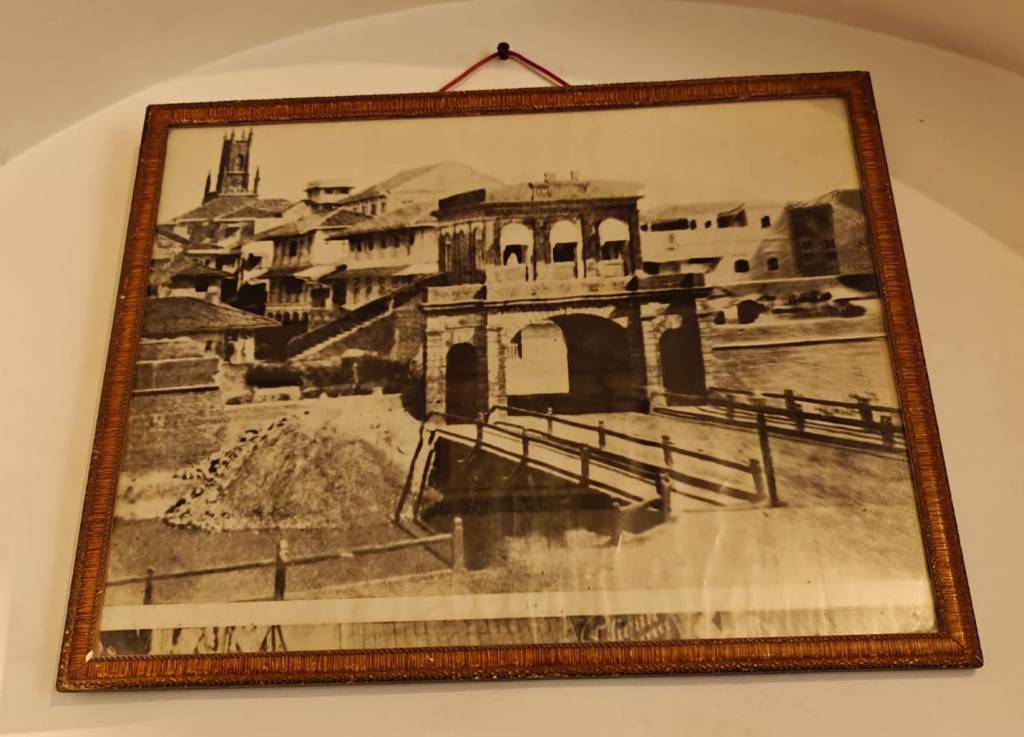
The Brits expanded the Fort, making it around 1.6 km long and 500 m in width. The Fort had gates in three directions, with the Arabian Sea on the East. If you are wondering where the fort once stood, you can picture it using current Mumbai landmarks.
- The southernmost Apollo Gate (named after Apollo Bunder) was located near the current St Andrew’s Church, opposite the Lion Gate of the Naval Dockyard Building.
- The west-facing Church Gate (at the site of the Flora Fountain) was named after the St Thomas’ Cathedral which it opened to (more on the church ahead). Yes; that is how Churchgate station derives its name.
- The northernmost Bazaar Gate (named after a bustling bazaar – market – that stood there) was near present day GPO.
A northward extension of the fort walls, Fort George, was also created in 1769. It currently still exists adjacent St George Hospital, and is used by the Directorate of Archeology and Museums, Maharashtra.
So, what happened to the mighty Fort? It was actually demolished in 1862 by the British themselves! The then Governor of Bombay Henry Bartle Frere took this decision to accommodate Bombay’s expansion. Besides, post the British victory in the 1857 mutiny and takeover of India by the Queen of England from the East India Company, the chances of any potential attack were quite minimal. Fun fact – the announcement of the abolition of the East India Company was done by the then Governor Elphinstone from the very steps of the Town Hall!
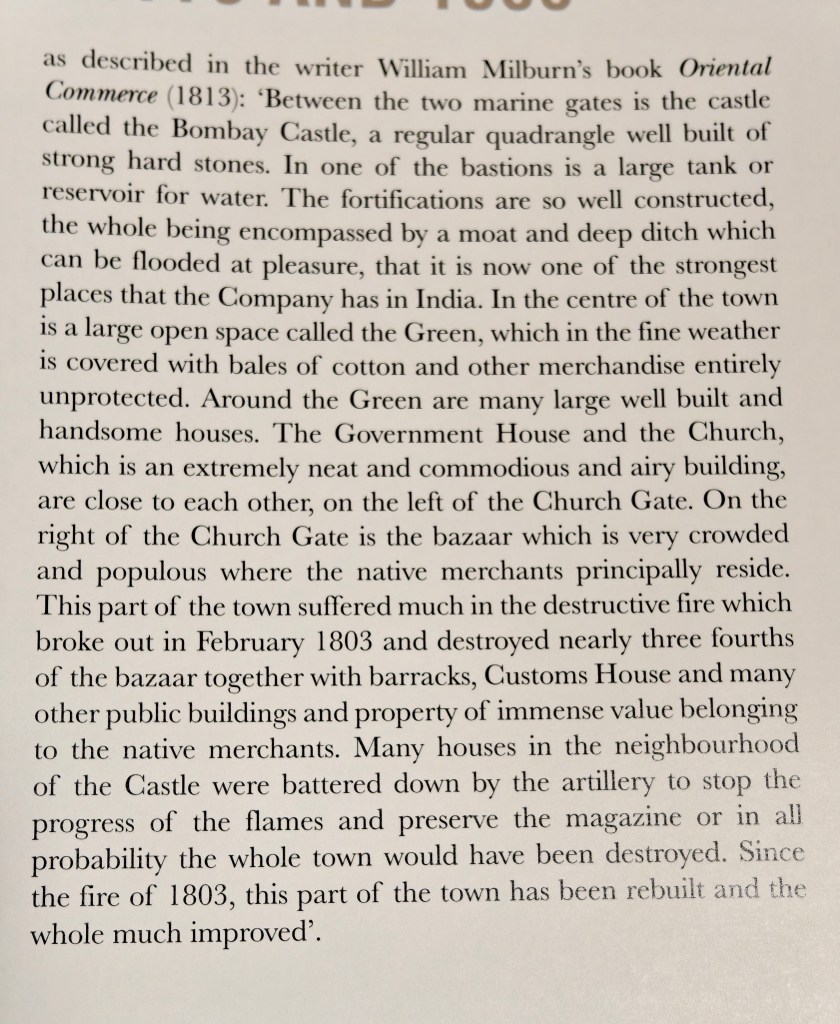
The impact of the Fort can be understood by the fact that despite being gone for over 150 years, this entire prime area of Mumbai continues to be called the Fort area!
The Asiatic Society Town Hall
This neoclassical Greek-style building was inaugurated in 1833 as the Town Hall. Its eight Doric columns and 30 tall steps give it an imposing feel even today; imagine the effect in the 18th century on a population unexposed to such structures!
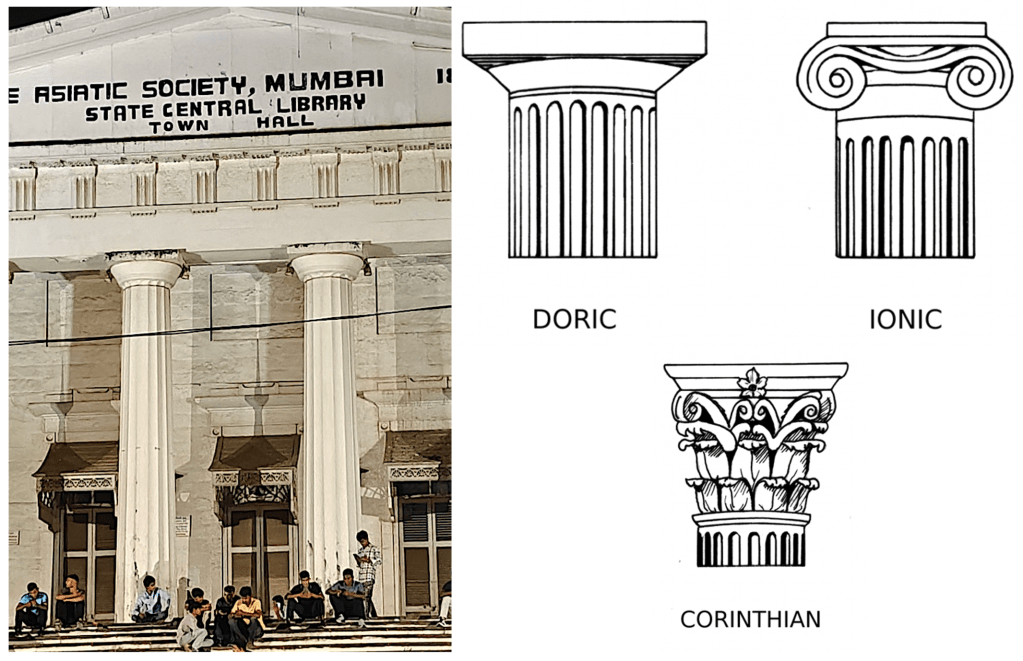
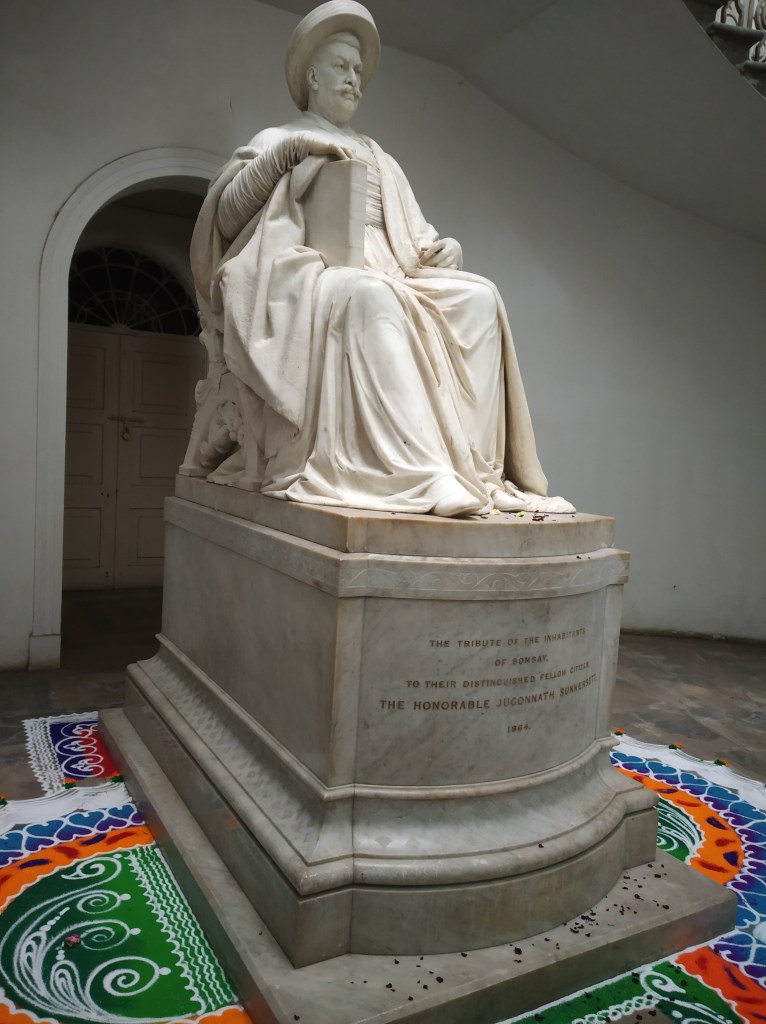
The Asiatic Society of Bombay was started in 1804 to study India (and rest of Asia) in more detail, given that the British were here for the long foreseeable future and needed to understand the country better. Its members were predominantly Whites, with Jagannath Shankarsheth, popularly known as Nana Shankarsheth (Nana Chowk is named after him) being the first Indian member. You can find a marble statue of him inside the building.
The library is housed within the grand building, with over 2.5 lakh books, including at least 15,000 rare manuscripts. These include one of the only two known original handwritten copies of Dante’s Divine Comedy (sadly not on public display), an 1853 copy of Firdausi’s Shahanama, andthe 16th century Sanskrit manuscript of Aranyakaparvan of the Mahabharata,focusing on the years of the forest exile.
The library is trying to digitize its rare book collection, an expensive process. It has launched fundraising campaigns, including an ‘Adopt a book’ scheme, for the same – do consider donating!
Horniman Circle
The Horniman Circle in front of the Town Hall currently has the 2.5 acre Horniman Circle Garden at its centre surrounded by the headquarters of major banks. If Mumbai is India’s financial capital, this spot is undoubtedly its nerve center. But what makes this place truly fascinating is its deep-rooted connection to Mumbai’s early trading days.
Back in the early 18th century, this area was known as the Bombay Green– a vast stretch of open space across the Town Hall. Traders from all communities, but especially the traditional trading communities – Bohras, Baniyas, Parsis etc – dotted the landscape in their distinct attire and headgear, making deals and striking bargains. Two of the hottest commodities? Opium, which was exported to China, and cotton, which saw a boom during the American Civil War when the trade route to the West got disrupted.
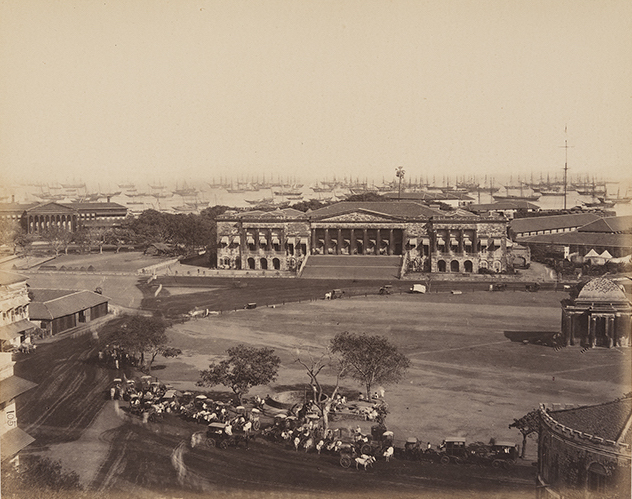
A super quirky fact. Many merchants would congregate under the shades of a Banyan tree at the Bombay Green, which probably led to it being called banyan tree – a corruption of baniya tree! In 1851, a few such traders formed the ‘Native Share and Stock Brokers Association’, which eventually become the Bombay Stock Exchange in 1875, the oldest Exchange in Asia, and moved to the adjacent Dalal Street. The cotton traders eventually moved to Cotton Green with the formation of a cotton exchange there.
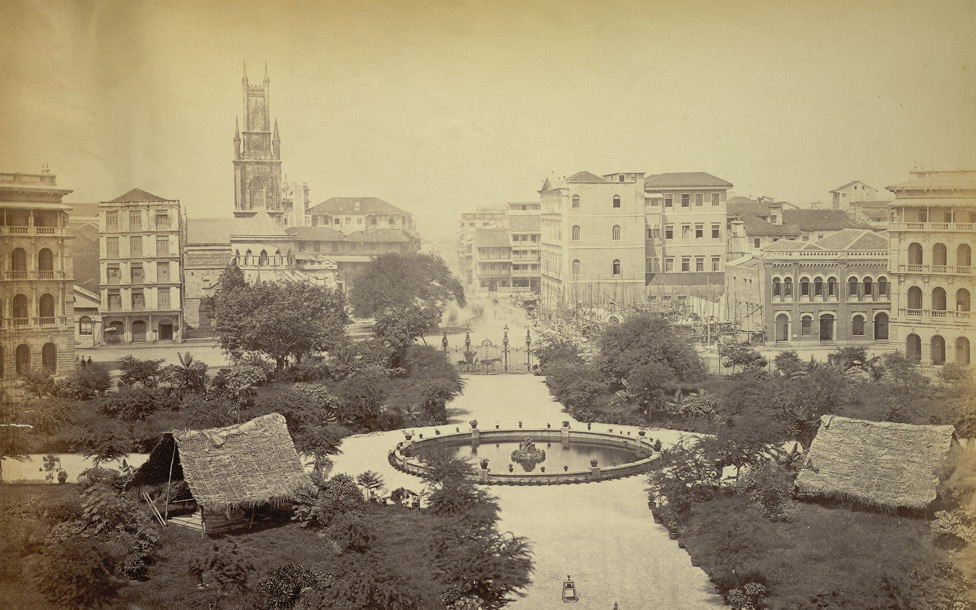
With the Fort demolished and business growing, in 1872, Governor Lord Elphinstone and Bartle Frere decided to give this place a facelift. They converted the Green into a garden surrounded by a set of relatively identical grand commercial buildings, and called it Elphinstone Circle. The Circle’s first building, the Bank of Bombay, laid its foundation stone in 1864. They completed the remaining buildings by 1873. To maintain aesthetic uniformity, all buildings had the same material (Porbandar stone) and design elements (decorative keystones). Today, these heritage structures house major banks like the RBI, SBI, Punjab National Bank, and Royal Bank of Scotland, stores like Hermes and Christian Louboutin, India’s first Starbucks, and the then office of Ratan Tata, amongst others.
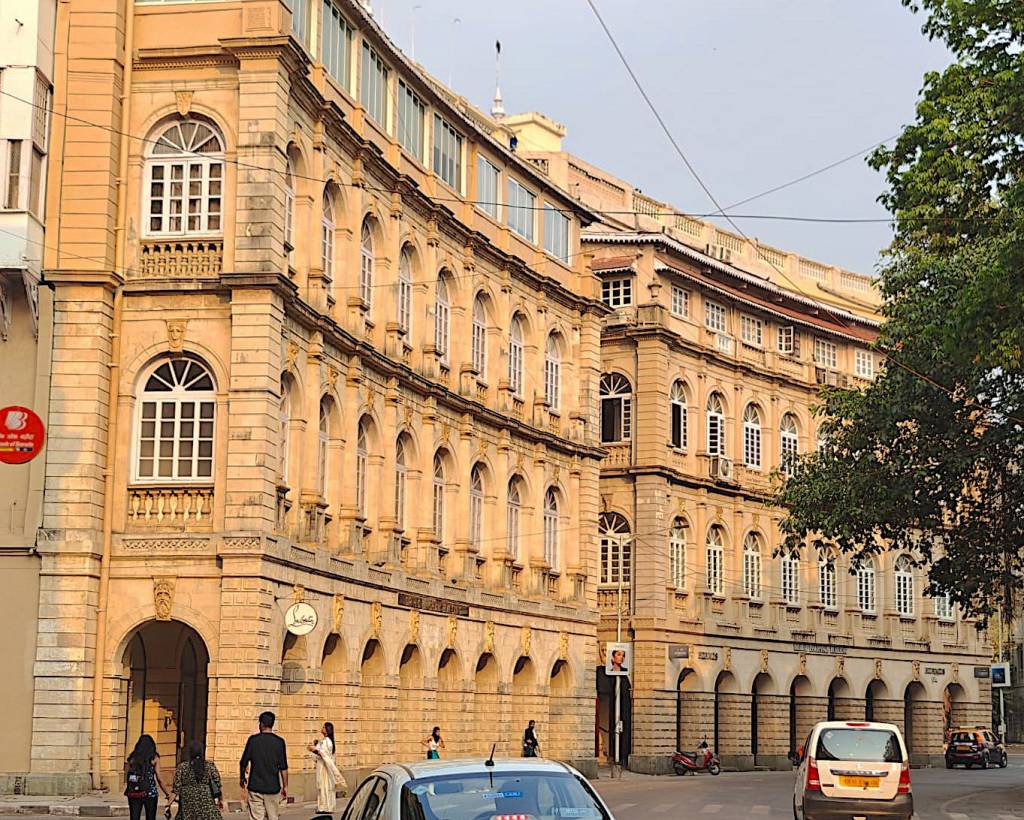
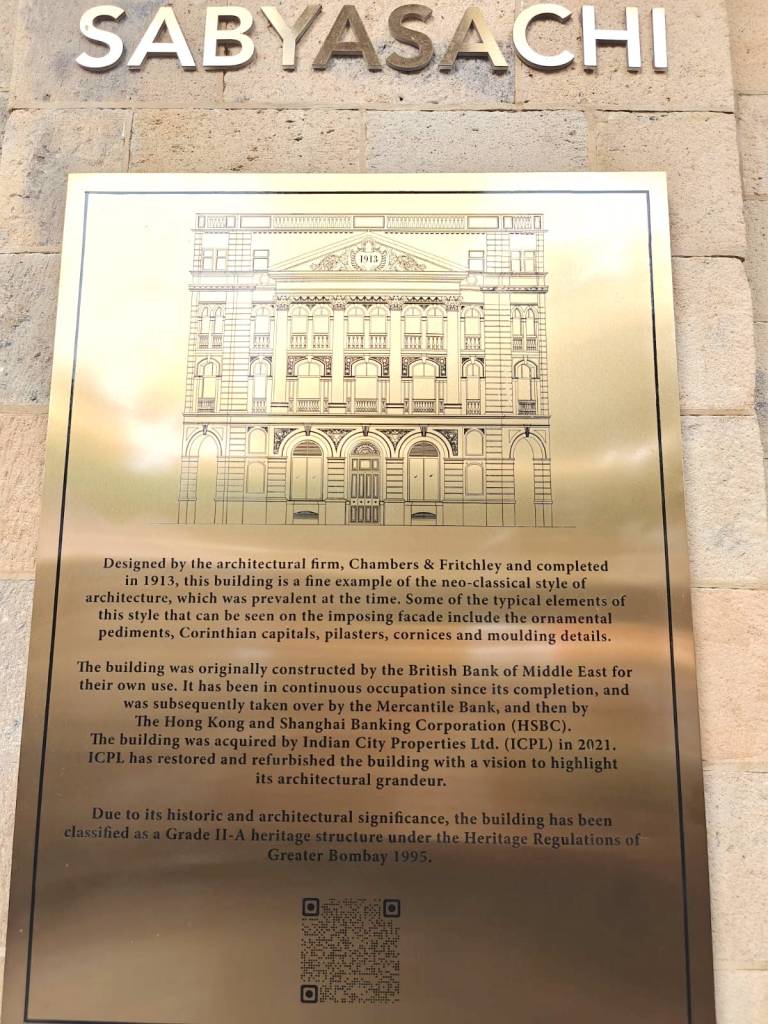
While difficult to go into the details of each building, they are all heritage structures with a rich history. Watch out for the plaques which some of them have mentioning interesting details.
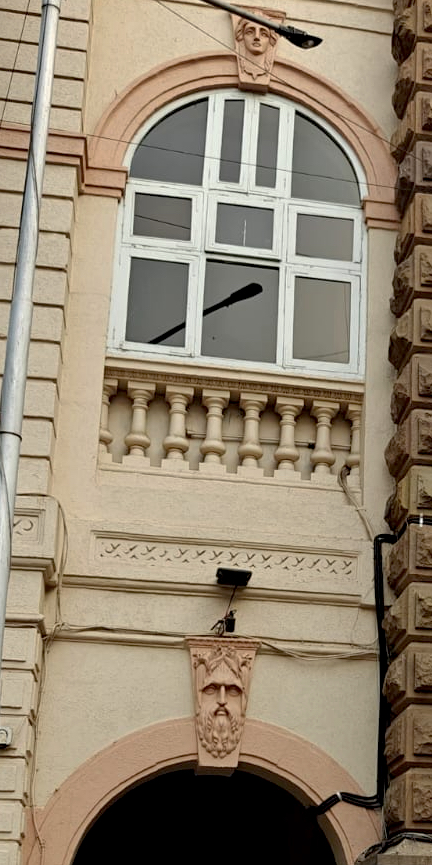
Here’s a fun detail to watch out for. If you look up while walking past them, you will notice a row of pretty grumpy looking bearded faces along the top of the archways of all buildings. These faces are on the keystone blocks – you pull them down and the arch will collapse. A level above them are a row of serene-looking female faces with braided locks of hair, literally keeping an eye over the men! While similar, every face remains slightly different in its expression.
The iconic red Bombay Samachar Building adjacent the intersection of the Circle with Veer Nariman Marg housed three newspapers over the years. The Times of India, the Bombay Chronicle, and the Bombay Samachar. It still publishes Bombay Samachar, which has the distinction of being Asia’s oldest surviving newspaper (since 1822).
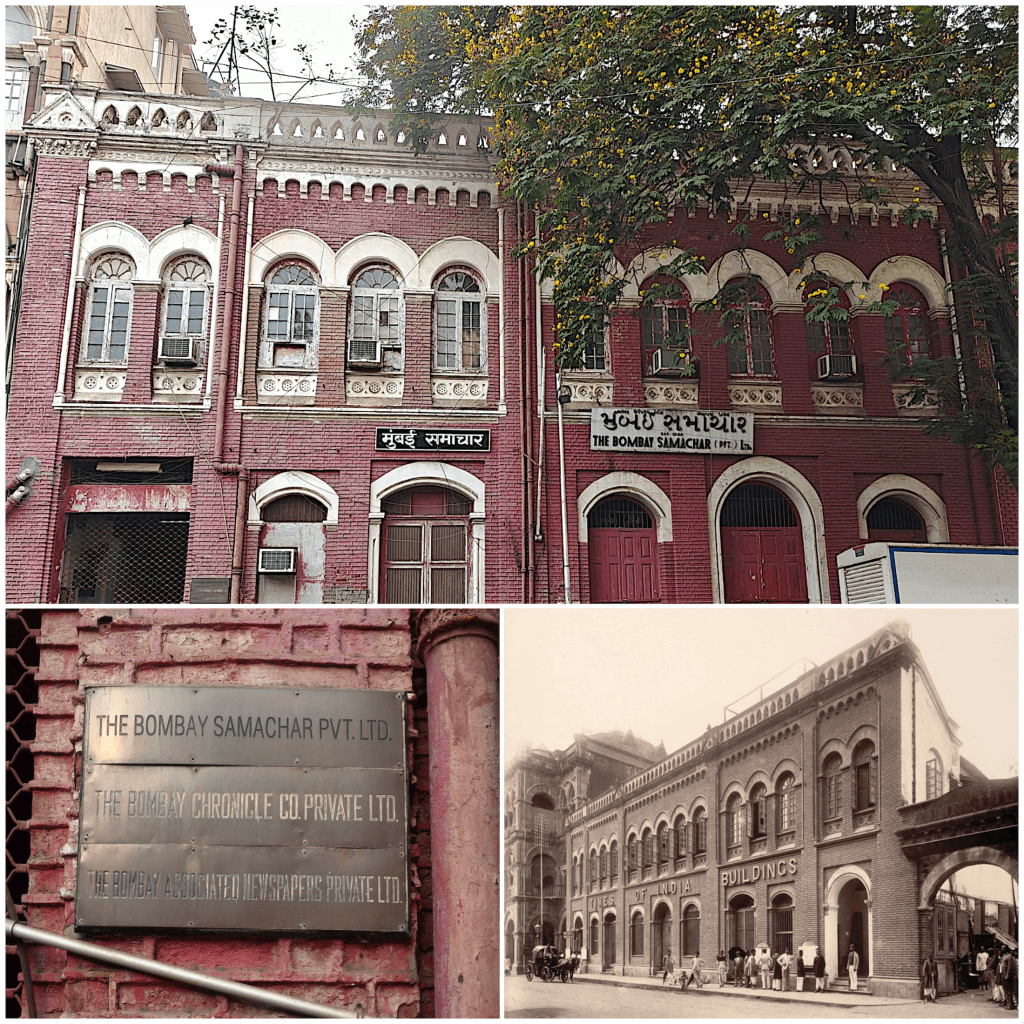
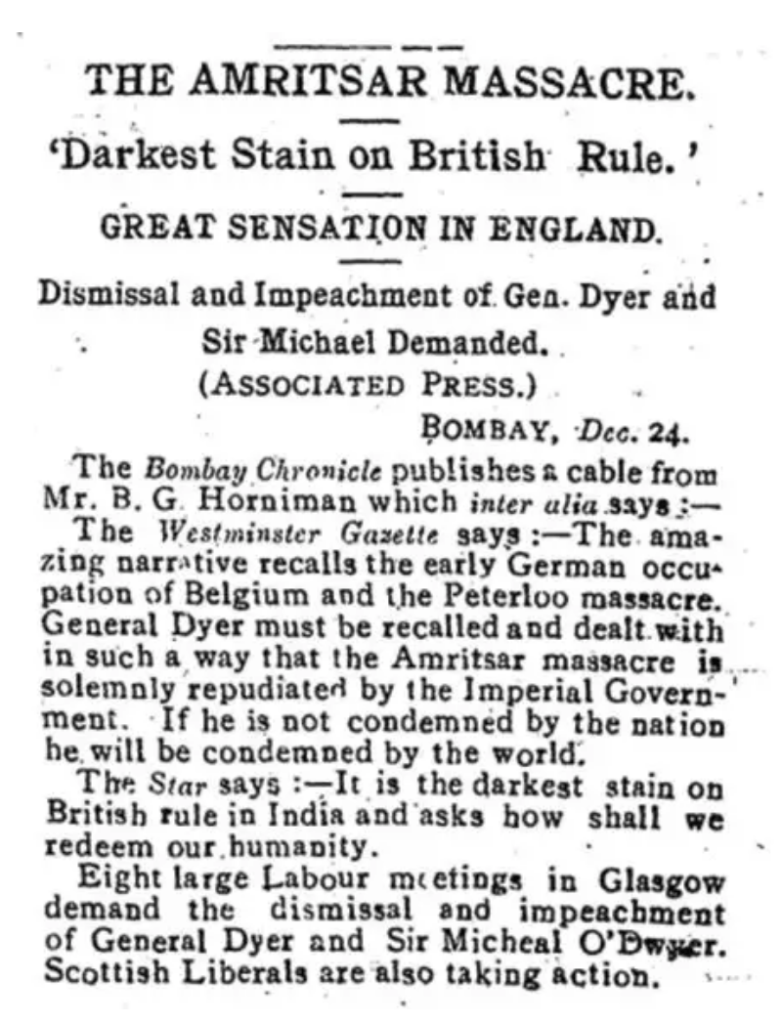
But the more compelling story belongs to the relatively lesser known Bombay Chronicle. It was started here by Sir Pherozeshah Mehta in 1910 as a pro-Indian English newspaper to counter the existing pro-British press (including TOI). Benjamin Horniman became its editor. Although an Englishman (Irish), he staunchly supported the Indian freedom struggle. His biggest contribution was being the first to publish stories of the Jallianwala Bag massacre, which brought world attention to British atrocities in India. Not surprisingly, the British deported him back to the UK. But he wasn’t done! He managed to come back to India in 1926 using a legal loophole and continued to actively publish, and eventually passed away in India in 1948. The Elphinstone Circle was renamed the Horniman Circle in 1947 after independence, in his honor. You can read more about this remarkable man here.
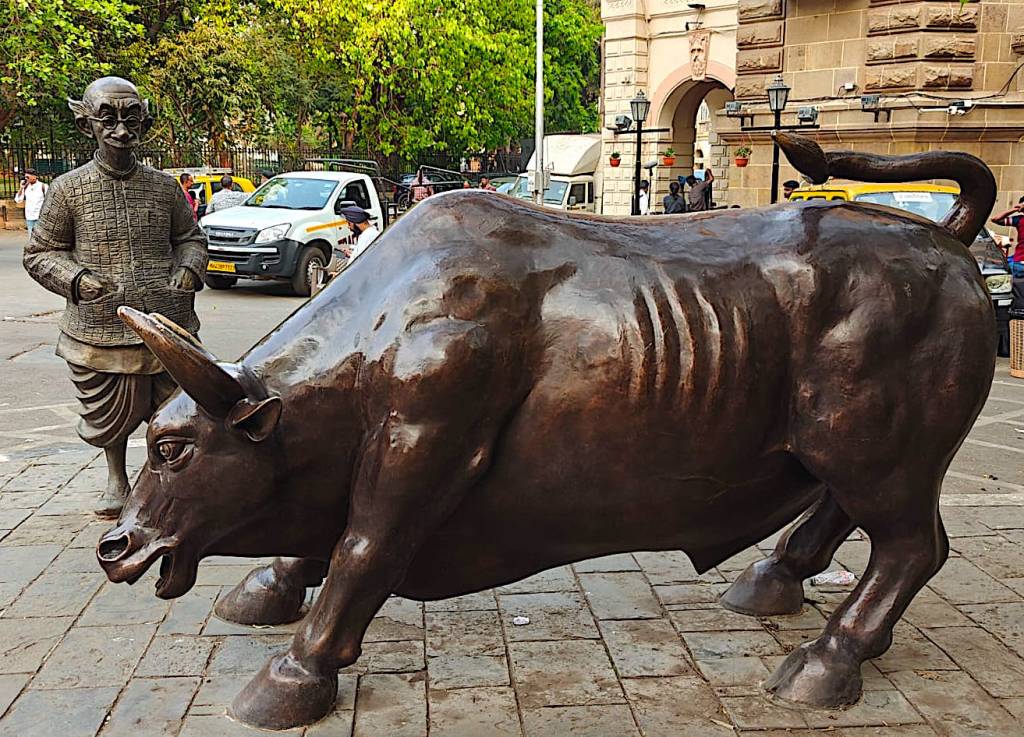
Before moving on, don’t forget to cross the street and check out the statue of the iconic Common Man and the Charging Bull at the junction of the Mumbai Samachar Marg and Horniman Circle Road. Then, continue your stroll down Veer Nariman Marg towards St. Thomas’ Cathedral!
St Thomas’ Cathedral
Founded in 1718, this was the first Anglican Church within Fort. Here is a fun fact: its foundation stone was actually laid way back in 1676 on Bombay Green. So why the delay? Well, someone ran off with the money meant for its construction! It was only four decades and a second round of crowdfunding later that the church finally saw the light of day. The Cathedral was considered the zero point of Bombay then (the zero point now is at the General Post Office near CST). The Churchgate railway station was linked to the cathedral by a road leading through the Church Gate.
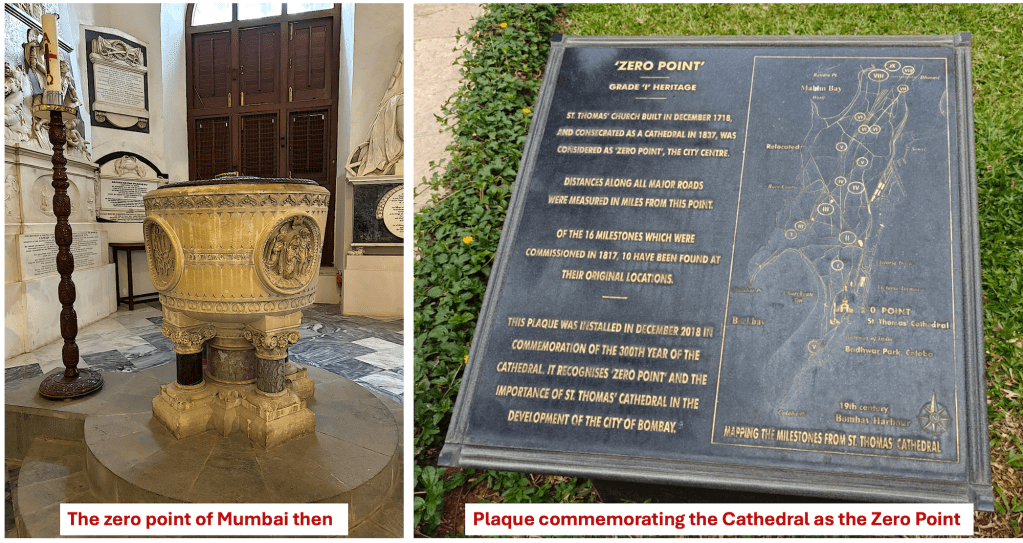
The church itself is a stunning structure with beautiful stained-glass windows and a fountain at the entrance, generously donated by Cowasji Jehangir Readymoney (more on him in a bit!).
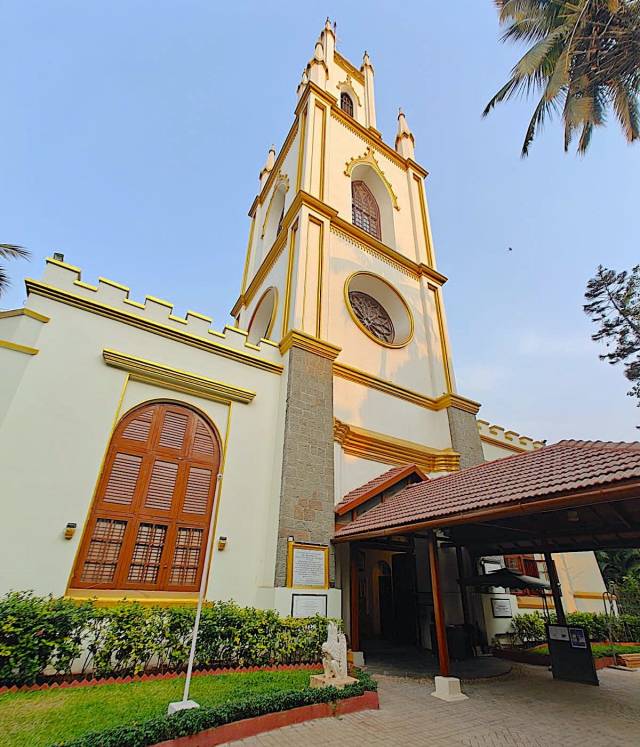
It has hosted some truly iconic visitors over the years:
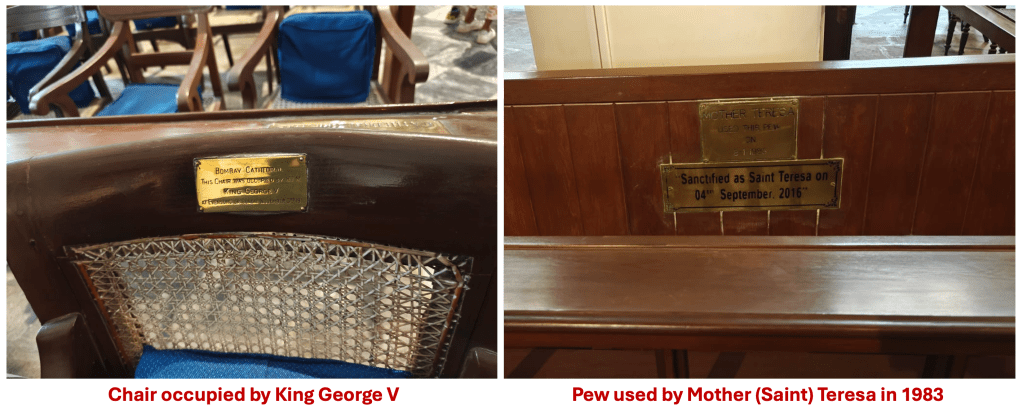
- King George V and Queen Mary attended service at the church in 1911, with the chairs they sat on still being preserved and having their names written on brass plates. You can literally sit on the King’s or Queen’s chair at the church!
- Mother Teresa visited it in 1983, with a plaque now placed on the pew (bench) used by her on the occasion.
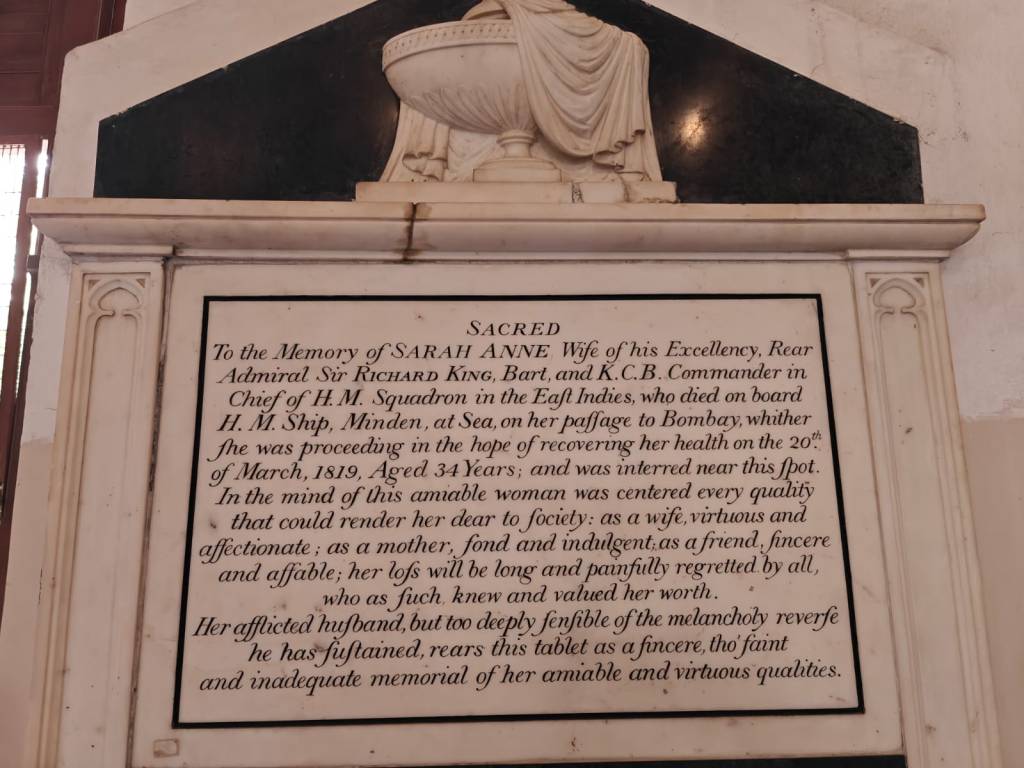
As you walk around, you’ll notice memorial stones and plaques honoring various figures from the British era. Many deceased Brits were buried right under the church floor! And here’s a fascinating detail: back then, the letter ‘s’ was written as ‘f’— ‘as such’, keep an eye out for some interesting spellings in the photo below! This only goes to show how the English language has continued to evolve until so recently!
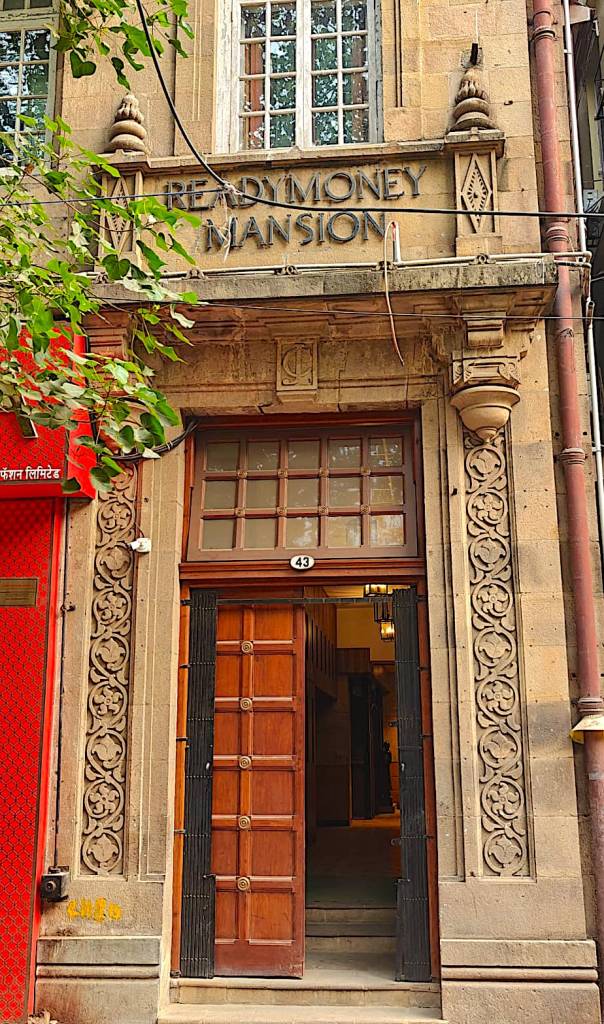
Moving further towards Flora, one comes across the ‘Readymoney Mansion.’ This wealthy Parsi family earned from the lucrative opium trade and worked as bankers for various British clients. Their reputation for always having cash on hand earned them the sobriquet ‘Readymoney’, which they later adopted as their surname! Cowasji Jehangir Readymoney was amongst the family, and apart from the St Thomas’ fountain, has also donated money for the Bombay University Convocation Hall adjacent the Rajabai Tower, and multiple other fountains including one in Regent’s Park, London.
Flora Fountain
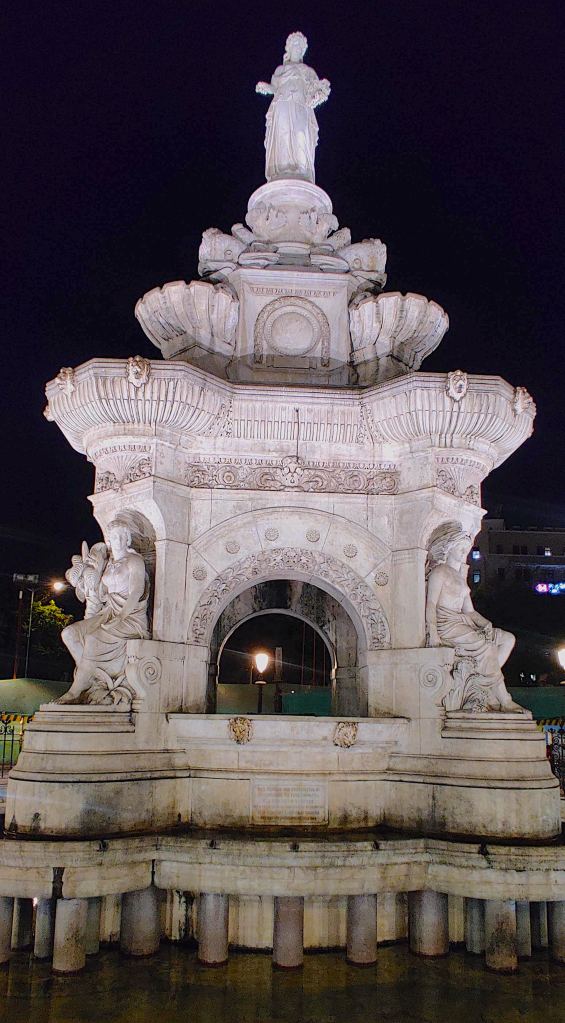
Lo and behold, you have reached the end of the British era Fort! Flora Fountain is the exact place where the erstwhile Church Gate was present. This beautiful structure was built in 1864 by the Agri–Horticultural Society of Western India. It was initially supposed to be named after the then Governor of Bombay, Sir Bartle Frère, whose policies had led to quite an impressive development of the Fort structures. It was eventually called Flora Fountain though, after the Roman Goddess of flowers and spring who adorns the top of the fountain, apt for a fountain constructed by the Agri-Horticultural Society. As you stand there, you will also notice tracks adjacent to the fountain. These are not railway tracks, but tram tracks from an era when trams used to run across Bombay (these were shut in 1964). In fact, the original full-form of BEST was Bombay Electric Supply and Tramways. The tracks were rediscovered in 2016 during road improvement work near Flora and have now been conserved.
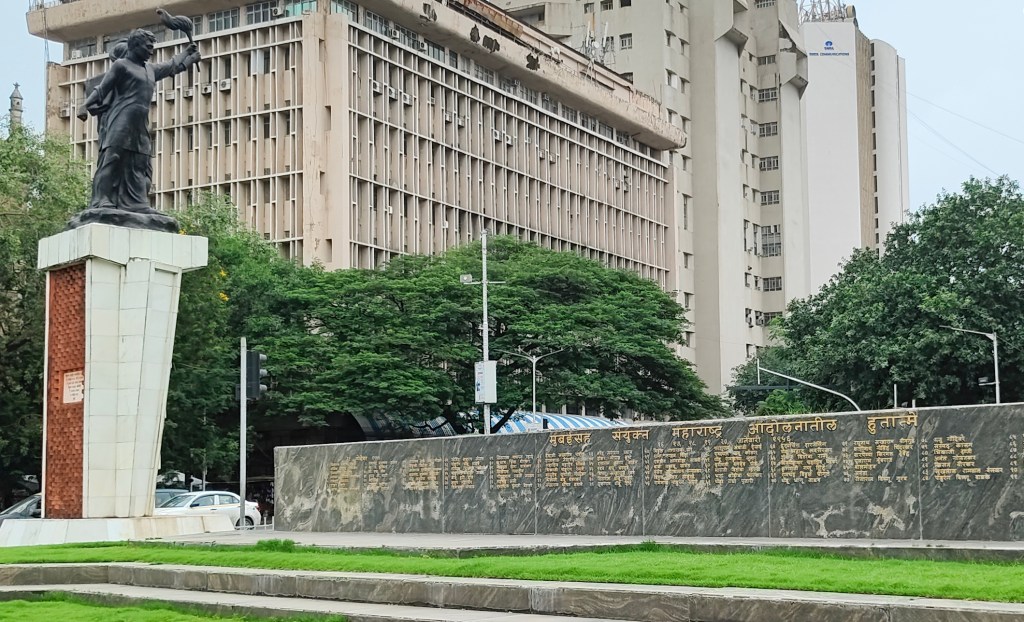
The adjacent Hutatma Chowk (hutatma means martyr) commemorates a pivotal incident in 1956 when police fired upon peaceful demonstrations by the Samyukta Maharashtra Samiti (United Maharashtra Committee) across Mumbai, resulting in over 100 deaths, some right at the Chowk itself. The incident gave a fillip to the movement for creating the Marathi-speaking state of Maharashtra, which ultimately happened on May 1, 1960. The Hutatma Memorial comprises of a bronze statue of a “Martyr with a Flame” atop a 16 feet high pedestal, along with a plaque listing the names of all the martyrs and an eternal flame to keep alive the memory of the sacrifices.
Standing at this historic spot, you’re at the intersection of Mumbai’s colonial past and its post-independence struggle for identity. A fitting place to close your sojourn! Now, it’s time to sit back, soak it all in, and maybe grab a well-deserved break at Kala Ghoda Café or one of the many fantastic eateries in the area. In just 500 meters, you’ve walked through centuries of stories—from the discovery and rise of Bombay as a trading hub to its evolution into ‘Urbs Prima in Indis,’ the First City of India. The streets here don’t just connect places; they connect eras, cultures, and legacies that have shaped and still shape today’s Mumbai.
PS: We have used interchangeably Bombay in lieu of Mumbai at multiple places in this article, to be contextually correct as the place used to be called Bombay then.
PPS: If you enjoyed reading this, do consider doing the Khaki Tours Fort walking tour. It is simply phenomenal.


I went there last week
it was awsome
LikeLike
This is such a well written blog. Have done a few Khaki tours myself and they are indeed very informative. But until you can do one yourself- this blog is a great start. Sometimes one wonders what around the city is something that visitors will really like. And this blog is such a wonderful way to proudly show your city and even for ourselves to know the deep history of buildings you’ve seen over decades. Loved it!
LikeLiked by 1 person