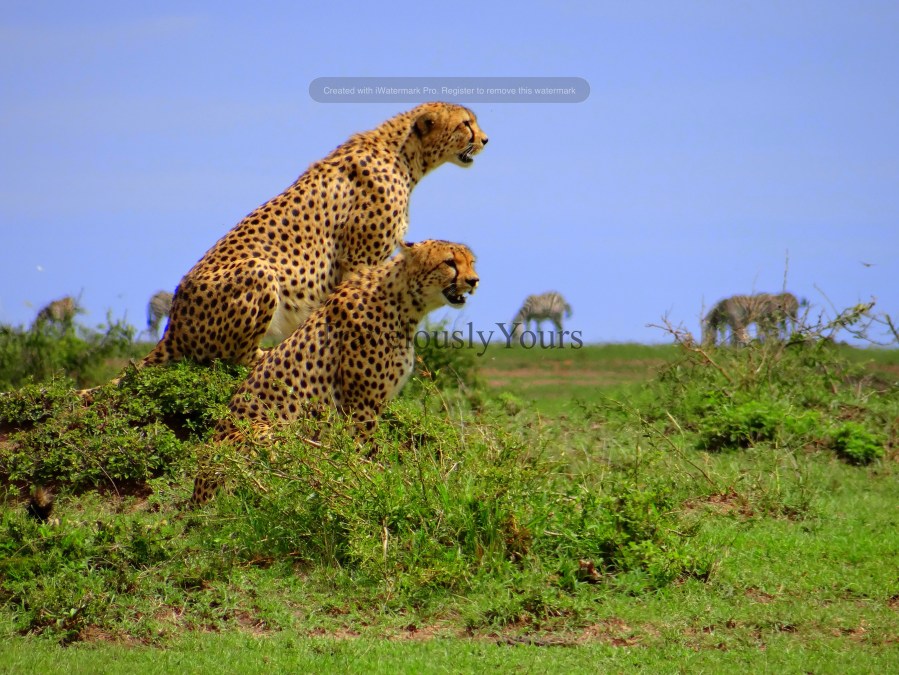
An African Safari (‘Safari’ in Swahili means ‘journey’) is on every traveler’s wish list and it couldn’t get better when that got checked off by one of the most popular game reserves in Africa- Masai Mara. Last October, we experienced wildlife like we had never imagined before. Here we would like to share our experiences from Masai Mara and Nairobi.
General tips on Kenya
Best time to visit
Although close to the equator, Kenya has a surprisingly good climate thanks to its altitude. In fact, many hotels and homes will not even have ceiling fans!
Although Masai Mara offers an exceptional year-round game viewing, the best (and most expensive) time to visit Masai Mara is usually July-October. This also overlaps with the the wildebeest migration when around 1.5 million wildebeest move to Masai Mara in search food and water, crossing the crocodile infested Mara river. The grasslands appear black as the area is overrun by the extraordinary phenomenon of the migration of the wildebeest from the Serengiti National Park. However, the big 5 abound throughout the year and almost any time is otherwise fine to visit, save for May/June, when the grass is tall for easy animal sightings.
Importantly, don’t forget to get vaccinated for yellow fever well in time before visiting Kenya!
Getting around
– In Nairobi, taxis are easily available and most convenient. Uber comes in very handy. Roads are great; traffic rules are followed; streets are clean. The general civic sense of the people is good. Many locals did advise us against walking alone at night. Like anywhere else, it is just good to keep yourself away from infamous city pockets.
– People are warm and welcoming. English is spoken by most.
– There is vegetarian food available everywhere, thanks to the prominent place that non-resident Indian Gujaratis have in Kenya since long. Chapati is in fact staple, so much so that a Kenyan friend of ours refused to believe when we told her that chapati is not Kenyan in origin but is an Indian food item. Almost all hotels and tour operators will offer a vegetarian (including Jain) and a non-vegetarian meal option.
– Bargaining is the rule of the game when it comes to any shopping or booking a tour.
Selecting the safari and getting the best price
– Once the travel dates are decided, planning the safari is not very difficult. The next main thing to do is to book an appropriate tour and then you are all set. One cannot enter the park without a local guide and a permitted vehicle and the tour operators are the best way to get this all sorted in one go.
– Keep a minimum of 2-3 days for Masai Mara; there is no upper limit and wildlife/ photography aficionados can stay for weeks without complaining. While you will see the big 5 in a couple of game-drives into your stay, longer stays increase the chances of seeing a kill or maybe hearing the lion roar!
– There is a daily entry price to enter the park; there are no cheaper 3-day or 1 week pass options. The cost of the tour thus depends mainly on the hotel you select to stay. Irrespective of where you stay, the game drives inside the park are just the same. The more expensive hotels (~300 USD/night) are located within the park and are a luxurious experience with better rooms, views, facilities and food options. Most mid-range and budget hotels, irrespective of their price, will have you stay in tent or tent-like accommodations, usually comfortable enough with attached bathrooms and basic amenities. We opted to stay in one of these lesser expensive hotels 10 minutes from the park gate and were very happy with our stay.
– The other factor deciding the tour cost is the mode of transport from Nairobi to Mara. One can either take a flight or drive to Masai Mara. An early morning 50 minute flight from Wilson Airport, Nairobi to Mara Serena Airport, Masai Mara gives you the entire day to explore Mara and costs 150-200 USD per person. We were 6 of us (plus our little one) and chose to leave early morning at 7 am by car. Driving to Mara takes around 5 hours and the view of the Great Rift Valley while driving down the hills is an added bonus. The last hour of our drive was on a bumpy road along the Mara reserve area. However, after coming from the Mumbai roads post monsoon, it was not too uncomfortable for us!
– A final factor with regards the cost is the car used; a 4-wheel drive is more expensive, and so is an AC car. We never felt like we needed air-conditioning in the car (or in the hotels for that matter!). If you are going during the rainy season, you must opt for a 4-wheel drive as the paths in the reserve are mushy and the last thing you want is the car stuck next to a pride of lions! Our 2-wheel drive however had no access issues in October.
– We used an online aggregator website called https://www.safaribookings.com/ for finding a tour operator. All companies on this site are verified and there are sufficient reviews of most operators. You could use filters to find operators who accommodate kids, if needed.
– Bargain hard with the tour operators. They are quick to respond to emails and Whatsapp texts. If there is a vehicle or hotel you prefer, let them know. The larger the group, the easier it is to bargain. If it is just 2-3 people, you must be willing to share the car with others to bring down costs.
– Thus, in short, the main two factors you can cut down for prices are the mode of transport to Mara and the hotel you stay in. Decide well accordingly.
– As usual, we are sharing our itinerary on our google maps page. Here is the link. Select the label ‘Kenya’.
Our itinerary
Day 1 and 2: Enjoyed Nairobi (we had clubbed this with a close friend’s wedding which we were attending)
Day 3: Traveled early morning to Mara; did the evening game drive
Day 4: Full day game drive; Mara village tour in the evening
Day 5: Early morning game drive; then drove to Lake Nakuru
Day 6: Lake Nakuru game drive; then drove back to Nairobi. Caught a 10 pm flight back to Mumbai.
Things to do in Nairobi
Nairobi is an energetic modern city with a great vibe and many interesting things to do. Given that you will almost certainly stay at least a day in Nairobi, here are a few suggested things to do in and around the city.
1. Shopping!: If you want to get those beautiful Kenyan handicrafts, the artefacts and curios, the kikois, the beaded jewelry and footwear (called Maasai), Nairobi is the place for it! There are three categories of places where you can go to:
– The best upmarket place to buy stuff are the Galleria Mall and Hub Mall; they give you a host of quality options. We also liked the little kiosks at the Westgate Mall. Don’t expect to find the exact same things at the Maasai Markets, so if there is something you really like here, get it.
– A great option for street shopping is the Village Market or the Maasai market. The Maasai Market is a moving market which is held at different places every day (except Mondays). You can read more on it and on the art of haggling at this helpful blog.
– However, the place we enjoyed the most for shopping was the Triangle market. A lot of the vendors of the Maasai market actually make and source their stuff from the Triangle market. Besides getting great handicrafts at good prices, this market will let you meet the wholesalers and see some of the workshops. Don’t hesitate to bargain hard and ask the item at just 20-25% of the quoted price.
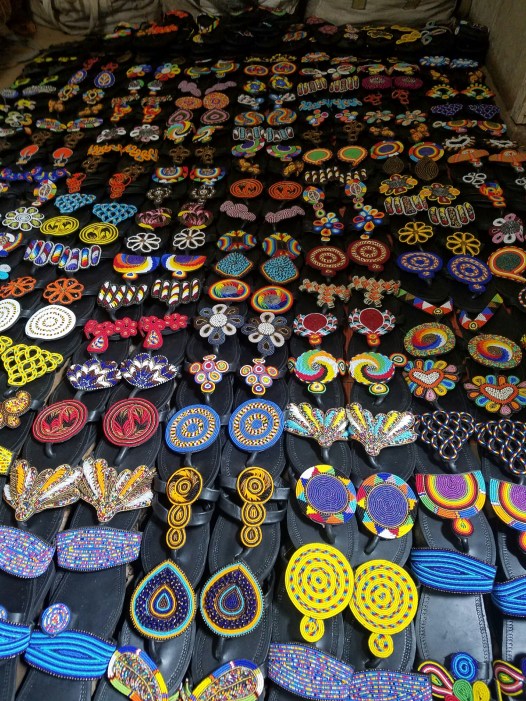
An example of one of the wholesalers at the Triangle market
2. The Giraffe Centre and the David Sheldrick Elephant and Rhino Orphanage: These are both 30-45 min drive from Nairobi, close to the Nairobi National Park. At the Giraffe centre, one can feed the giraffes and interact with them up close.
The David Sheldrick Orphanage is an amazing experience where you can watch the baby elephants (orphaned by poachers) being bottle-fed in an open arena between 11 am and noon. It is heartwarming to see how the naturalists know the stories of each and every one of them and how they have all worked together to make this the most successful orphan-elephant rescue and rehabilitation program in the world.
The entrance fee is $10 for the Giraffe Centre and $5 for the Orphanage.
3. Nairobi National Park: Having a national park next to the capital of the country is pretty cool, isn’t it! However, if you are anyway going to Mara, this may not be worth the visit. This place is ideal for those who are transiting through Nairobi and have just a few days in the country.
4. Carnivore Restaurant: This is en route to the giraffe/elephant centres. It’s an open air barbecue restaurant famous for serving exotic meat (crocodiles, ostriches, ox balls etc). It has a $40 all-you-can-eat meat buffet which people rave about.
5. The Nairobi National Museum: It is well reviewed and has been upgraded recently; slightly pricey at 1800 Kenyan Shillings (about $18 currently).
6. Karura Forest: It is an urban upland forest for a green respite from the hustle bustle of the city. It has picnic areas and some beautiful trails for nature-walks, cycling and bird-watching.
Things to do in Maasai Mara (like you don’t know!)
We were in Mara for three game drives as described in our itinerary above. Maasai Mara is a large game reserve contiguous with the Serengeti National Park in Tanzania. The landscape has rolling hills and grassy plains, and is crossed by the Mara and Talek rivers.
The big 5 (lion, cheetah, elephant, rhino, and African buffalo) will almost always be seen during the several game drives you do, besides of course innumerable zebras, giraffes, gazelles, hippos, crocodiles, deer, warthogs, vultures, ostriches, amongst many other animals and birds. In fact, you will see so many animals that by the time you leave Maasai Mara, giraffes and zebras would feel like cattle to you.
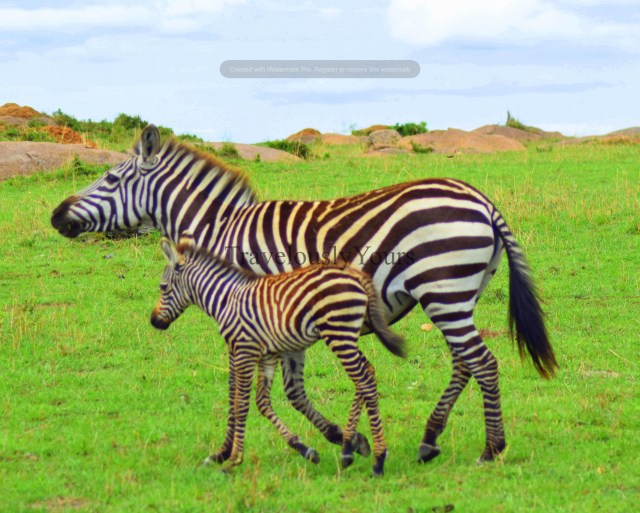
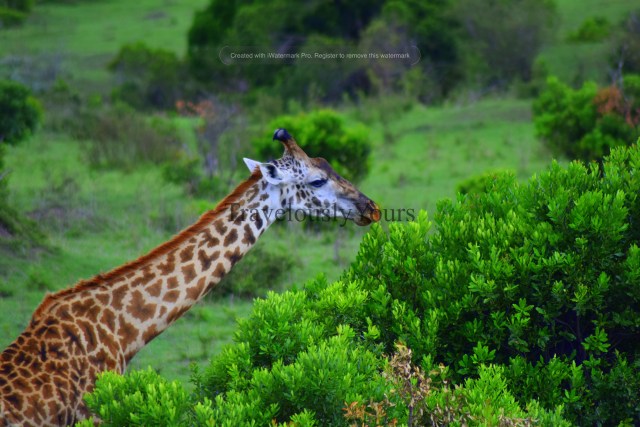
Giraffes and zebras will no longer excite you after some time!
You will be using the same vehicle that brought you to Mara and your driver will be your guide. They are usually very knowledgeable and are great animal and bird spotters. Our guide David was a very passionate wildlife enthusiast and he really enriched our Mara experience. We saw a group of 5 cheetahs walking together searching for a spot of shade; a pride of lions sunbathing lazily after a kill with the carcass lying close by; a single majestic cheetah posing for us less than 50 m from the car; a leopard so well hidden underneath some bushes that it took some time to spot it even after knowing it was there; a group of mother and baby elephants walking along in the backdrop of the setting sun; vultures and hyenas sharing a carcass; a bunch of hippos trudging down into the Mara river with crocodiles lying at the shore; and lots more.
We had some terrific cheetah sightings!

The King: Reminded us of the MGM logo!
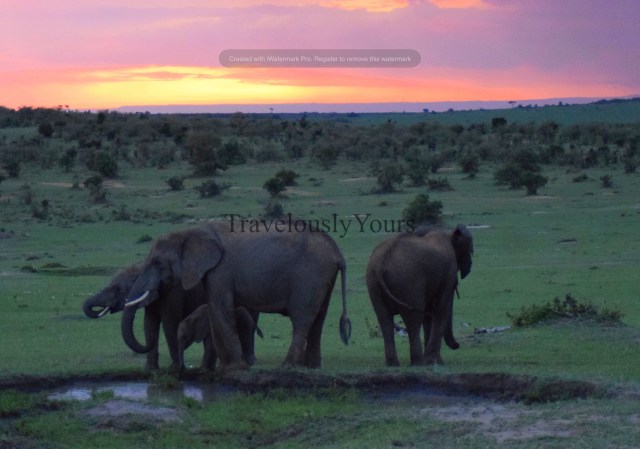
The gentle beasts..
The full-day game drive is probably our most memorable experience, where one enters the park at 7 am and returns back around 4 pm. It will be on this drive that you will be taken deep into the jungle to experience its beauty beyond just animals- the Mara river and its many little rivulets, and the vast expanse of grasslands, often dotted by lone Acacia trees. Having a packed lunch under one of these trees was one of our treasured experiences. The early morning tour is also a great experience, as you can feel the forest slowly awaken to its busy self under the golden hue of the sun and the constant chirping of the birds.
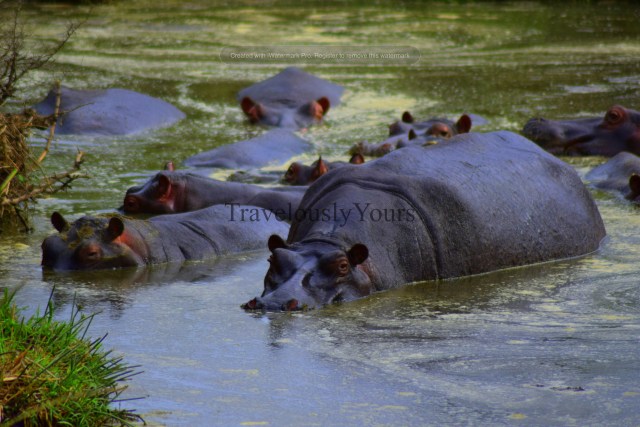
Hippos chilling in one of the many water holes
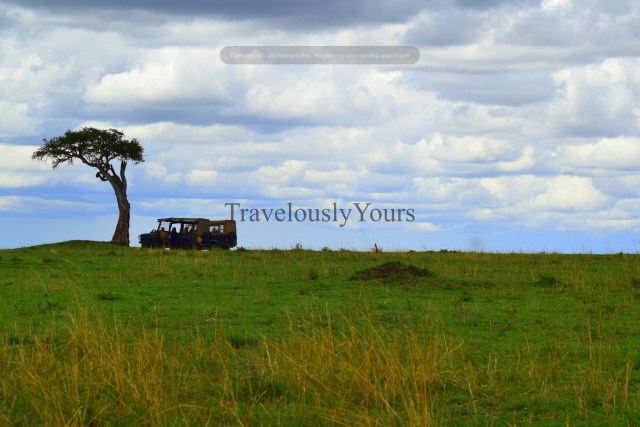
Lunch break!
On one of the evenings after the game drive, ask your tour guide to take you to a Maasai Village ($10 per person) which is a unique experience. A Maasai guide himself will take you to his family village where you will see up-close their lifestyle and existing cultural practices including a tribal dance. It was very interesting to see how this tribe still leads a life we would imagine to be a century old.
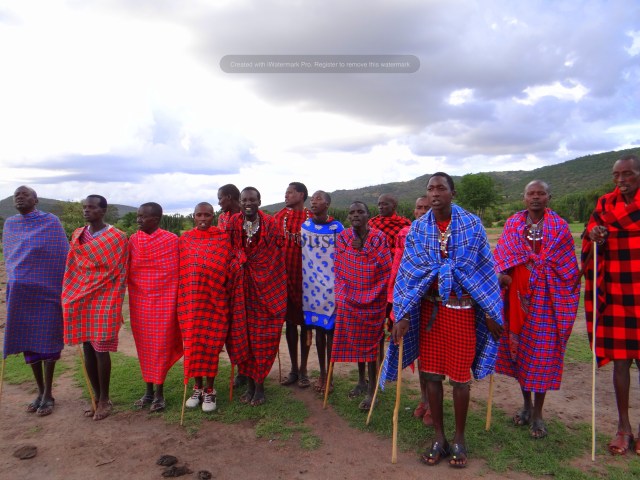
The Maasais (photo reproduced with permission)
Lake Nakuru
Lake Nakuru used to be called the ‘Pink Lake’, an apt term for those times when the lake used to be completely covered by pink flamingoes during the migration season (something similar to the ‘black’ grasslands during wildebeest migration). Unfortunately, due to flooding in the past few years, it has lost a lot of its flora and fauna, and certainly its pink sheen. It is nevertheless a beautiful lake, and worth one game drive (takes around 4-5 hours). You will certainly see the rhinoceros (we saw both the black and the white rhino) and a still beautiful flock of flamingoes, storks, geese, and many other animals. We enjoyed our time here, and would certainly recommend coming here. It is quite conveniently located 3 hours from Nairobi, and around 5 hours from Mara.
Lake Nakuru was the perfect relaxing counterpart to the vast plains of Mara
Apart from the Lake, there is not much to do in Nakuru city and you can enjoy a relatively relaxed time there after the hectic Mara traveling.
We drove back to Nairobi picking up avocados on the way and filled up every empty space in our bags with Macadamia nuts. Reminiscing our African dream while munching on the nuts is something we still enjoy doing on quiet evenings.
Other places to visit in Kenya
Lake Bogoria : Located 5 hours north of Nairobi, the flamingoes have now moved to lake Bogoria, which now boasts of a vast population of pink flamingoes. Certainly worth going!
Amboseli National Park: Although not as diverse as Mara, it has a large number of elephants. Also, Mt Kilimanjaro acts as a backdrop, giving some beautiful and serene moments and photographic opportunities.
Mombasa and Malindi: These are two beautiful places along the Indian Ocean that are ideal destinations for a relaxing beach getaway. There are several all-inclusive resorts at great prices to choose from. Being a port city and an ancient trade hub, Mombasa is like a melting pot of culture from Asia and Africa. The interesting history of the city and the blue oceans with white sandy beaches provide a memorable experience.
Mt Kenya and Nanyuki: Mt Kenya is a local favorite when it comes to going for treks and hikes. Nanyuki is a town at the equator which can be used as the base for the treks, besides of course the charm of being able to cross from the southern to the northern hemisphere in one step, besides having a look at the Coriolis effect!
 Travelously yours
Excellent and inspiring review.. Thanks for the time and effort..
I visited the Nairobi National Park as did not have time for the Maara.. And by no means was I dissappointed.. Could spot the Big 4 (missed the leopards).. In fact was lucky to see the Golden Couple together.. Another advantage of the NNP is they allow you to take your vehicle for the game ride.. So, if you have someone who knows the routes, you end up saving quite a bit..
LikeLike
Yes indeed. The Big 3 or 4 are regularly seen there. And as you said, you can take your vehicle along. Another thing we did not add is that there is an actual area where you can barbeque and eat within the National Park! For those who would be excited at the thought of barbequing meat safely whilst surrounded by lions and other wild cats, go for it!
LikeLike
And the backdrop of Nairobi City from within the park is another unique experience.. I am not sure if I can post pics with the comment here, but had a few really nice ones..
Probably should start a pics-only blog.. 😉
LikeLike