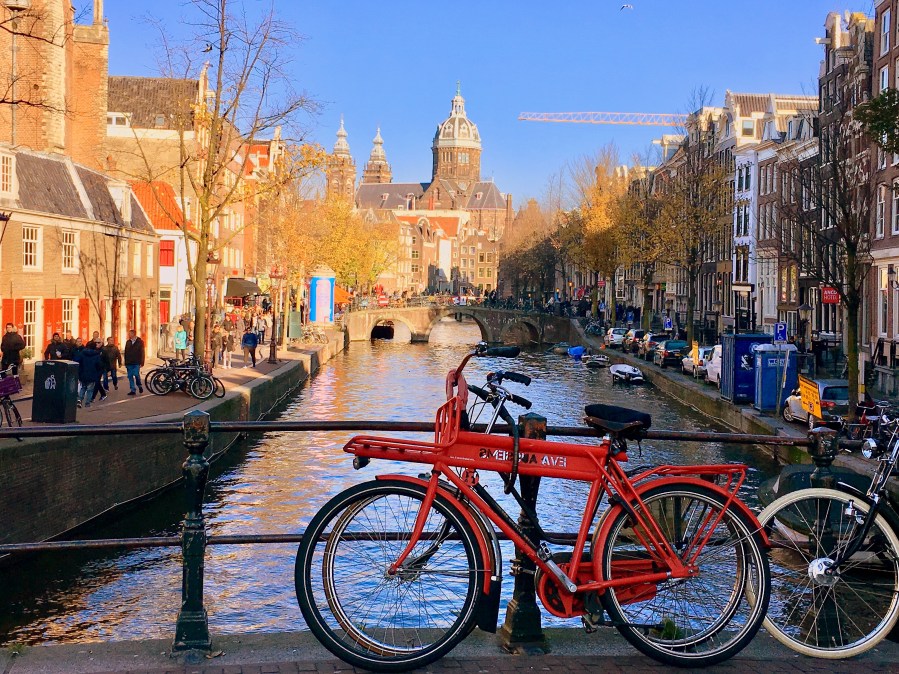
Netherland is well known for its cyclists and canals, windmills and tulips and football. But you need to visit this country for at least a week to fathom its liberal values, its unique culture and art and of course its legalized prostitution and hash. Even if you know what to expect in Netherlands, this place has ample surprises for you. It gets its name from the flat terrain and sea level/ below sea level altitude (“nether-land’ meaning low-land- it is quite a literal country in most of its names). Holland, a province of the country (technically two provinces – North and South Holland), is often used synonymously with the name Netherland, but is actually a subset of it.
We visited Netherland and Belgium in early November last year over a 9-day trip, but are breaking the trip into multiple blogs to share our experience comprehensively (you can see our complete itinerary at the end of the blog). In the Netherlands, we traveled across Amsterdam, Rotterdam, Kinderdijk, and Geithoorn; we have written on these over this and two more blogs – here and here. There are of course other beautiful cities like the Hague, Utrecht, and Maastricht which we would love to explore the next time we visit the country.
General tips:
Best time to go: Summer is expectedly the best time to go to Netherland. If you are able plan your trip around April, you will be lucky to see the tulips blooming! November actually is quite rainy and cold, and perhaps October should be the last month to plan a trip; although we got lucky with a relatively dry November. The upside of going in October or November is that it is less crowded and your pictures will not have 10 other people photobombing it!
Getting around: Like most of Europe, Netherland has great public transport, and can be explored conveniently without renting a car. We did however rent a car for a few days while traveling between Belgium and Netherland, which helped us explore some quaint towns and lesser touristy places conveniently.
There are multiple confusing options for travel cards, day passes and single-way tickets while traveling using public transport. Most of Amsterdam can be covered on foot, depending on where you are staying, but it does get tiring after some time.
Day Pass: The GVB manages most of the transport, and has a 7.5 Euros day pass (or 12 Euros for two days). It includes the buses, trams, and metro. (Although the train which takes you directly to Schipol airport is not covered with this pass, there is a bus option which is available).
OV Chip Card: The other option is to purchase a 7.5 Euro OV chip card (the 7.5 Euros are not redeemable) which can then be loaded with money. This can be used to pay for GVB as well as trains in Amsterdam and other cities in Netherlands. In fact you can actually purchase day passes and load them on the card as well. You are charged based on the distance traveled, and it actually turns out to be cheaper if you are not going to be taking too many buses in a single day. The balance amount on the card can be taken back while leaving the country, and the card remains valid for 5 years.
Single-journey tickets: This costs you an extra Euro each time you purchase, and charges you more than the OV chip card, and is probably worth using only if you plan to use public transport less than 2-3 times.
Public utilities: For all their liberal values, there are no free public restrooms in this country; you have to pay to pee. In a similar vein, restaurants will not serve tap water; they will sell only mineral water. Water fountains are pretty much non-existent as well. Carry your own bottles; tap water is safe for drinking as such, so you can easily fill them at your hotel.
Cellular service: There are several cellular providers and you can purchase a prepaid SIM card in most supermarkets like Albert Heijn and Kruidvat. Usually, the SIM is free or at a nominal price, and you have to load it. Most carriers will charge a roaming fee outside of the country. Topping up online is possible but the details of the plans remain murky on their website, while telephonic helplines are in Dutch, so be sure what you are paying for. Unlike the online reviews, we did not have a great experience with Vodafone.
Cycling: A blog on Netherland cannot begin without a note on cycling and cyclists! There are dedicated cycling lanes everywhere, so while crossing the roads, be careful to look for cycles whizzing towards you first, and then for cars. Amsterdam has very complex cycling rules and a busy traffic, and we would not recommend cycling on the roads here unless you are very familiar with all their rules. Smaller towns and villages are more biker friendly, and perhaps that’s where you can (and should) cycle.
We are sharing our itinerary and vegetarian restaurants we recommend, amongst other titbits, on our google maps page. Click here to see the maps; select ‘Netherlands’.
Things to do Amsterdam
Central Amsterdam is large and crisscrossed with multiple canals, as you can figure out in the map below. Here is a list of things we recommend doing in Amsterdam!
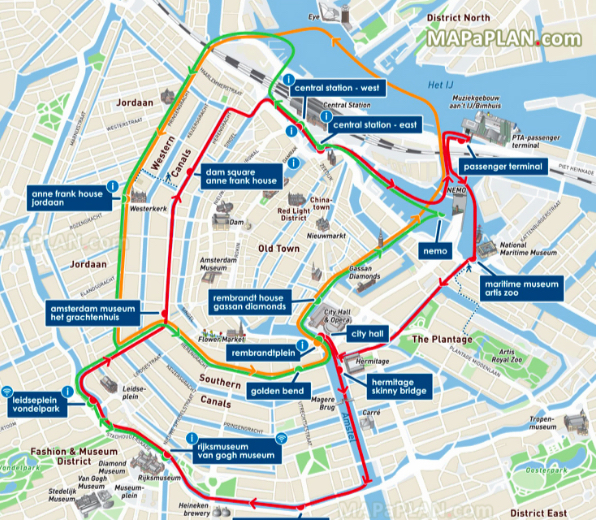
Courtesy: http://www.mapaplan.com
1. Start with a walking tour: This is the best way to start around the city centre which has a lot of places to see and assimilate, including the Royal Palace, the Town Hall, the Old and New Church. There are multiple free and paid walking tours which begin from Dam Square and walk you through the distinctive history, architecture and culture of Amsterdam; we did the 2 hour classic tour and would highly recommend it.
2. The canal cruise: The ubiquitous canal cruise is there in every Dutch tourist place, and for a good reason! This is a good alternative to the walking tour. You can catch the cruise from just outside Amsterdam Centraal station for 16 Euros, and enjoy the highlights of this lovely city. The Amsterdam canal belt is a UNESCO World Heritage site. Roaming around these countless bridges over the romantic canals will make you fall in love with Amsterdam.
3. The museums: The museum district of Amsterdam is along the ‘scenic bus route 2’, voted amongst the top 10 scenic routes of the world by National Geographic. The Rijks museum is the most premium museum with a vast impressive array of art and artifacts on display. The Van Gogh museum, which has the biggest collection of artworks by the artist, is another must see place to understand his life and his inspirations. If you have time for only one, the Rijks is probably the one to opt for. Apart from the classic museums in this area, the Maritime museum is also an interesting one to go to. Note that for both the Van Gogh and the Rijksmuseum, you have to specify the date and time slot while booking the ticket online.
4. The I AMsterdam sign: Present just next to the Rijks, this famous red sign is perfect spot for a 10-min photography break! Go figure what we did here! The other I amsterdam signs can be seen at Schiphol airport and Sloterplas Lake in Amsterdam West.

5. Anne Frank house: This museum chronicles the fascinating but tragic story of Anne Frank, a Jewish girl who hid here with her family during World War II for a long time before eventually getting caught and killed. She chronicles her days in an unforgettable diary, which was later published as a book. A must-visit-place for every German, you will always find a queue here, and it would be prudent to book the ticket and time slot online. Anne Frank’s The Diary of a Young Girl is worth a read if you plan to go here.
6. Red Light district: This most talked-about neighbourhoods of Amsterdam that houses the world’s oldest profession is a must-visit place after sundown. Unlike most of the world where prostitution happens only behind closed doors, in this city you will find prostitutes offering their “services”, from behind a glass window.
Apart from the actual red light rooms, there are a lot of themed pubs, strip clubs, live sex shows and sex shops and it is indeed quite an experience to walk around these streets without any fear. Look out for one particular shop called Condomerie with a very exclusive display and where you can get a personalized condom made depending on your ‘size’ and your favorite characters on the tip, including Darth Vader or Santa Claus.
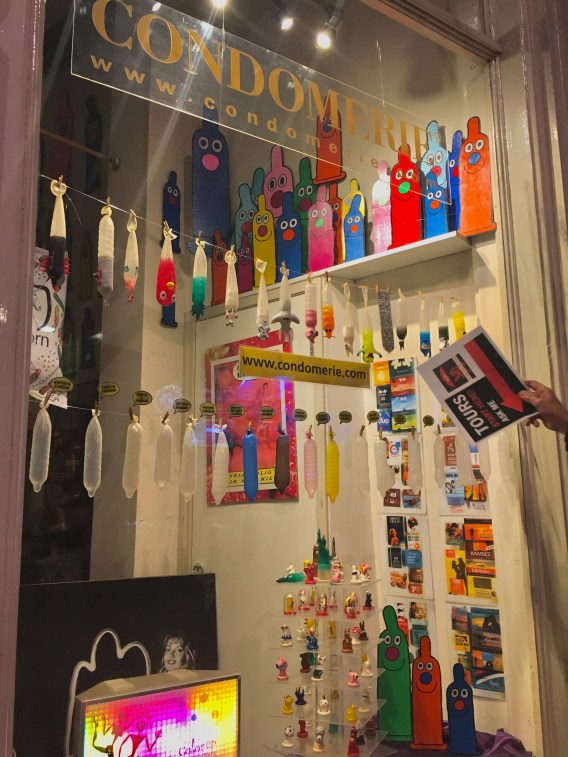
The ‘Condomerie’: An example of the sexual paraphernalia business which has grown in Amsterdam thanks to the Red Light District
A 1.5 hour walking tour of the Red Light district is a very informative way of touring this place understanding its origins, current status and dynamics. It was very intriguing to know that the prostitutes were looked as a ‘necessary evil’ to protect the rest of the women from getting ‘defiled’ by traders and seamen who visited this hub of commerce in the 15th century. The church (Oude Kerk (Old Church), one of Amsterdam’s oldest churches) decided it might as well have extra weekend ‘confessions’ so that no sailor coming over just during the weekend could sin without getting the chance to confess and pay for his redemption!
Very importantly, please do not click a photograph of a prostitute at work; it is not just disrespectful but also punishable, and rightly so.
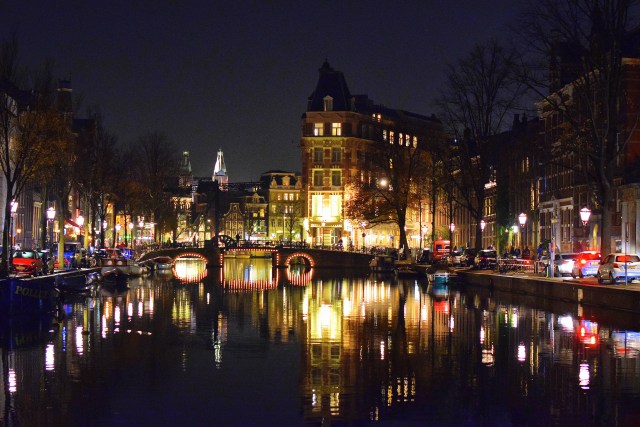
Amsterdam at night; after the Red Light District tour
7. The flower market (Bloemenmarkt): This bustling market is a must-go. Tulips abound here during the summer, but it was worth a trip even in November. You can purchase good quality classic Dutch wooden tulip mementos here for cheap; we got 6 for 10 Euros. Tulip bulbs (besides multiple other flowers) are also available for taking back home and tulips that thus grow will be a beautiful reminder of your time in the city.
Of course, if its tulip season, you will certainly go and visit one of the many tulip gardens and fields as well.


At one of the shops at the Flower Market
8. Try the ‘coffeeshops’: The story of marijuana in Netherland is as interesting as the different kinds of marijuana items you will find in this city. Unlike prostitution which is legal, it’s not technically legal to smoke weed. However, the authorities will turn a blind eye to those in possession of 5 gm or less and as long as there are no law and order issues. There are over 150 coffeeshops (most around Central Amsterdam) which serve weed over the counter. If you do not want to smoke it, you will find hash cookies, chocolates, cakes among other items in several stores.
9. Vondelpark: Amsterdam’s Central Park (a much smaller version) is located close to the Rijks museum and is a cosy break from sightseeing and touristy spots. If the weather is sunny, you should definitely have a picnic lunch here.
10. Explore Jordaan: Jordaan is the most arty part of the city, dotted with quaint buildings, quirky boutiques and art galleries. Close to the Anne Frank museum, you can easily spend a couple of hours exploring its narrow lanes, cozy pubs and hip eateries.
11. There are lots of other things to do beyond the scope of this blog, including the Heineken experience and exploring north Amsterdam. This city has enough for as many days as you can spare!
Food: You need to give yourself enough time each day to enjoy the great food in Amsterdam, with innumerable restaurants to explore in whichever part of the city you may be. Although relatively expensive place for food, there were some good and reasonable vegetarian options we loved.
Restaurants along Chinatown: Chinatown is a couple of minutes away from the Red Light District, and has good eateries on the Zeedjik street. We really enjoyed a delicious Japanese meal at Eat Mode, and would highly recommend it. Another restaurant recommended to us by our guide for its sandwiches is Latei, although we couldn’t try it.
Saravanaa Bhavan: For those craving Indian food
Maoz: This is a vegetarian chain serving falafels and wraps. The food is tasty and perfect for a quick bite.
Desserts: There are two classic Dutch preparations; the stroopwafel, which are thin waffle shaped wafer bars separated by a layer of caramel syrup, and poffertjes, which look like mini pancakes but are way more delectable. Although you will get stroopwafels in all supermarkets, they are best had warm. We had our best one at a farmer’s market which was fresh from the oven. A renowned albeit expensive stroopwafel dessert bar is Van Wonderen Stroopwafels, where they are served these with various interesting toppings. One other great dessert place is Metropolitan- The Pastry Shop; it is a chain which serves delicious gelatos and poffertjes among other desserts.
Our favorite dessert was at the Pancake Bakery; it’s a huge restaurant serving different types of sweet and savory pancakes, and close to the Anne Frank museum. We totally recommend having the Dutch Pancake there, which is topped with stroopwafel (what else!), chocolate, cream, and cinnamon ice-cream. We found the savory pancake too bland and overpriced, and would recommend given that a skip.

The delicious Dutch Pancake; a must have
Other options include:
De Laatste Kruimel: This was a bakery recommended by our walking tour guide and has a high rating on TripAdvisor.
Tony’s Chocolonely Store: This is a unique chocolate store which sources all its cocoa through a 100% slave free route to make over 50 different chocolates. You can also pick up their bars at a supermarket, but this store is way more fun! The shop allows you to try as many of their delicious flavors as you want before the purchase. Besides, you can actually make your own chocolate deciding on the type of chocolate (white, dark etc), adding other contents or flavours (hazelnut, almond, pecan etc), amount of sweetness or salt and then get it packed in a custom designed wrapper.
Shopping:
Netherland has a lot of interesting local trinkets and memorabilia, and you certainly can’t leave the country without buying some of them.
Wooden tulips: You’ll find these everywhere; we found the Flower market to have the most variety and price.
Delftware: This classic blue and white pottery was originally made in the town of Delft (close to Rotterdam); hence the name (didn’t we mention that most names in Amsterdam are very literal?). These porcelain items are very exclusive and watching someone make it will give you an insight into the intricacies of the process. Heinen Delft Blauw store next to the flower market is a great place for its variety and quality of products, but you can find Delftware at other places across the city as well- just watch out for fake goods.
Clogs: Wooden clogs are traditional Dutch footwear souvenirs that you will find everywhere.
Hema is a local shopping chain which you might also want to explore for local products and toys.
Cheese: Amsterdammers eat 17 kg of cheese every year, and for good reason! You must try the different varieties and flavors of cheese at the various local cheese stores; they will widen your idea about cheese and is a great item to bring home.
Photography: You cannot finish your tour without a mandatory photo of the Amsterdam canal and bicycles, can you? You will find plenty of great spots for capturing these; just keep an eye out for them. The I AMsterdam sign is another winning spot for photography; you may need a wide-angle lens or a panorama shot to cover the entire sign (or take the photo across the canal). A good place to catch the city skyline is the terrace of the Nemo science museum close to Amsterdam Centraal.
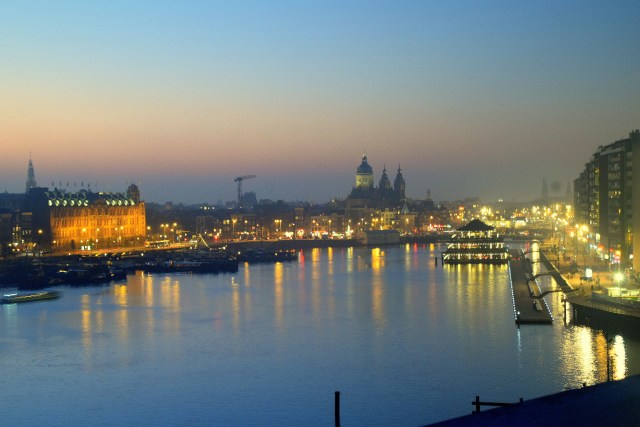
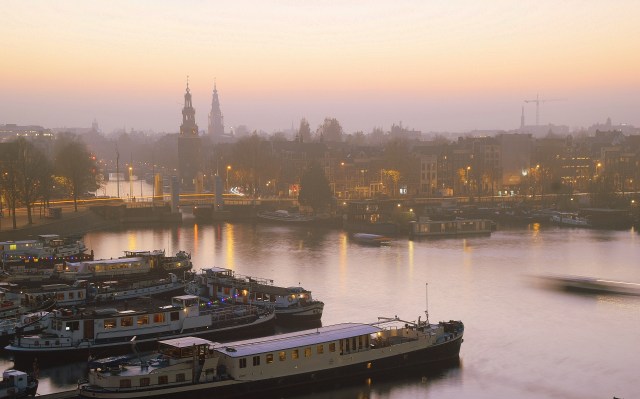
View from the Nemo Museum
Amsterdam is an extraordinary experience, but there is lots to do beyond the main city, including Giethoorn, Rotterdam, Kinderdijk, Zaanse Schans, and Naarden. For more on these outstanding places, read our next blog coming up soon!
Our itinerary:
Day 1: Land in Amsterdam in the morning; go to Rotterdam and start the Dutch experience right away!
Day 2: Explore Rotterdam; catch evening bus to Brussels (we stayed there for 2 days as we had personal work there as well)
Day 3 (and perhaps 4): Explore Brussels
Day 5: Rent a car in the morning and reach Gent in time for the morning 10 am walking tour; drive to Bruges after a leisurely lunch and reach there before dark. Explore Bruges in the evening.
Day 6: Walking tour/Canal cruise in Bruges; drive to Kinderdijk (2 hours drive) to enjoy the sunset there. Reach Geithoorn by night (another 2 hours drive).
Day 7: Enjoy Geithoorn; depart for Naarden after lunch (1.25 hours drive) and visit the Fortress museum (advantage of staying in Naarden at night is the free parking and relatively cheaper lodging)
Day 8: Reach Amsterdam in the morning and return the car (3 day rental); start exploring Amsterdam
Day 9-10: Amsterdam. Depart on day 10.
We found renting a car very convenient to be able to visit places like Ghent, Bruges, Kinderdijk (at sunset time), Geithoorn (reaching at night and be able to explore it early next morning before the day trip batches from Amsterdam crowd the place) and Naarden, and would recommend doing that if feasible. However, all these places are easily reachable with buses and public transport as well.
 Travelously yours
Pingback: Getaways from Amsterdam: Exploring the Dutch countryside – Travelously yours
Pingback: Bewitching Belgium: Things to do in Brussels, Ghent, and Bruges – Travelously yours