South Africa is a country famous for its safaris, Cape Town the Table mountain, and of course, Nelson Mandela. It also boasts of the Garden Route, one of the world’s most beautiful scenic drives. You can enjoy spellbinding views of the Indian Ocean while watching whales, seals and penguins right from the shore along this route! From skydiving and bungee-jumping to meeting sharks in the ocean, this route has everything there is to offer. No wonder then, it is the perfect destination for a honeymoon trip, a family holiday, an adventure trip, or for a group of friends to create fabulous memories! South Africa and particularly the Garden Route remains quite an enigma though for many in terms of how to plan a trip, with too many options and things to do. We spent two weeks in this heavenly place recently, and are laying it all out for you here. We write about how to plan the perfect road trip along the Garden Route here, while we have covered how to plan the ideal safari and things to do in Cape Town in other blogs. We have shared our suggested itinerary at the end of the blog.
GENERAL TIPS: These have been mentioned in the blog on the planning the Kruger safari as well but we are repeating them here for completeness.
Best time to go: South Africa has enough to offer across the year. Being in the Southern hemisphere, its summers and winters are opposite to those up North. The best time to explore the Garden Route is the gorgeous summer between Oct-Apr, with less chances of rain. Winters are moderate but not sub-zero, but have relatively higher chances of rain. Do note however that while it can rain anytime of the year along the Garden Route, it does not rain for too long. Also, whale watching season is July-October (an almost guaranteed time being Aug-Sept); so there is something big to entice you then as well! May to October is also ideal for the safaris, as the vegetation is low and sparse.
Getting around and general safety tips: The best way to explore the Route properly is to rent and drive your own vehicle. Using the Bazbus (Hop-on Hop-off bus) or booking a car with a driver or a tour operator are other options. Safety is an issue in South Africa, although the Garden Route and Cape Town are relatively safe. Personally, we encountered no mishaps. We are laying down some general rules though based on the feedback we received. For example, do not travel with valuable ornaments or watches. Don’t rely on hotel room safes; hide your valuables in a safe place or carry them with you. Don’t keep cameras or purses in visible locations after locking your car; car smash and hit’s do happen in many localities. We have read about carlock jammers which block the signal from the car keys to lock the car, so please check the car doors after pressing the lock key as well. Overall avoid empty spaces in the dark, and be on a relatively higher alert while traveling.
Miscellaneous: Tap water is safe to drink along this route and in in most of South Africa. We carried two refillable bottles and filled them up at the hotels, which all offered facilities for the same. The Kruger area was an exception when we traveled as there was outbreak of cholera reported there recently; we stuck to bottled water there.
Getting a sim and exchanging currency is quite straightforward; do avoid doing so at the airport though where they are priced much higher.
Credit cards work almost everywhere; we never ended up using Rands to pay for anything (including tipping our walking tour guide!). However, it might be a good idea to convert some money for emergencies or to keep small change in the pocket and avoid removing your card every time. Credit card number theft is something to watch out for as well; hide the details while typing your credit card pin.
Please carry a travel adaptor plug. The type M plugs used in South Africa are not really used elsewhere.
We are sharing the places we recommend, amongst other titbits, on our google maps page. You will have to zoom over to South Africa or go to this link and select South Africa.
GARDEN ROUTE
The Garden Route is arguably one of the most picturesque drives in the world, up there with the Canadian Rockies. Technically, it is a 250-300 km drive from Stormsrivier on the East to Mossel Bay towards the West. Cape Town is located another 400-450 km from Mossel Bay, via a most spectacular drive along the ocean.
Don’t get fooled by the short distances though. The Route offers such a huge plethora of things to do that even 2 weeks will not feel sufficient. We will give you a basic orientation of the Route and elaborate on the various places en route and things to do along the drive, including the ones we recommend.
Before diving into the things to do, let’s first understand a few prominent places to stay at for the many daytrips and adventures. You can spend 2-4 days in any of them and take day trips exploring the Route.
Plettenberg Bay (Plett): A beach town close to all the Eastern activities along the Garden Route, this is an ideal place to set base and explore adventure and natural beauty.
Knysna: Located along a lagoon at almost the center of the Garden Route, this has some great lookout points and restaurants and multiple activities as well.
Mossel Bay: The western tip of the Garden Route, Mossel Bay is a nice town with good food and beaches and is a good place to set base for a day trip to Oudtshoorn.
Hermanus: Situated between Cape Town and Mossel Bay, this is the place to be for whale watching!
Let’s begin from where we began – staying at Plett and exploring the eastern Route – and then move towards Cape Town.
THINGS TO DO FROM PLETTENBERG BAY / STORMSRIVIER:
Tsitsikamma National Park: This was one of the favorite parts of our trip, offering extraordinary vistas of the ocean and the cliffs. You can spend anything from a few hours to a few days in the Park, depending on the time you have!
The most popular thing to do is trek along the 2 km long Storms River Mouth Trail to reach the iconic Storms River suspension bridges. The trek is a relatively simple one along boardwalks and stairs (our 2.5 year old was able to walk it up). Set up alongside the stormy Indian Ocean (we saw some gigantic waves out there) and few small beach inlets, the trek takes you to the mouth of the Storms River opening into the ocean. A set of three suspension bridges (built in 1969) overlook this point. Walking along the bridges is a little bouncy but a lot of fun!
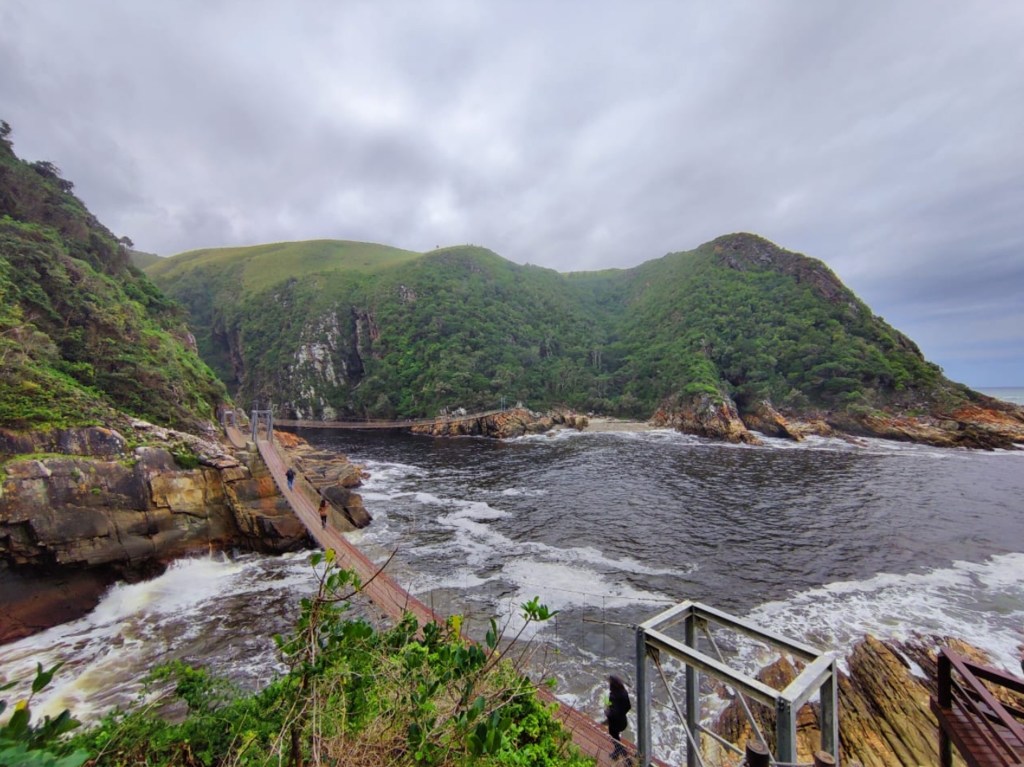
The trek takes you about 1-2 hours overall. You could continue further along a trail that goes to the top of the mountain, to reach the Lookout Point with some beautiful views. This though is much more strenuous and would take about 1.5 hours to and fro.
You can consider kayaking along the Storms River Canyon. The water does not have any rapids or strong currents, and there is no hike taking you along the canyon, making this the only way to enjoy its beauty! There are multiple other adventure options as well including ziplining and blackwater tubing.
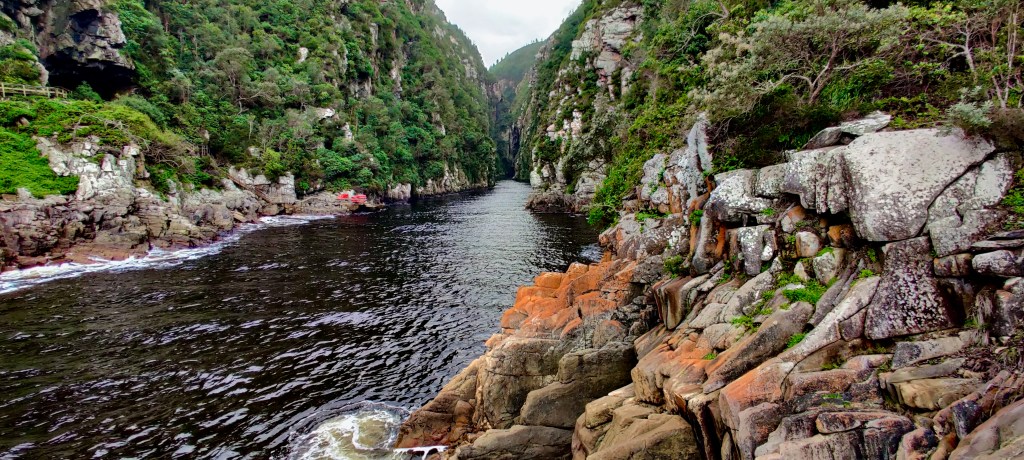
For those who have more time, the Otters trail is a 5-day hike along the coast, and is considered amongst the most beautiful hikes in the world. It is not extremely challenging, but it would be a good idea to book it in advance here.
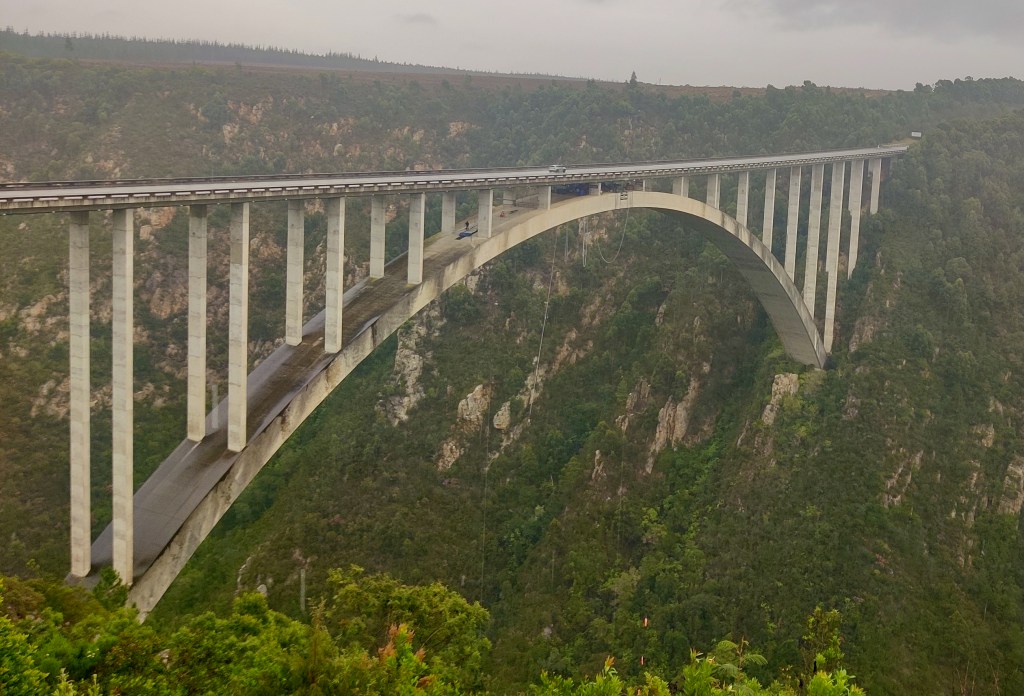
Bungee jumping at the Bloukrans bridge: This is amongst the highest in the world, and one of the most popular attractions along the route. It is totally worth the visit if you are interested in experiencing it, or even just to see others zipline to the center of the bridge and then do the jump! There is a nice area with parking available for anyone interested to view the jumps.
Robberg Nature Reserve: It offers several trekking options from 30-minute walks to a 4-hour hike around the reserve. It offers stunning views and beaches and the chance of watching a number of seals at the Seal Lookout Point. Another option is to do the seal boat or kayak tour or (if you are up for it) the swimming with seals experience at Plett!
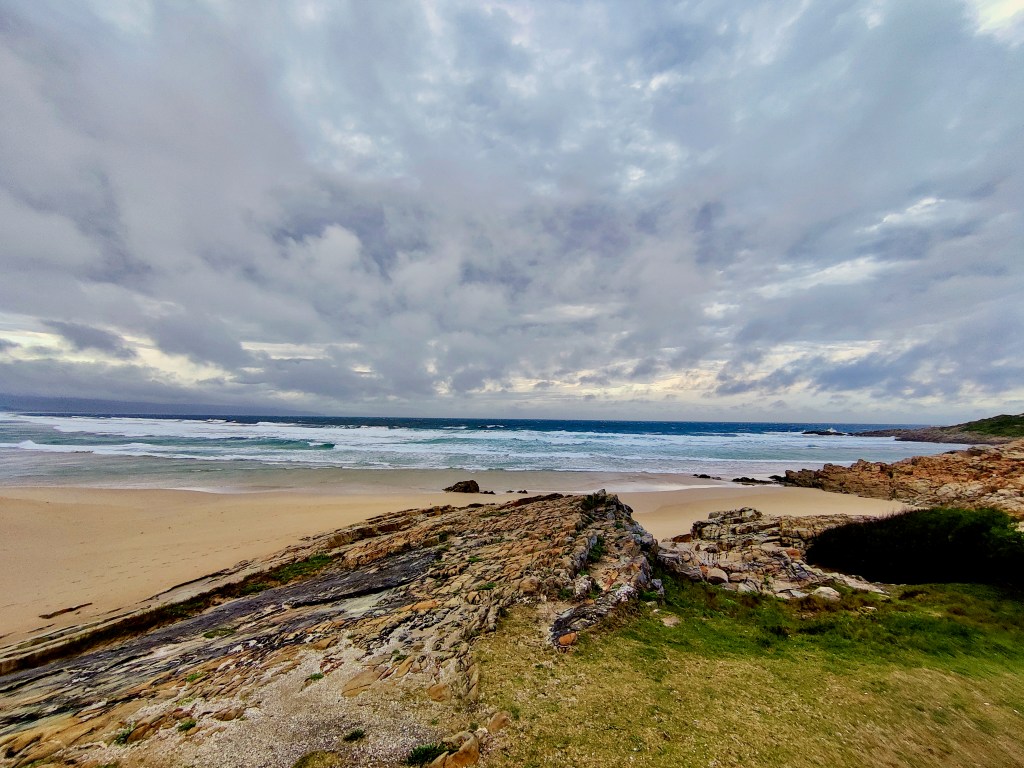
Other things to do in Plett: Plett offers some lovely beaches to relax at, like the Central Beach, Lookout Beach, Robberg Beach and the Keurbooms Beach. You can also do Whale Watching in Plett if it’s the season!
There are a few interesting sanctuaries present close to Plett. Monkeyland, Birds of Eden, and Jukani are located close to each other and even offer a combined ticket. You can experience multiple different species of free-roaming monkeys, hundreds of birds, and of course the big cats. Another option is exploring the Plettenberg Bay Game Reserve if you are not going to Kruger on the trip but wish to see the big cats.
The Elephant Park and the Wolf sanctuaries are two other sanctuaries, located along the drive from Plett to Knysna.
The Garden of Eden is nice and short 1 km wheelchair boardwalk along the same drive and serves for a pleasant pit stop if needed.
THINGS TO DO FROM KNYSNA:
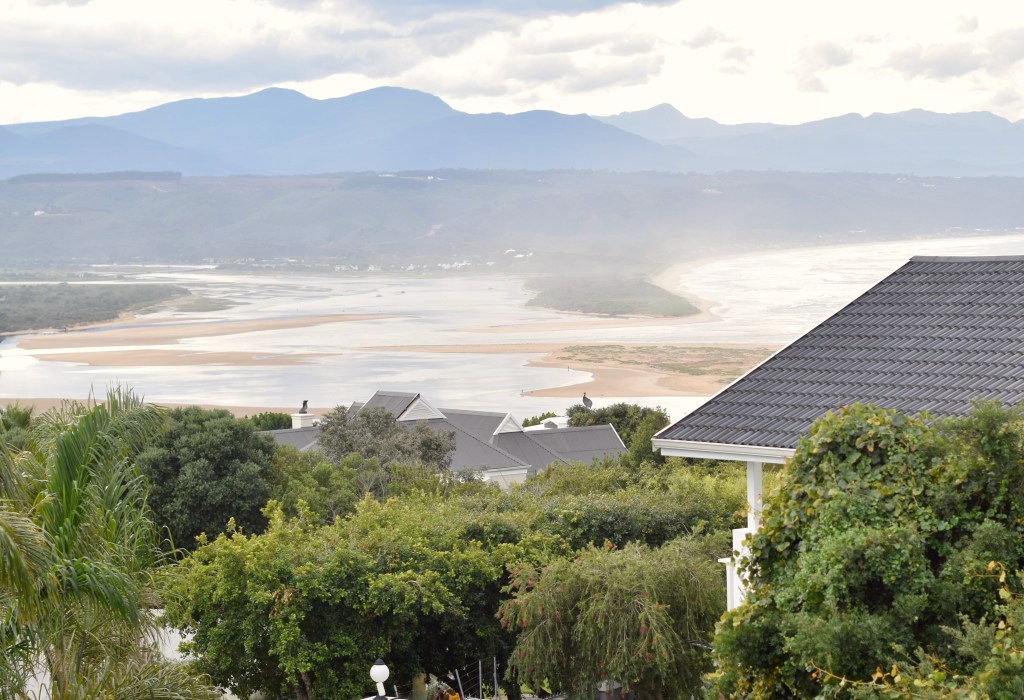
Half hour to the west of Plett and an hour east of George, Knysna is sort of midway along the Garden route. It is an idyllic town built along the Knysna Lagoon, an estuary which opens to the ocean after passing between two large high headlands popularly known as ‘The Heads’. Home to the famous Knysna seahorses, it has some beautiful lookouts and places to relax. Thesen Island and Leisure Island are the two isles to stay at. There are a number of good hotels and restaurants along Knysna to suit everyone’s taste and pocket.
You must definitely drive up to the Knysna Heads to enjoy a fabulous view of the lagoon meeting the ocean.
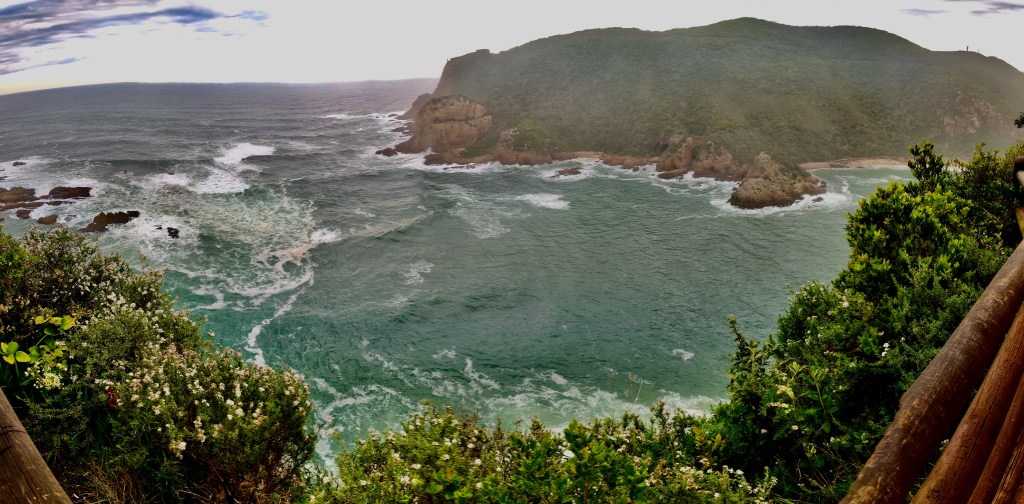
You can enjoy the beauty of the lagoon on a boat cruise or a paddle board!
Another beautiful place to enjoy the sunset apart from the two above is the Steenbok Nature Reserve at Leisure Island.
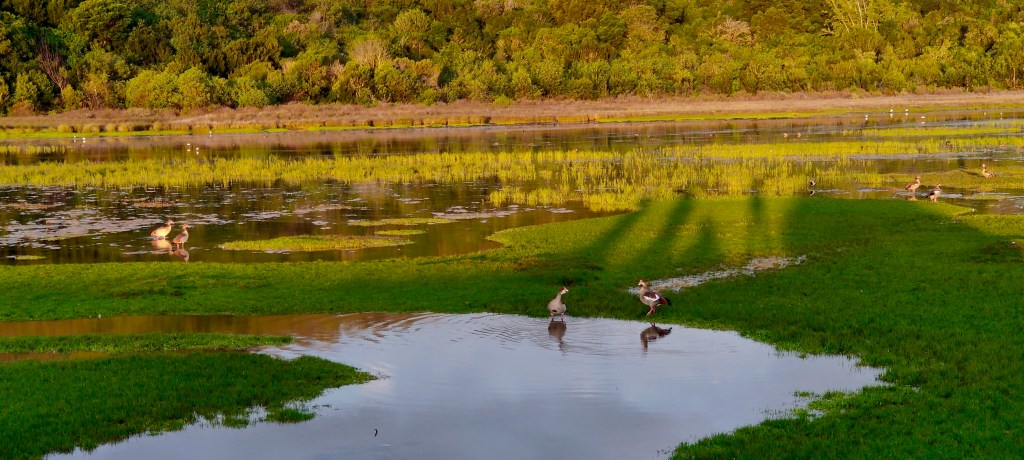
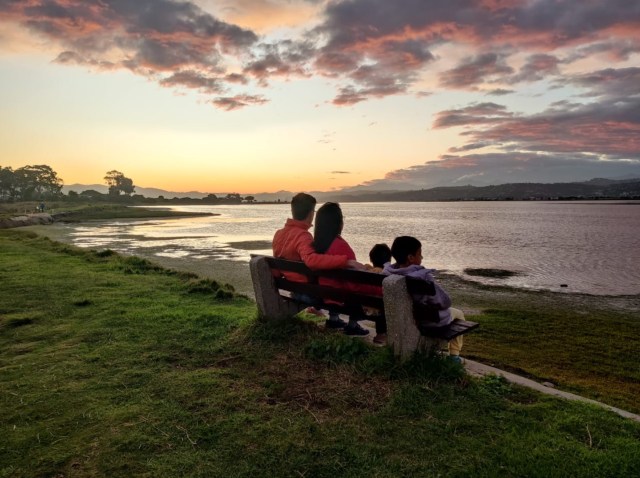
Brenton on Sea is a short drive west from Knysna and has a lovely beach as also some cute cottages to stay.
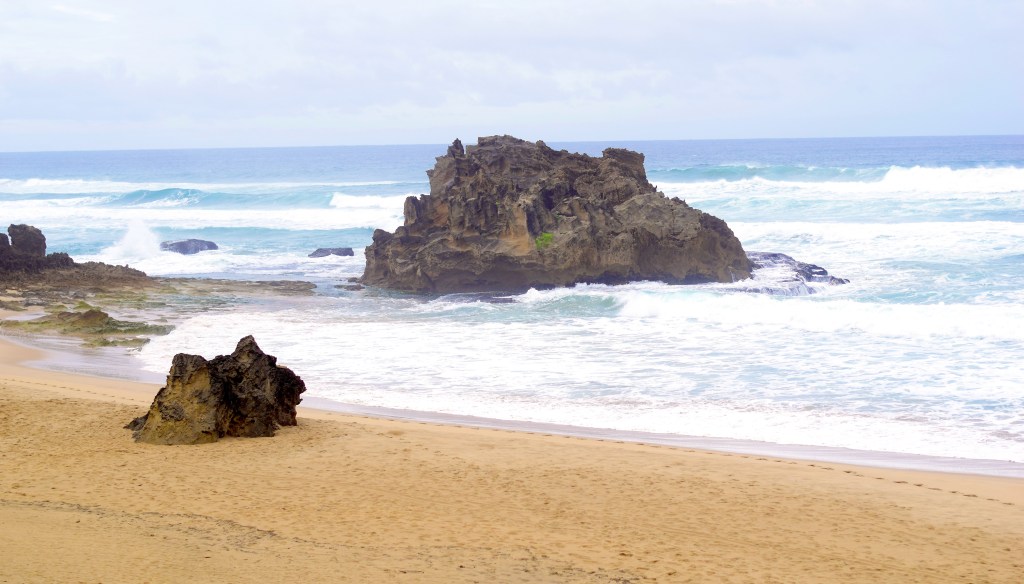
You can consider driving along the Seven Passes Route while traveling from Knysna to Mossel Bay. This is a beautiful old (it was completed in 1883!) meandering route between Knsyna and George which is part tar and part gravel, but suitable for most vehicles. It is 75 km long and spans 10 rivers and 7 gorges. There are multiple lookout points, short stopovers and treks, and picnic spots along the route to soak in the ever-changing landscape of forests, rivers and mountains. The downside though is that it is not along the ocean, and you would need to drive slower (60-80 kmph). You could also consider exploring only a couple of passes and then returning to the main route along N2.
https://www.google.com/maps/d/u/0/viewer?mid=1uqeXs2wNmYo6GpvLqRWtMkNNuM8&ll=-33.97433608189191%2C22.748025000000016&z=11THINGS TO DO FROM MOSSEL BAY:
The western end of the Garden Route, Mossel Bay offers some great spots for both relaxing and adventure.
You can relax and soak in the sun at Santos Beach, Diaz Beach, or Great Brak River Beach. Surfing lessons are an option at Diaz Beach.
You can drive your adrenaline up with Africa’s highest tandem skydive over here or with shark cage diving.
You can explore wildlife at Botlierskop Game Reserve, which offers safaris, bushwalks and horseback trails.
A popular option is to do a day trip to Oudtshoorn, an 85 km (one hour fifteen min) drive from Mossel Bay. Its main attraction is the Cango Caves, a remarkable system of caves and tunnels with many stalactites, stalagmites and interesting rock formations. It offers a regular an hour-long heritage tour and a 90 min long adventure tour, where you get to crawl along narrow tunnels and passages and get a feel of spelunking! The other attraction is the Ostrich Farm (more than one have now mushroomed there), where you can get to observe, touch, feed and ummm.. even eat different species of ostriches (and their eggs). Similar farms are also present near Cape Town, and you may consider going there as well if you wish to avoid the drive to Oudtshoorn.
THINGS TO DO NEAR HERMANUS:
Hermanus is a whale watching and shark cage hub en route Mossel Bay to Cape Town, about 3.5 hours from Mossel Bay. You should consider spending a night around Hermanus or the nearby Gansbaai to break the long drive. There are some lovely airbnbs along this stretch where you can even hear the whales at night while sleeping in your room during peak season! We spent a night at Gansbaai despite it not being the whale season, and are yet so glad about it!
An interesting hour long detour along the route is to go to Cape Agulhas, the southernmost tip of Africa and the point where the Atlantic and Indian Oceans meet (yes; it is Cape Agulhas and not Cape of Good Hope). Although nowhere close to the spectacular views at Cape Point, an imposing lighthouse and an old wrecked ship bedeck the landscape.
Apart from the aquatic adventures, we would highly recommend going to Klipgat Caves at the Walker Bay Nature Reserve, about ten min from Gansbaai. It needs a short 20 min trek to reach there. The caves were inhabited by Stone Age men 80000-50000 years ago, and have very interesting information boards explaining the daily lives of our Stone Age ancestors. A bigger bonus is some captivating views of the sea from the caves. We could have easily spent hours at the caves soaking in the nature.
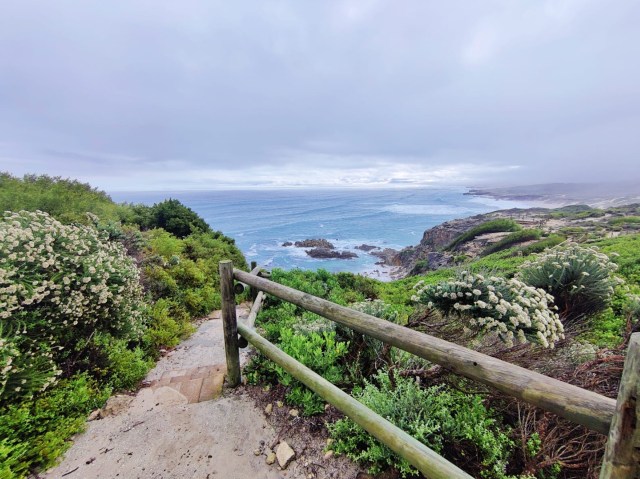
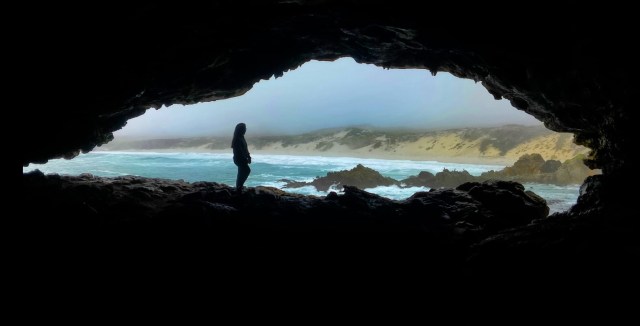
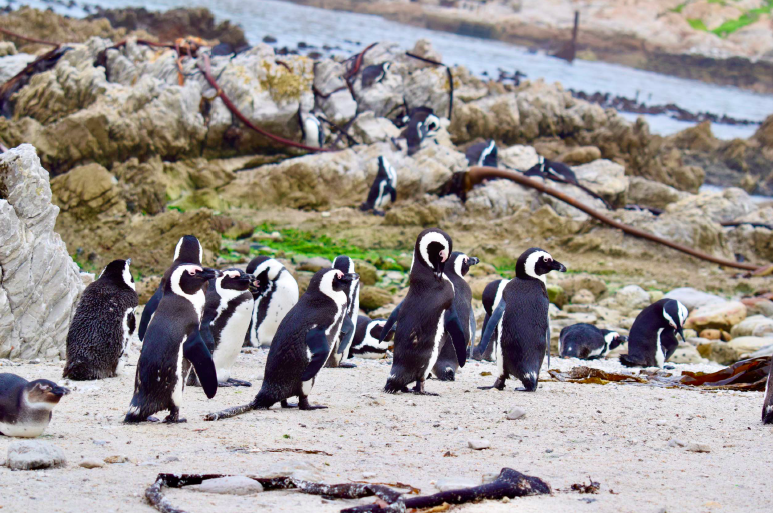
We would recommend driving to Cape Town along the spectacular oceanside R44 route from Hermanus. You simply must take a stop at the quaint coastal town of Betty’s Bay and go to the penguin colony at Stony Point Nature Reserve. It houses the cutest little creatures you will see over the entire vacation. The African penguins have an endangered status, but live openly along this stretch. You will see little penguin signs along your drive once you reach Betty’s Bay, directing you towards the colony. We were greeted at the parking lot by a signboard which asked us to check under our cars for penguins, and lo and behold, we could see penguins (including a penguin nest with a teeny-tiny chick) right behind the signboard, and there were three penguins strolling along the parking lot as well!
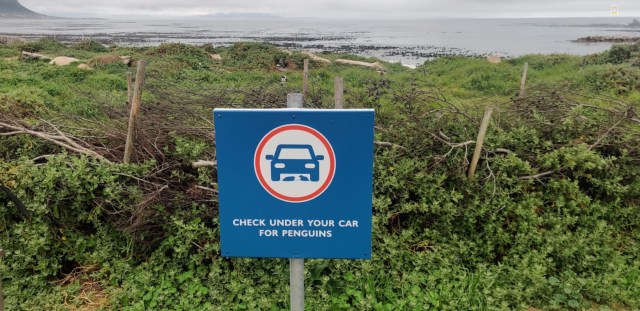
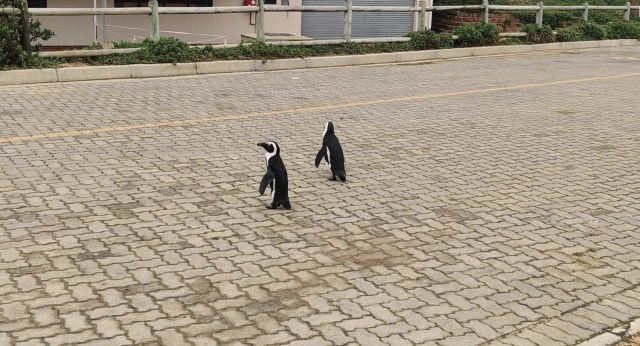
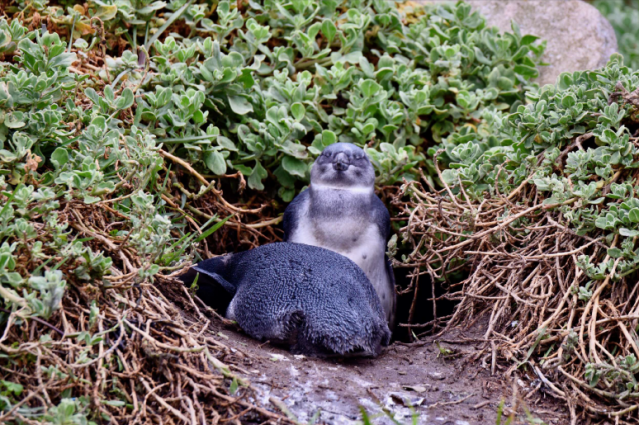
There is a short boardwalk towards the penguin colony and you get enraptured by these endearing little creatures waddling, swimming, squawking (their sound resembles that of a donkey, so much so that African penguins were earlier called – horror of horrors – jackass penguins), preening, and doing all those things which make penguins so cute.
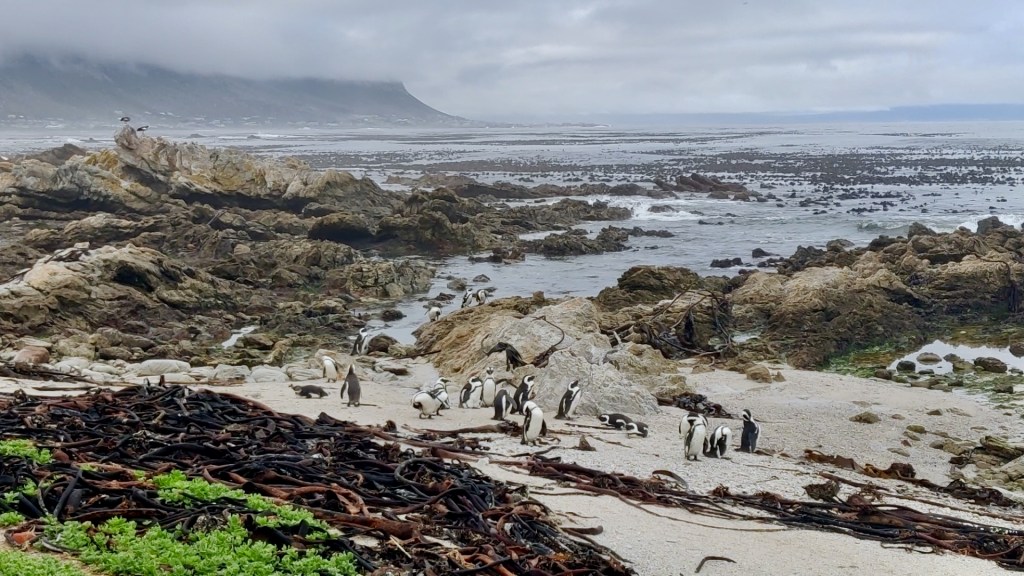
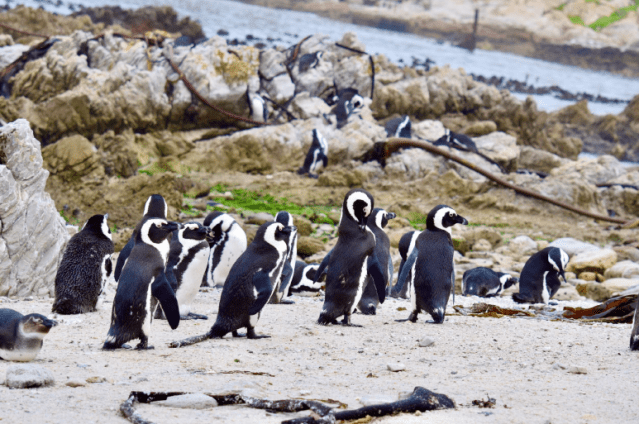
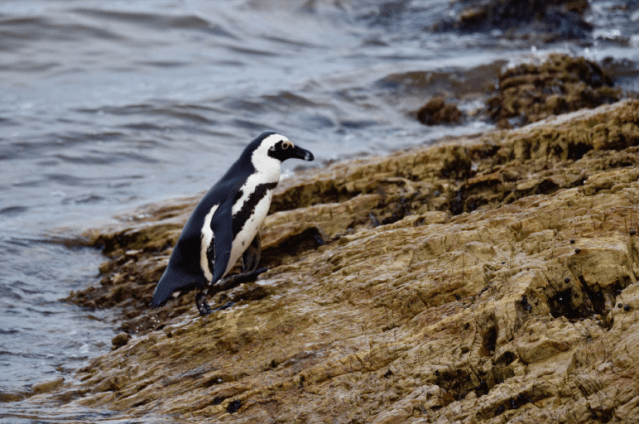
There is a lovely unnamed viewpoint close by where we enjoyed a beautiful sunset after the penguin show, before driving to Cape Town.
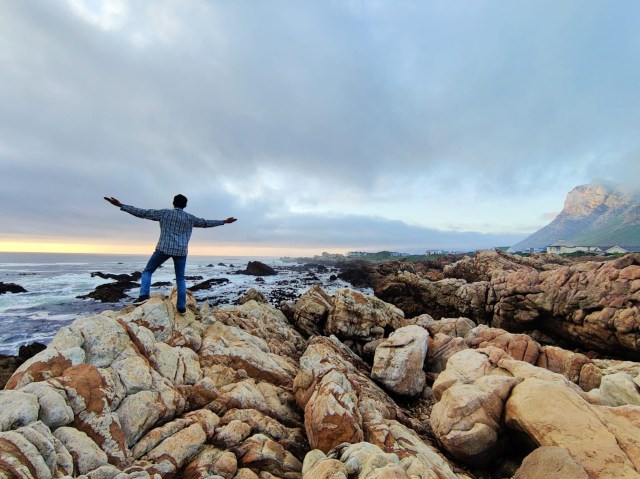
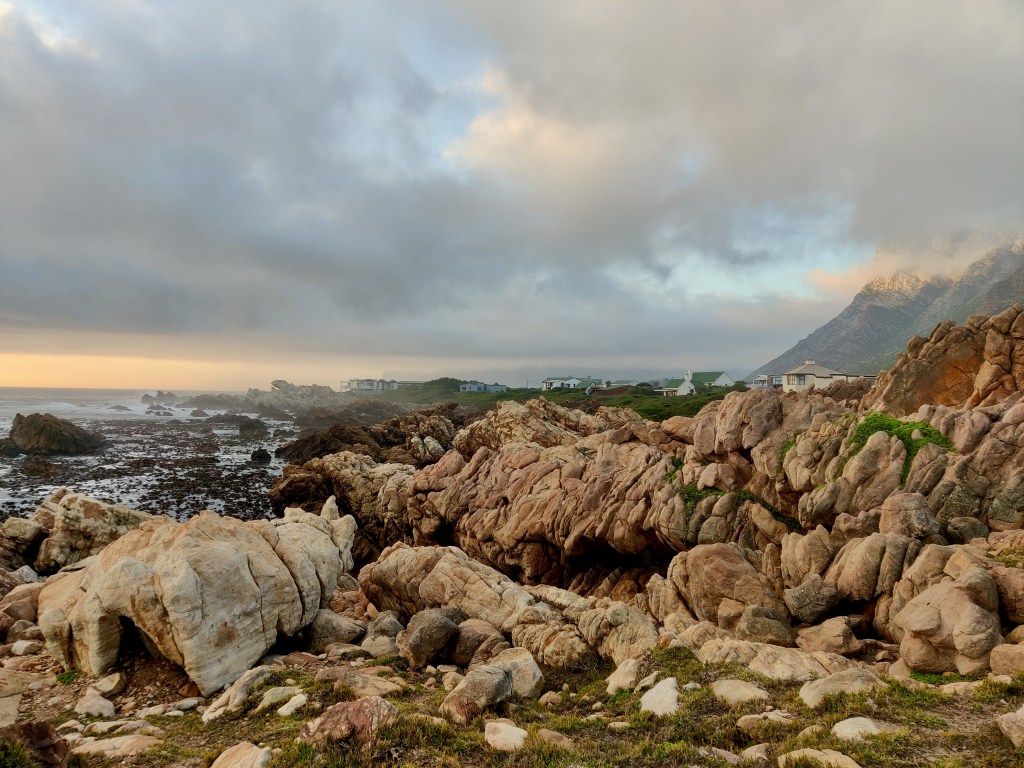
You can also consider driving along the vineyards of the Cape Winelands, or going to the Cape Peninsula and Cape of Good Hope/Boulders Beach en route Cape Town. You could skip Betty’s Bay if you plan to go to Boulders Beach.
PLACES TO EAT:
There is no shortage of good food along the Garden Route, but vegetarian food may require some searching. Here is a list of suggestions (east to west again)!
Fynboshoek Cheese in Tsitsikamma serves everything entirely cheese-based and is a drool worthy experience! The downside is that you have to have a booking and its open only between 12-2 pm. Don’t miss this one!
Bramon Boutique Wine Estate in the Crags close to Plett is located in the middle of a vineyard and serves great tapas and Mediterranean dishes. The original owners have however sold it off and the recent reviews are more mixed, so do check them out before booking this place (open 11-4 pm).
Ristorante Enrico is another great option close by, with great Italian fare and vegetarian options.
Two recommended veg-friendly restaurants around Knysna serving delicious fare are Café Mario and Muse Fusion Food.
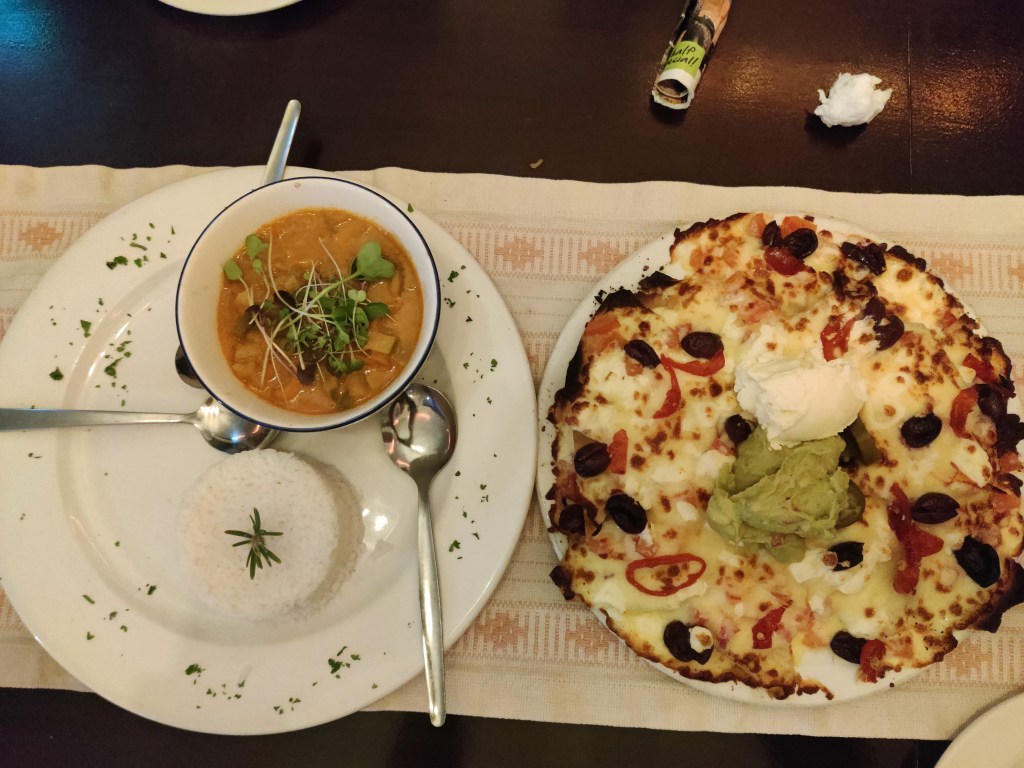
Carola Ann’s at Mossel Bay is a delightful option for Mediterranean cuisine; it also has a cute Deli where they sell their homemade bakery products.
The Green Shed Coffee Roastery at Wilderness and the Blue Shed Coffee Roastery at Mossel Bay are also worth checking out for coffee enthusiasts.
We end the blog with our suggested itinerary for a single South African trip. This is probably our longest blog and still doesn’t feel complete, given how much there is to do along this beautiful route! Check out our blogs on things to do at Cape Town and on planning the perfect South African safari for more details as well!
OUR SUGGESTED ITINERARY:
The ideal way to explore South Africa would be over two trips of 10-14 days each. You can explore Kruger and the Blyde River Canyon on one trip, and the Garden Route and Cape Town over another.
If however, you wish to cover majority over one trip, here is what we would suggest.
Day 1: Land at Jo’burg.
Day 2: Explore the Cradle of Humankind. If you are not going to a private game reserve at Kruger, go to the Lion Safari / Bothongo.
Day 3: Leave for Kruger early morning at 7 am. You may do an evening safari there once you reach.
Day 4 and 5: Do a full day safaris/bushwalks at Kruger National Park or a private game reserve near Kruger. You could consider spending one day in each as well.
Day 6: Drive back to Jo’burg after the morning safari. Catch an evening flight or next day early morning flight to George or Port Elizabeth (Gqeberha). Rent a car for the rest of the trip. Spend the night at Knysna or Stormsrivier village, depending on where you land.
Day 7: Start exploring the Garden Route. There are tonnes of things you can do here, depending on whether you want to go for natural beauty or adventure or relaxation or a mix of all of these. We would suggest starting by going to the suspension bridge at Tsitsikamma National Park and/or kayaking along the Storms River here. The Bloukrans Bungee Jumping is also close by, for those interested. You can go to the Knsyna Heads and Leisure Island for the sunset if you still have time. Spend the night at Plettenberg Bay/ Knysna.
Day 8: Consider trekking along Robberg Nature Reserve or doing a boat tour for the seals. Another option is to drive to Oudtshoorn for the Ostrich Farm and the Cango Caves. Spend the night at Mossel Bay or Kynsna.
Day 9: Drive to Hermanus/Gansbaai. Enjoy whale watching if it’s the season. Consider diving in a shark cage if this excites you. Do not miss going to Klipgat caves either today or the next day. Spend the night there.
Day 10: Drive to Betty’s Bay or Boulder Beach for the penguins. You can extend the trip to go to the Cape of Good Hope (Cape Point) as well. Drive to Cape Town for the night. Another option is to drive via Stellenbosch to taste South Africa’s best wines, and then take a separate day trip to the Cape Peninsula from Cape Town.
Day 11-13: Explore Cape Town. Things to do would include trekking or taking the cable car up to the Table Mountain, do a walking tour of Cape Town, savoring the lunch at Kalk Bay, going to Robben Island, and enjoying the sunset with the Table view at Bloubergstrand Beach.
Day 14: Fly back home with happy memories!
Given the tonnes of stuff to do, you can always add one or two more nights along Garden Route and at Kruger (especially the former); there is no way you will ever get enough of the beauty South Africa has to offer.
 Travelously yours
Pingback: Exploring the Wild Side of South Africa: Planning the Perfect Kruger Safari Adventure – Travelously yours
Pingback: Top 10 Things to Do in Cape Town – Travelously yours