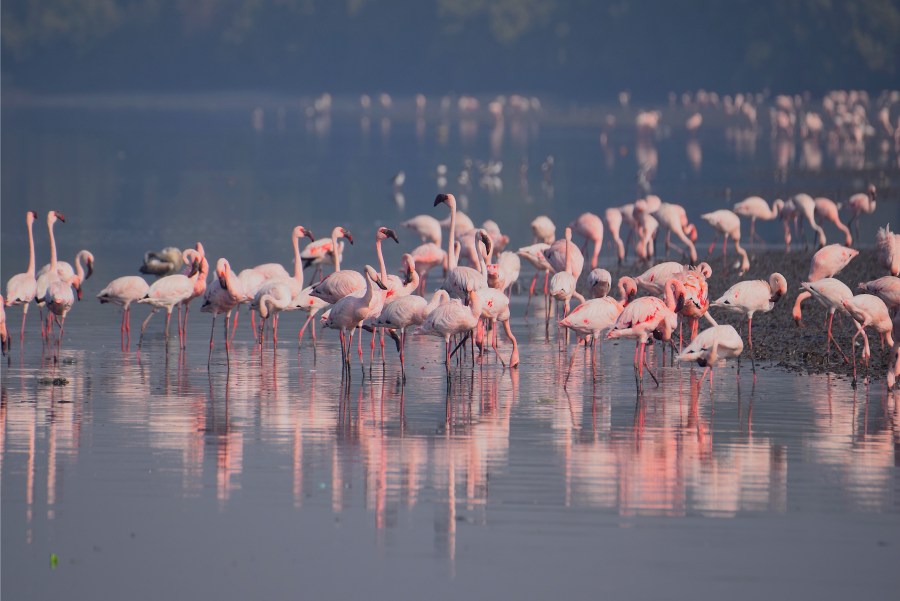
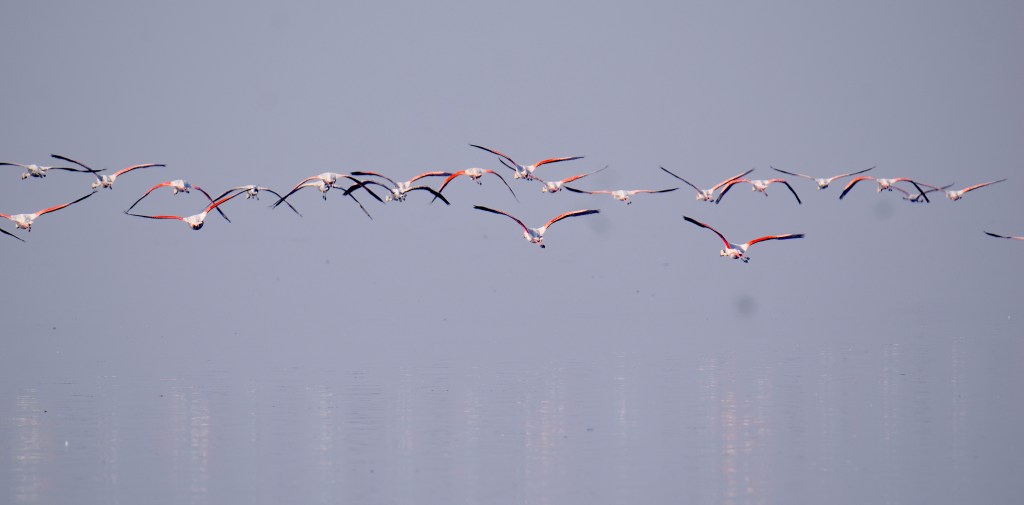
In the bustling urban expanse of Mumbai and Thane lies a hidden gem, that transforms into a spectacle every winter: a breathtaking congregation of over 100,000 flamingos. Amidst the concrete jungle, these majestic birds create a picturesque sea of pink, captivating everyone’s hearts.
The best spots to view the flamingos include the Bhandup pumping station, the Thane Creek Flamingo Sanctuary, and the CBD Belapur Jetty. The Sewri Mangrove Park, another popular spot, has been affected and closed due to the construction of the Atal Bridge, but flamingos have indeed been spotted back there this year (so fingers crossed for 2025!). Few other publicly accessible sites for flamingo spotting including the Karave Wetland Flamingo Point next to TS Chanakya Maritime Institute, the Seawoods Flamingo Refuge, and the DPS Lake Point.
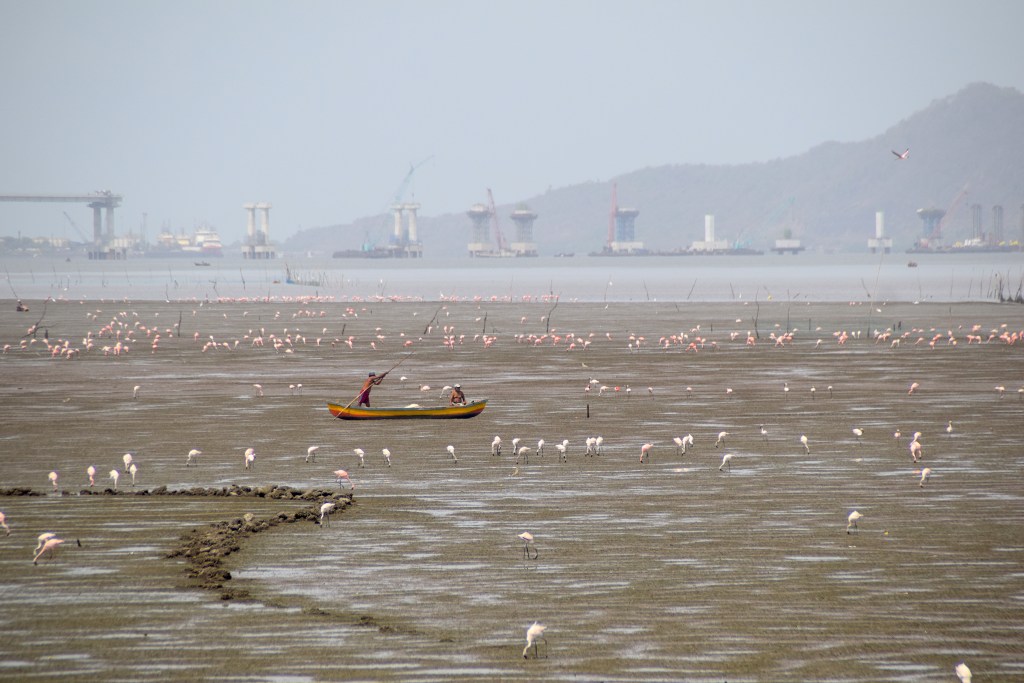
We invite you to join us as we recount our unforgettable journey at the Bhandup pumping station—a destination we firmly believe should be on the itinerary of every winter visitor to Mumbai.
Best time and place:
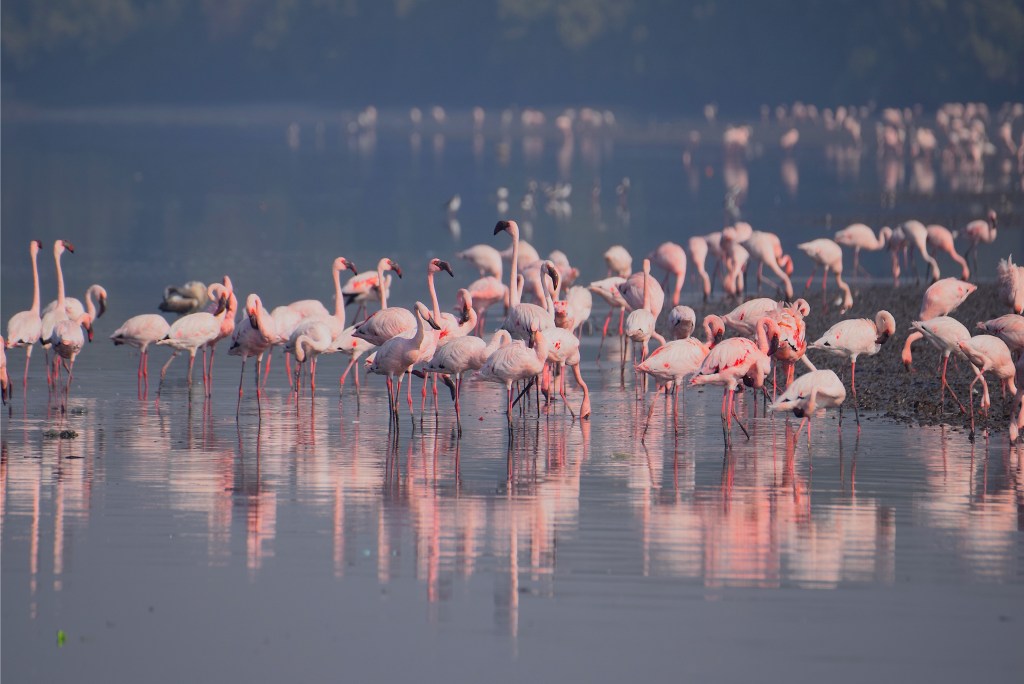
Winter (Jan-April) are great to view the flamingos, but it would be a good idea to check with an expert before venturing there. The pink color deepens in the later months (we’ll explain why ahead!). Flamingos can technically be seen throughout the year as those too young or too old to fly back continue to remain here for the rest of the year. The density though, is much lesser during other months.
The Thane sanctuary boasts a Coastal & Marine Biodiversity Centre museum and a picturesque Mangrove walking trail. On the other hand, the Bhandup jetty offers a serene boat ride experience, complemented by a charming butterfly park. However, accessibility might be challenging for those with mobility issues, as boarding the boat involves descending a few steps. We were told that the CBD Belapur Jetty is slightly better accessible in that regard.
The boat rides can be booked directly with the jetty (you need to pre-book though – call the office at +919987673737), but we would recommend going with a guide so that you are able to maximize spotting birds beyond the flamingos, and also learn more details about the birds. We booked via the passionate Wild Nest group. The boat timings will vary depending on the tide, and different times offer different behaviors of the birds. You would see more birds feeding during low tide and more in flight during the high tide. If you choose to go in the morning, we would definitely recommend going there as soon as it opens (we know it can get pretty challenging to get up early morning in the winter, but it’s really worth it). We took the 7.30 am tour.
You can purchase entry tickets at the Ticket Window. They cost INR 55 per adult and INR 25 per child, with INR 165 each for Car Parking and for using the camera. Washrooms are available only at the Ticket Counter but are very poorly maintained. The Jetty is another 5 minutes ahead. Car parking is available.
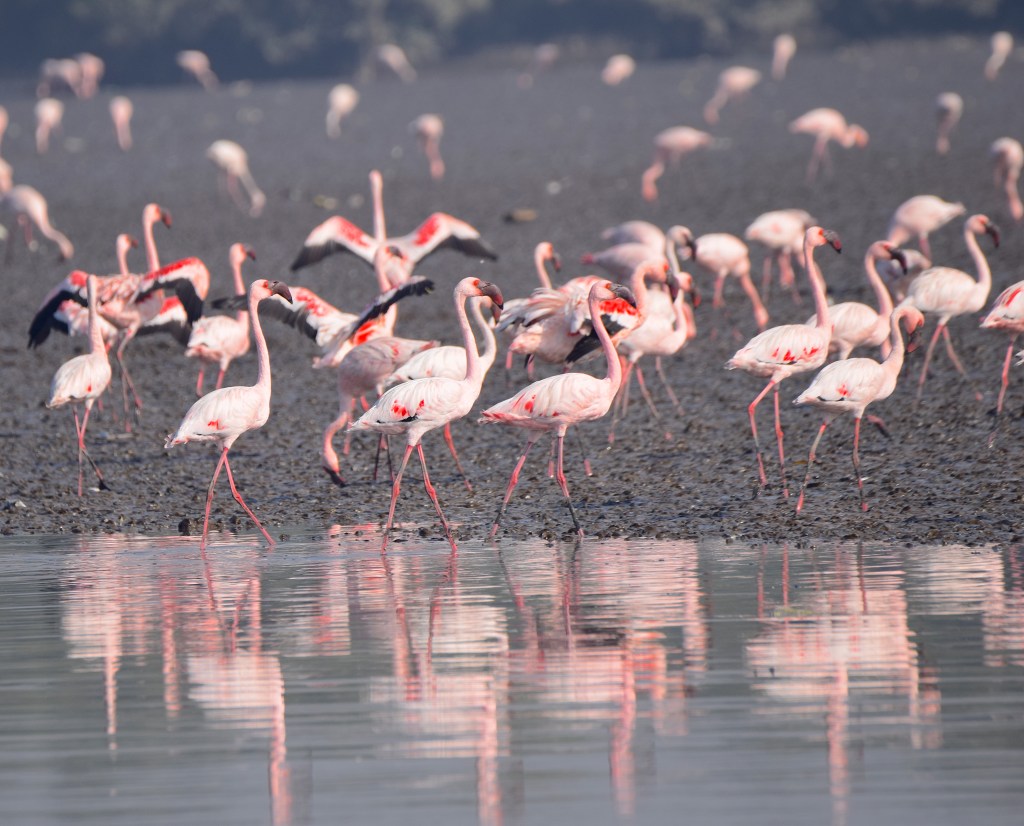
Exploring the Creek: Stretching over 26 kilometers, Thane Creek stands as Asia’s largest creek, nestled at the mouth of the Ulhas River. In August 2015, the northern segment of the creek was designated as a Flamingo Sanctuary, marking Maharashtra’s second Marine Sanctuary after Malvan. It hosts an impressive array of approximately 200 bird species. As a matter of pride, it became India’s first Ramsar site (a wetland site designated to be of international importance) located within an urban metropolis in 2022. Apart from the flamingos, other migratory birds are also present at the creek, many having flown from Europe or Siberia in search of warmer weather.
Why do flamingos flock Mumbai?
Simply put, the flamingos are attracted by the highly polluted sewage. The industrial discharge which fills up the creek has provided the nitrate and phosphate levels that are just about right for the growth of the blue-green algae, the chief food source for flamingos. Essentially, the sewage in areas like Bhandup contains the ideal levels of pollution for these elegant birds!
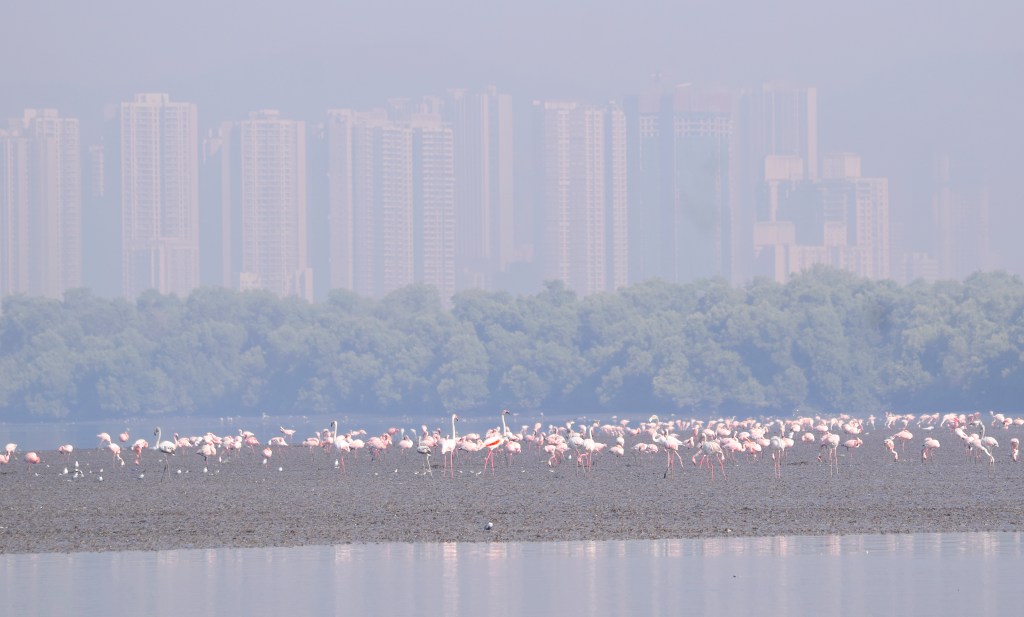
More about the flamingos:
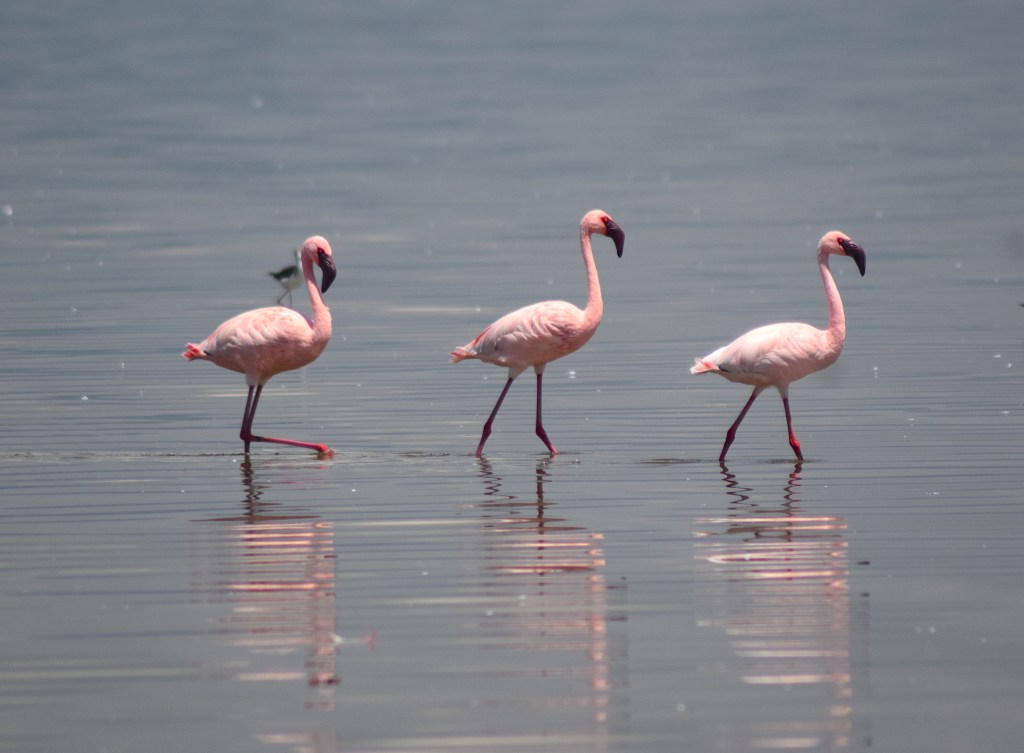
There are six species of flamingos found across the world, of which the largest (Greater Flamingo) and the smallest (Lesser Flamingo) ones are the two found in India. Kutch in Gujarat is home to the maximum number of flamingos, and is the breeding ground to most of them. The flamingos found at Mumbai predominantly migrate from the Greater and Lesser Rann of Kutch, India’s largest breeding ground for flamingos, as also from neighbouring countries. Here are some interesting facts about these beautiful birds.
1. The flamingos are so-called because they have an orange pink plumage on the wings, which look like ‘flames’ when they fly. The flamingos eat algae which contain alpha and beta carotenoid pigments, which lend them the pink color. Lesser flamingos eat mainly algae and are hence pinker, while greater flamingos also eat shrimps, fish, crabs etc and are comparatively less pink.
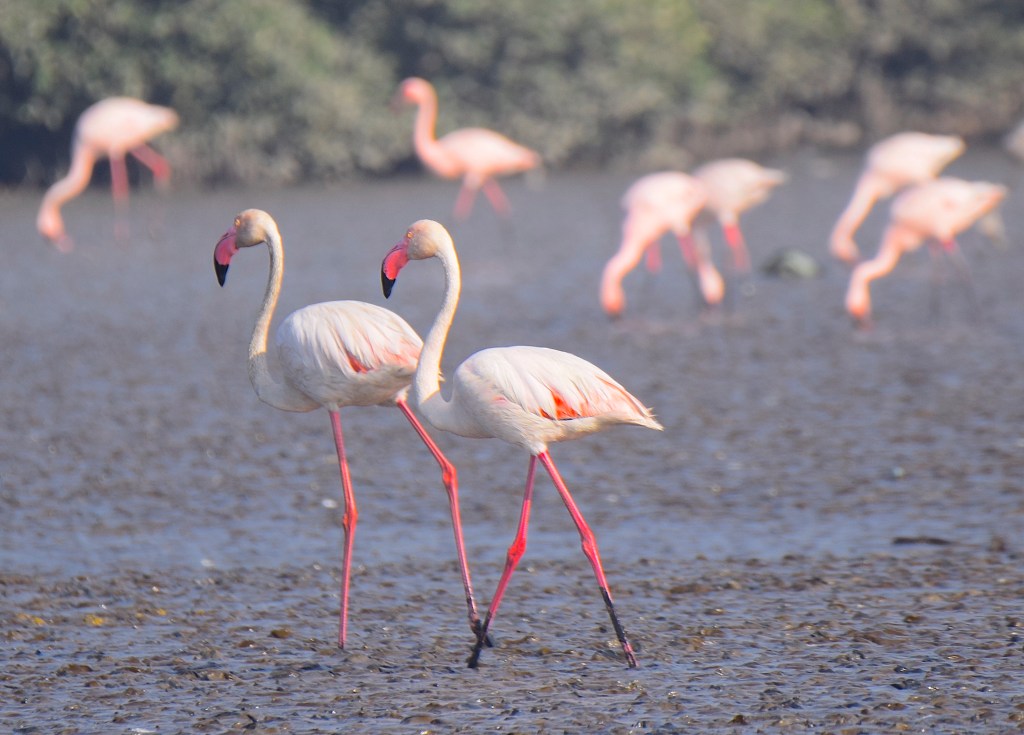
2. Flamingos work really hard on obtaining their food. They take in about 30 litres of mud daily to get about 150 gm algae! The kids have it relatively simpler – the parents regurgitate (yes, vomit!) the algae to feed the babies; this is called crop milk. It is pinkish red in color and can look like blood to the uninitiated. Check this viral video where it appears that the parent flamingo is sucking blood out of the baby (it is actually simply feeding the baby).
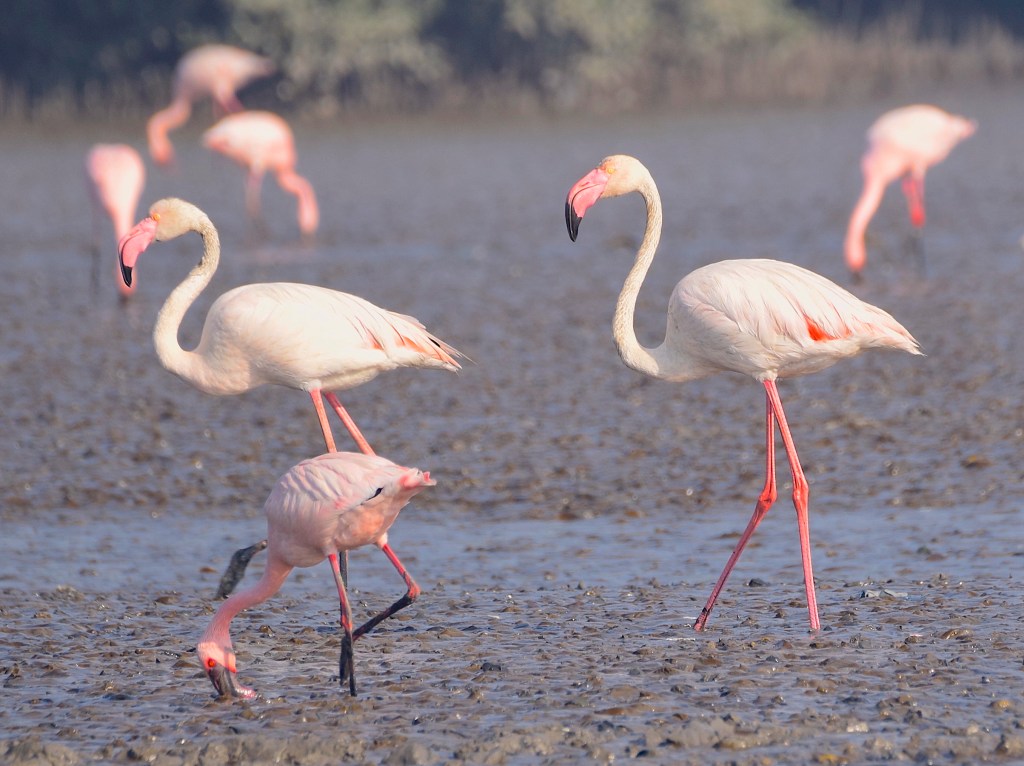
3. Flamingos are monogamous creatures! No wonder then, they have to work really hard to attract their mate. The flamingos dance in a very unique style, with entire groups of male flamingoes moving rhythmically together (it almost looks like a gliding movement) and nodding their heads sideways as they try to attract the attention of the female. The cooler the dance moves and the pinker the bird, the higher the chances of success! You can see an example of the dance here.
4. The baby flamingo has only one tooth, which it uses to the break the egg and come out. Once it is out, it loses the tooth.
5. The joint that you see along the legs is not the knee joint, but the ankle joint of the flamingo! The knee joint is rather high up, hidden under its feathers.
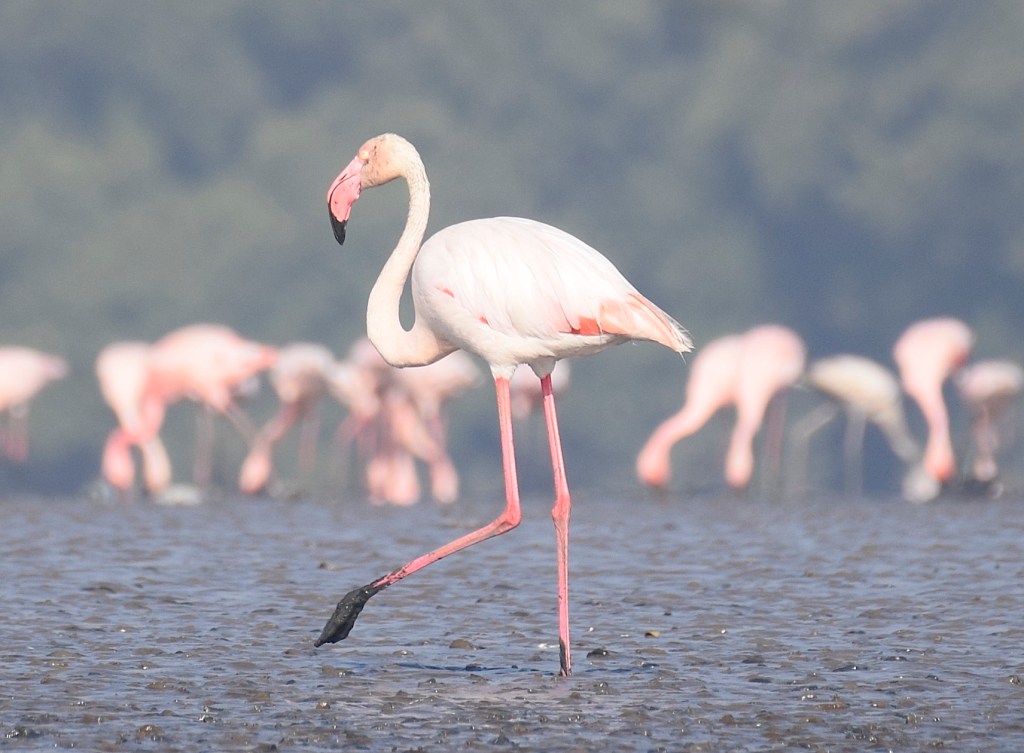
Bonus fact: A group of flamingos is aptly called a flamboyance. Can you think of any other animal which has such an awesome name for a group? We certainly can’t!
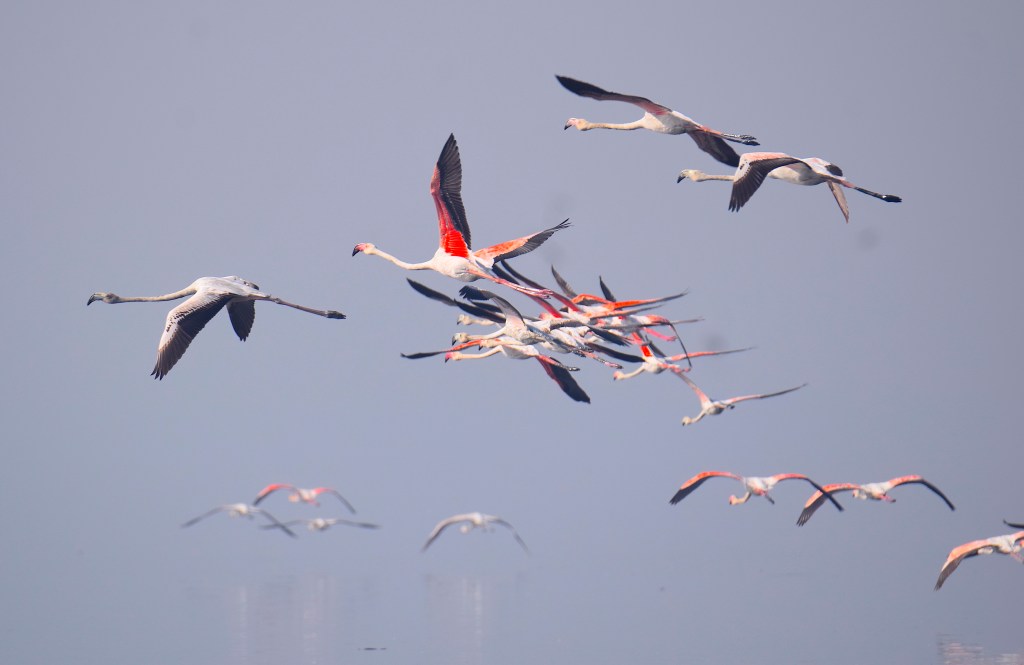
Other birds at the Creek:
While the flamingos remain the chief attraction, there are multiple other beautiful birds to spot as well! We were greeted by a few birds even before getting onto the jetty, including a red-breasted flycatcher and a drongo.
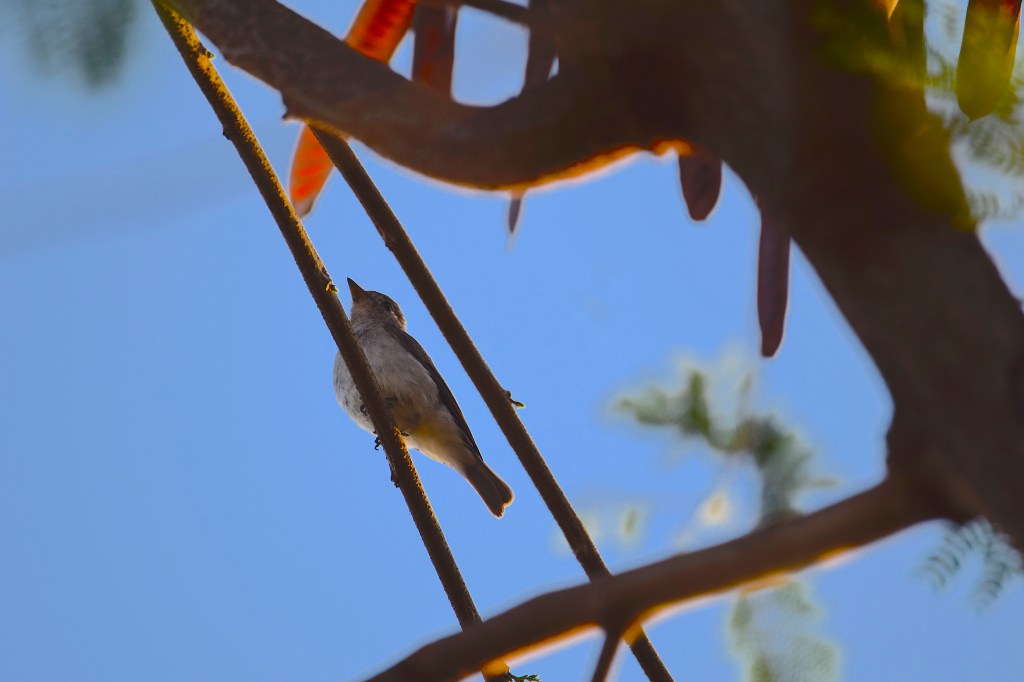
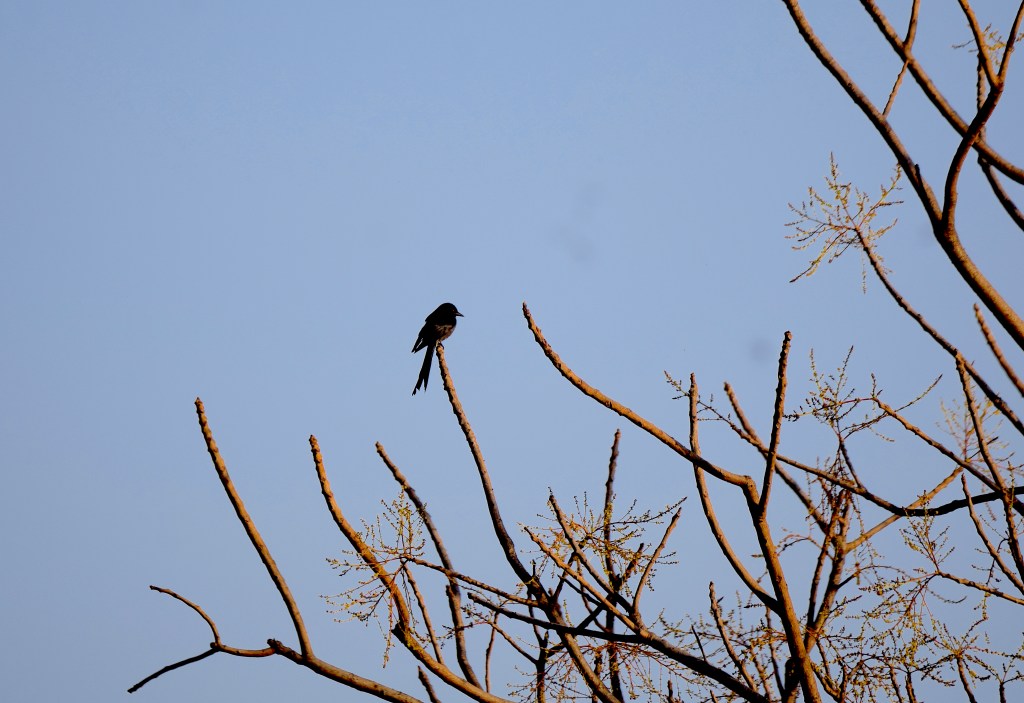
As we started off into the creek, we initially went past a number of different birds, including sandpipers and black-winged stilts.
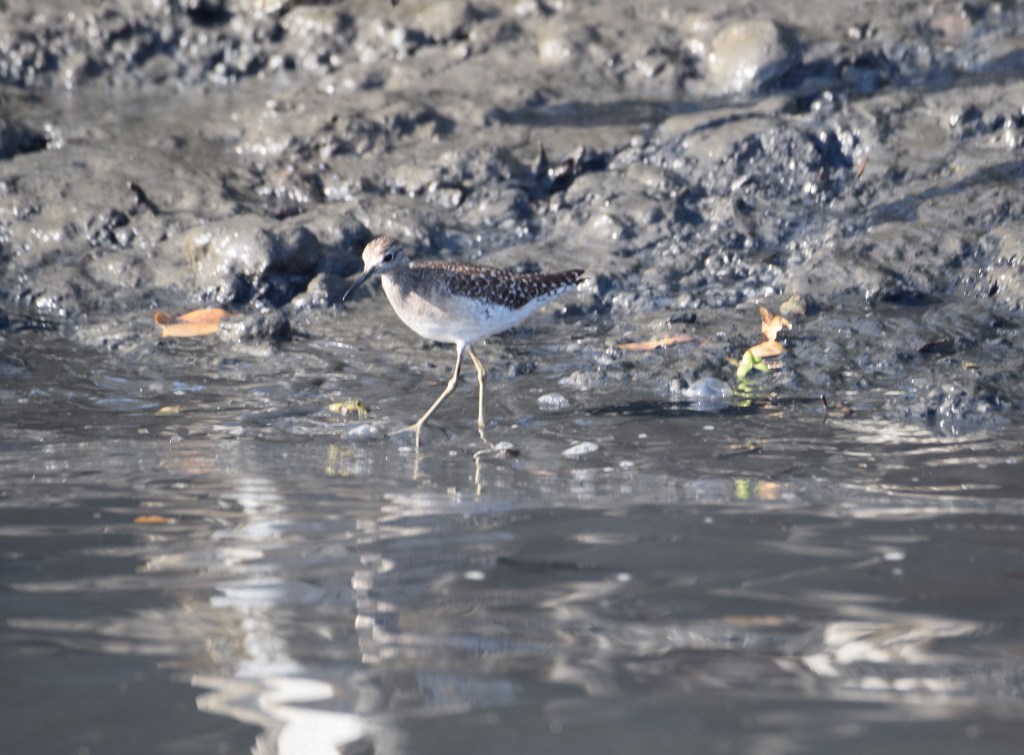
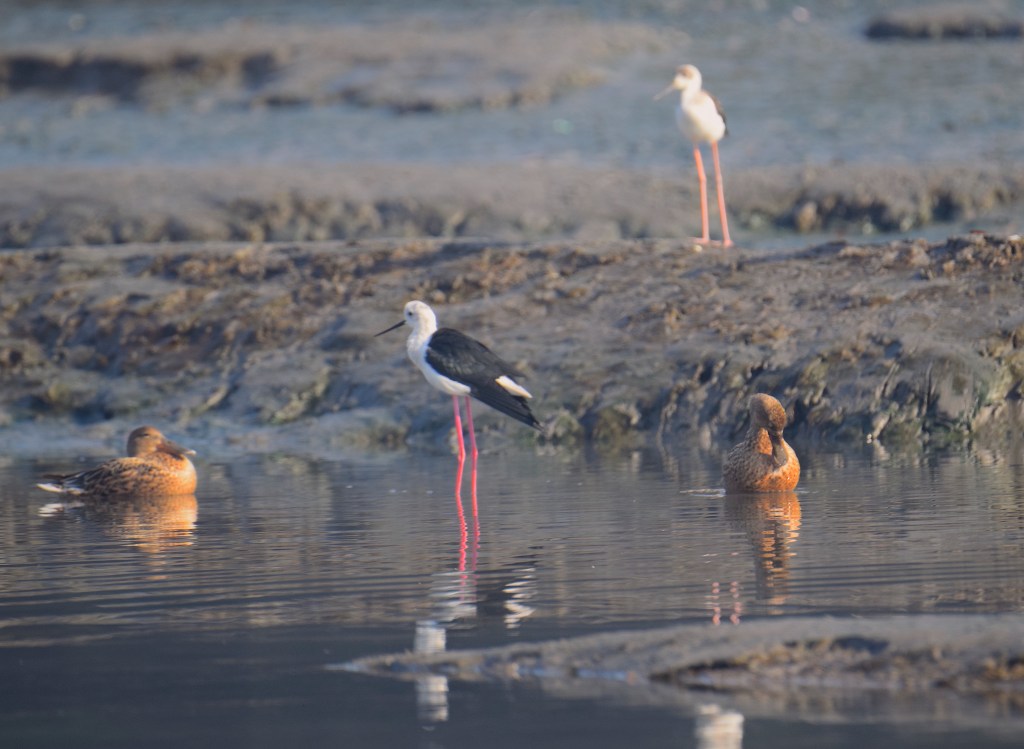
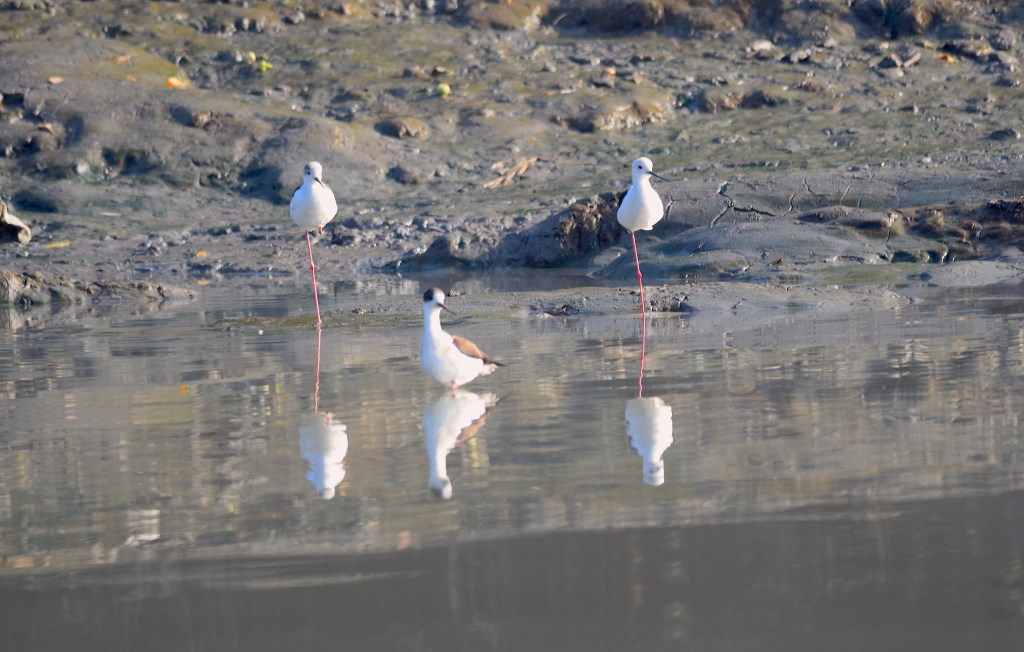
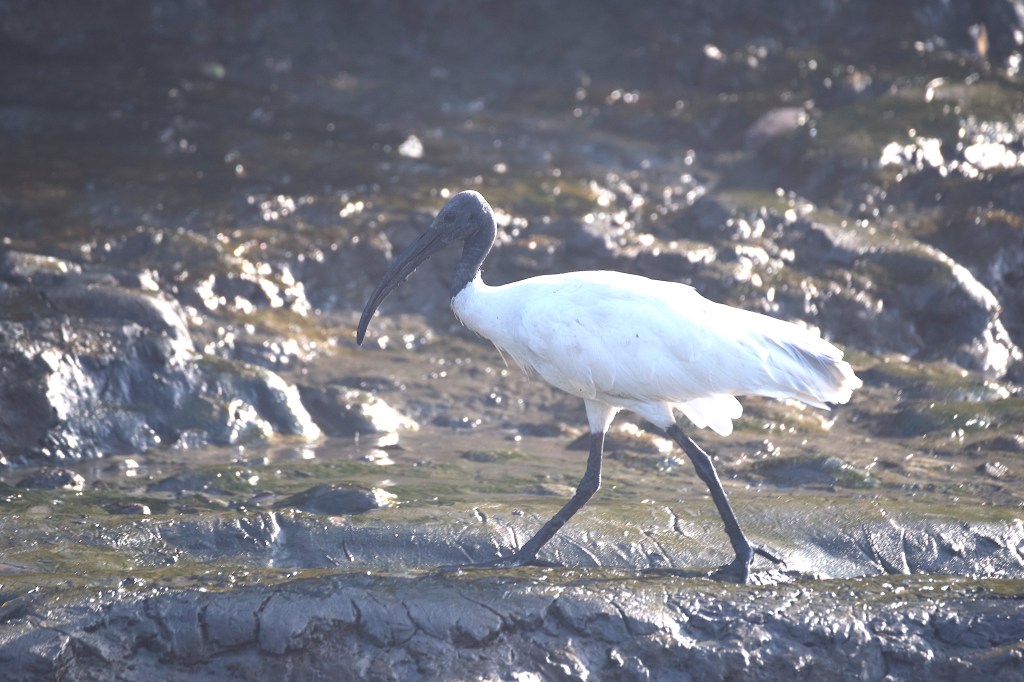
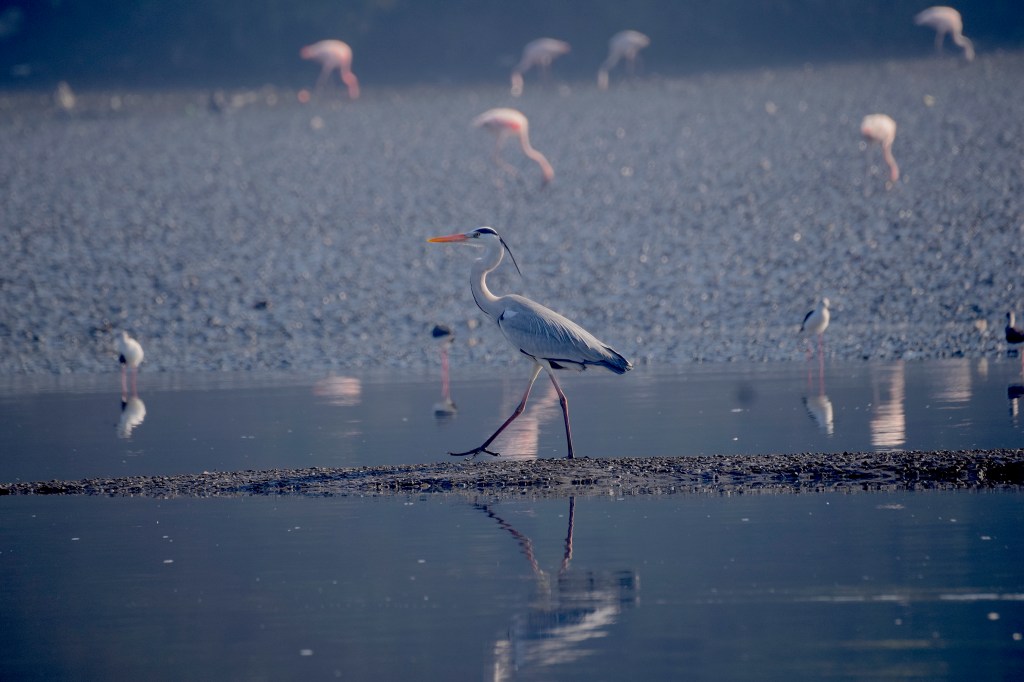
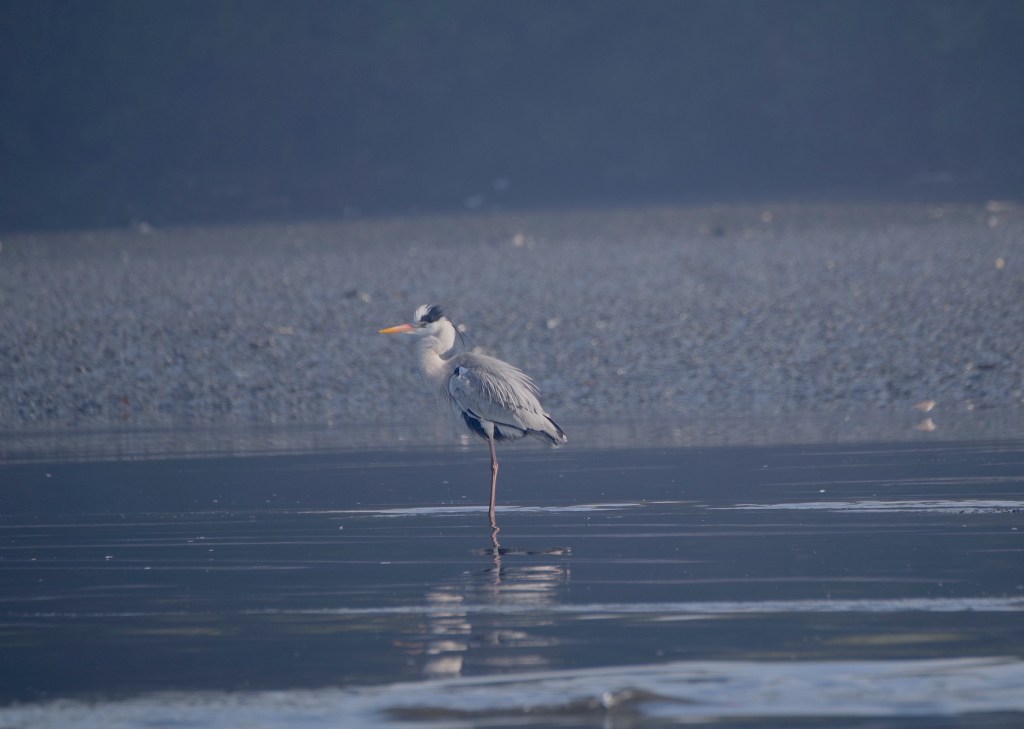
The black-head ibis and the grey heron were also star attractions.
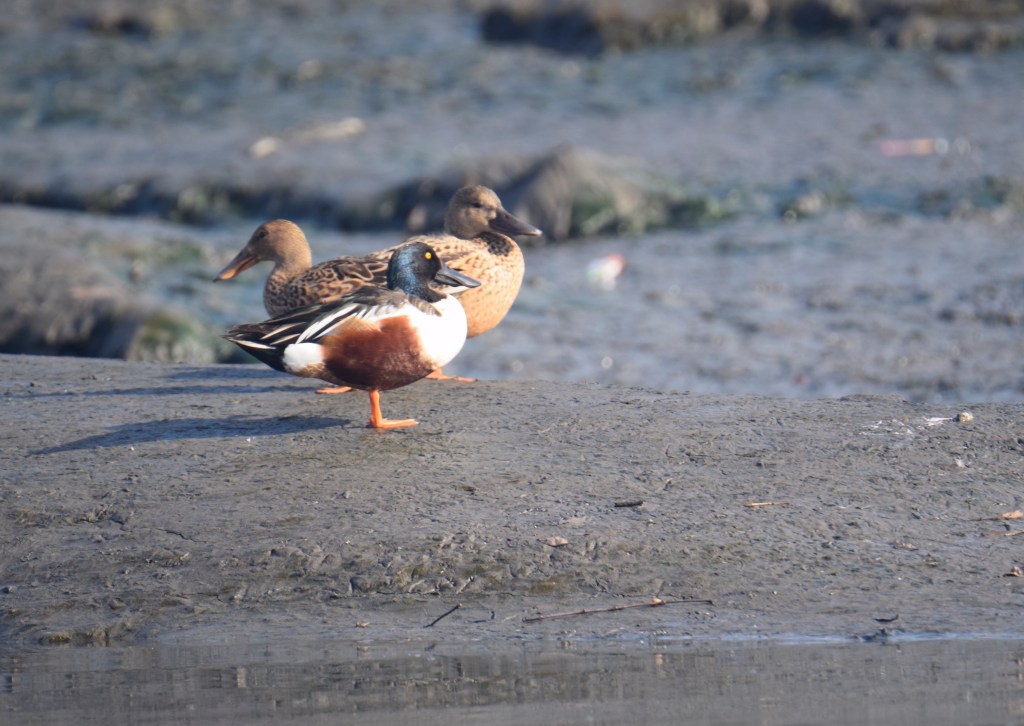
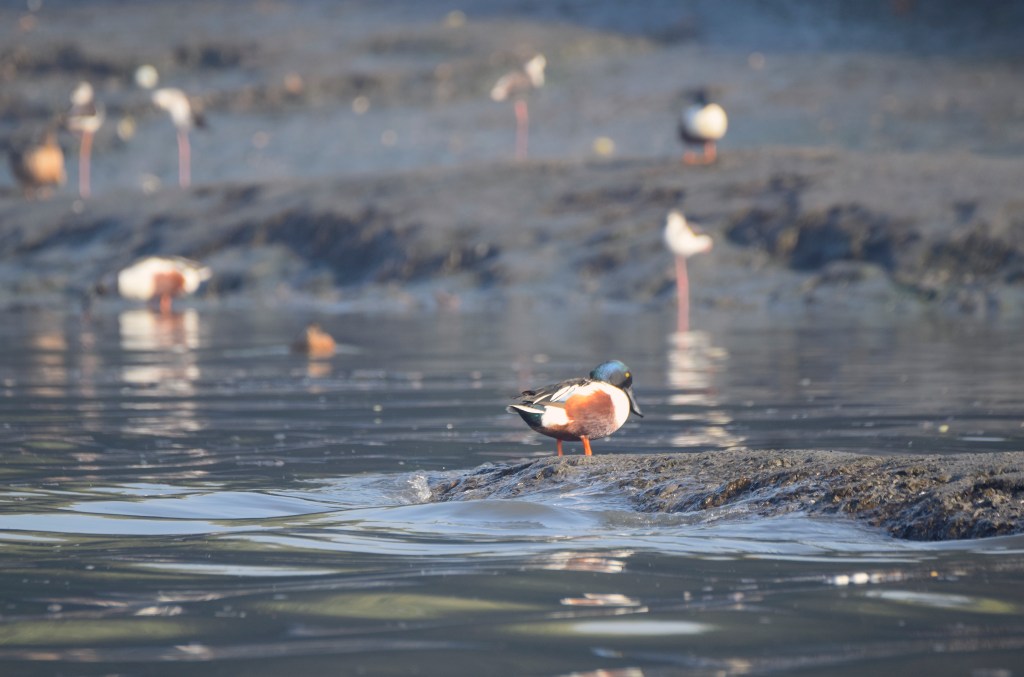
We also passed numerous shovelers. These beautiful ducks migrate all the way from Europe to enjoy the Mumbai summer. So-called due to their spatulated beaks resembling a shovel, the drake (male duck) looks handsome with a dark green head, white breast and chestnut belly and flanks. The female on the other hand is dull brown in color – this helps in camouflaging when they lay eggs.
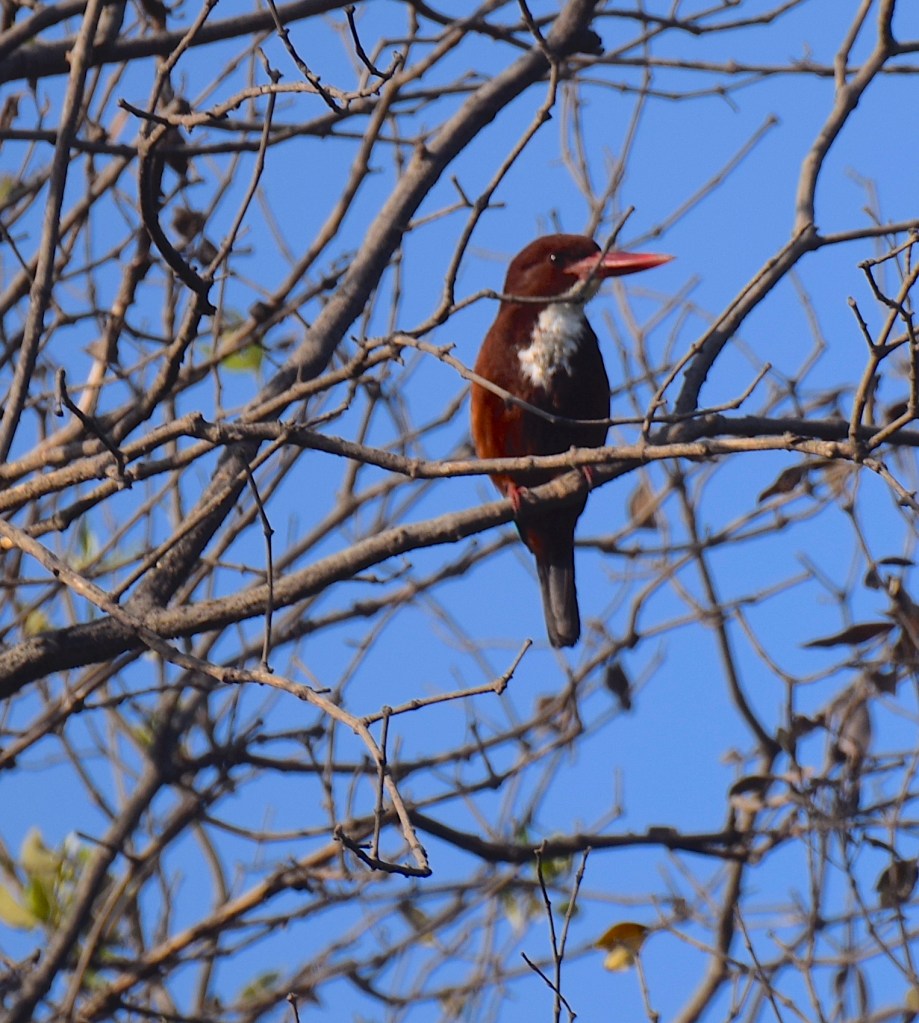
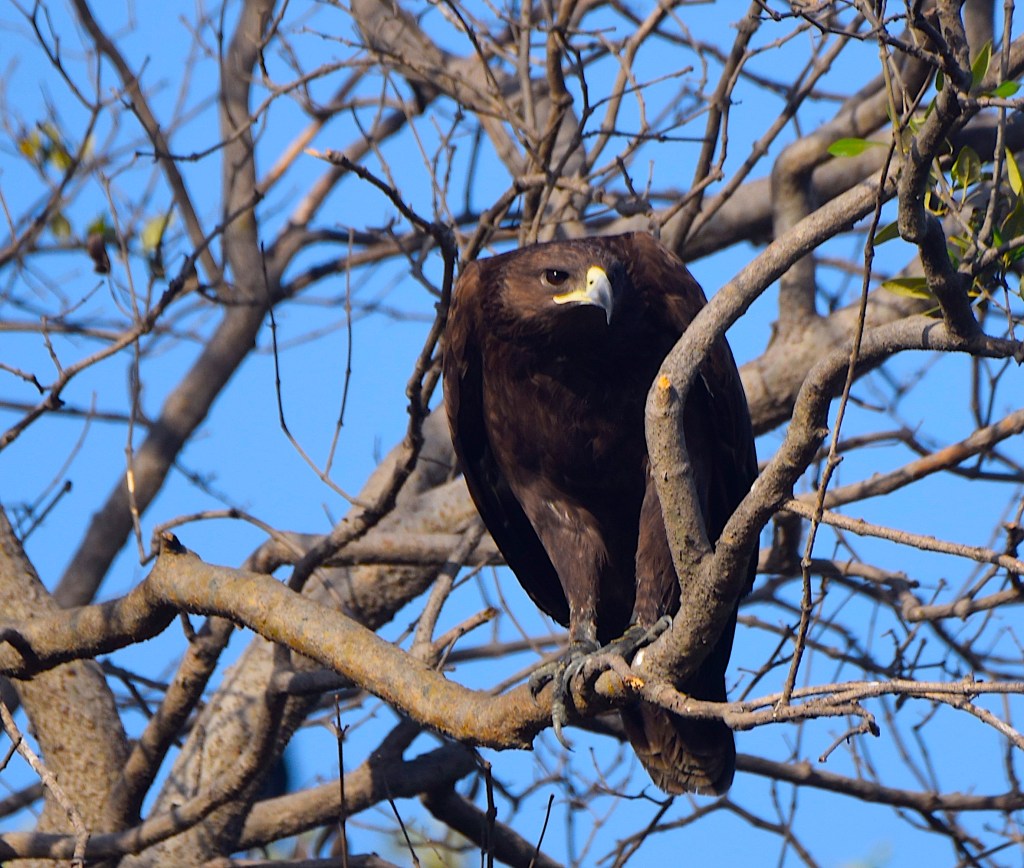
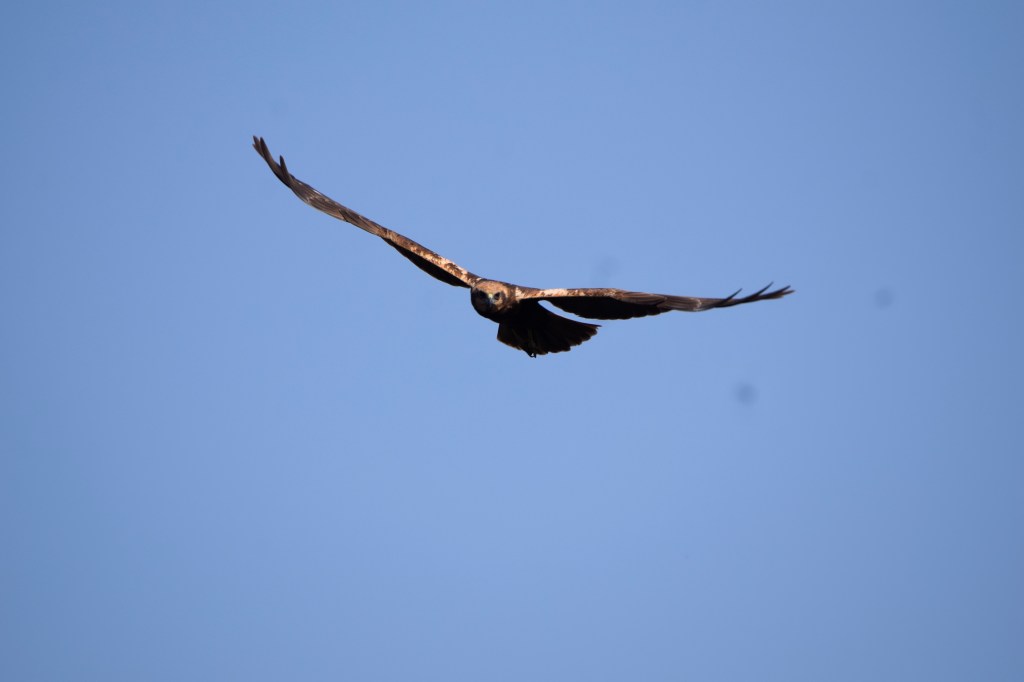
We were also lucky to catch a glimpse of the white-throated kingfisher relaxing over a branch, as also a majestic eagle.
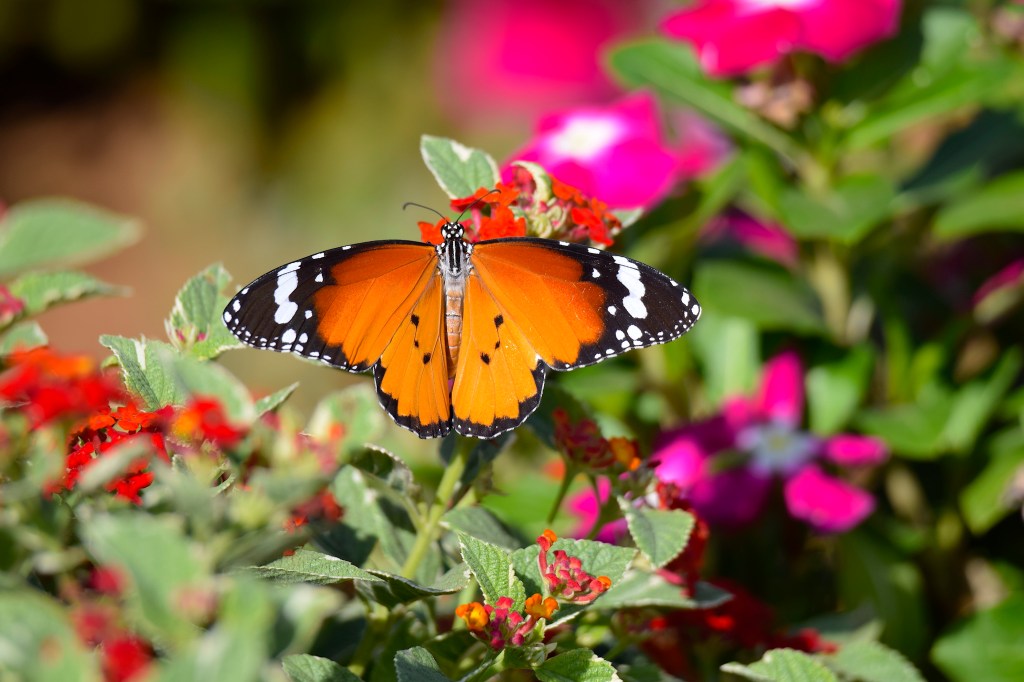
Once out of the boat, we also checked out the butterfly garden which did have a few butterflies, including the plain tiger butterfly (the kids loved it!). The salt pans along the drive back to the main road can also be checked out from close if someone is interested.
Capping off our exploration of Mumbai’s avian wonderland, the experience at Bhandup’s flamingo sanctuary will bring us back each year. As we bid farewell to these graceful creatures and the diverse birdlife at the creek, we carry with us not just memories but a profound appreciation for the natural treasures nestled within our bustling city. Whether you’re a seasoned birdwatcher, a nature enthusiast or simply a proud Mumbaikar, a visit to this avian paradise is a must-do.
 Travelously yours
It fascinates me to figure the distances they migrate from! Thank you for writing this, certainly exploring this when in Mumbai.
LikeLiked by 1 person