Belgium, the land of chocolates, waffles, fries, Tintin and the finest architecture! It is a place where you can have different flavors of beer over breakfast, lunch, and dinner every day of the year without falling short of new flavors. We visited Netherland and Belgium in early November over a 9-day trip (you can see our itinerary at the end of the blog), but are breaking the trip into three blogs to be able to justice to each of these amazing places. We explored Amsterdam, Rotterdam, Kinderdijk, and Geithoorn in Netherland, which are covered in our previous two blogs on things to do in Amsterdam and around Amsterdam. We will share our time in Belgium in this blog.
General tips:
Best time to go: Summer is naturally the best time to go. The upside of going slightly earlier or later though is that there is far lesser crowd.
Getting around: As expected, Belgium has excellent public transport. Brussels per se is eminently walkable, but you could get a day pass for 7.5 Euros (single 1-hour ticket costs 2.1 Euros, and there is a separate Mobib card worth 5 Euros which can be loaded with money for those staying longer). You could travel from Brussels to Ghent and Bruges by bus or by train, or rent a car like we did.
Brussels and Bruges are by far the two places to go, with Ghent being a convenient and highly recommended stopover en route. There are several other places that we would have loved to go to if we had more time.
We are sharing our itinerary and a few vegetarian restaurants, amongst other tidbits, on our google maps page. Here is the link: select ‘Belgium’ to see our stops.
BRUSSELS
The capital city of Belgium and home to the EU headquarters, Brussels is a perfect way to start exploring Belgium. Make sure you stay close to the Grand Place when you book your hotel. Here is our list of suggested things to do in Brussels.
1. Grand Place: When you go to Agra, you see the Taj Mahal; when you go to Brussels, you spend the maximum time at the Grand Place. The central square of Brussels, it is a UNESCO heritage site and probably one of the most beautiful squares in Europe. We would recommend going there both during daylight and at night to enjoy its beauty, particularly if you like photography. Lined by a series of beautiful buildings, ranging from the King’s House and the Town Hall to various guild houses, it makes a truly grand façade and an experience of wonder, particularly when you see it for the first time.
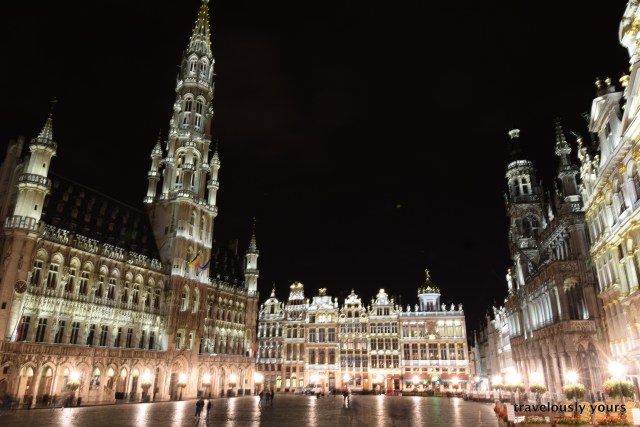
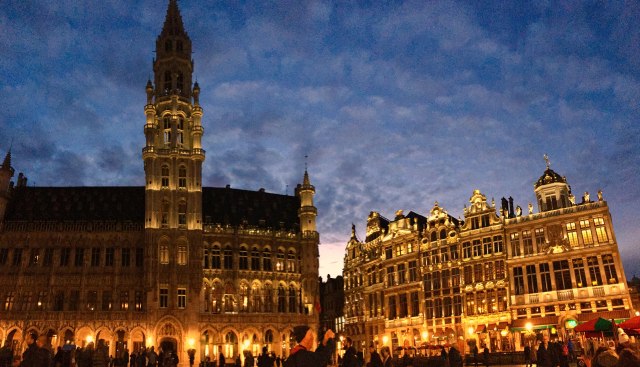
The Grand Place at night and at dusk
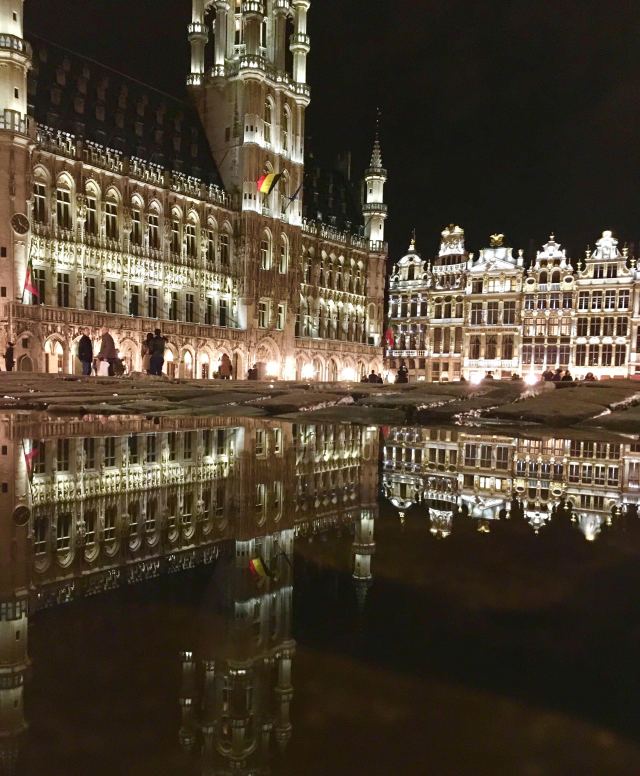
A reflective moment
2. Do a walking tour: This is a great way to explore the city and assimilate its history, geography, and culture, and tips on where to eat the best fries and chocolate and drink the best beer and hot chocolate! Go beyond the Grand Place region and along the Royal Palace, St Michael and St Gudula Cathedral, Mont des Arts, the Royal Gallery of St Hubert, and other beautiful structures. You can also try other tours such as a comic strip tour or beer or chocolate tasting tours. A tip: The Royal Gallery (it’s a shopping center actually!) has some of the best chocolate stores in the city, besides being a great photo-op at night when its empty.


The Royal Gallery by day and night


Royal Palace (left), the Cathedral (right), and the view at Mont des Arts (bottom)
3. Manneken Pis: A tribute to Brussel’s quirky irreverent spirit, the Manneken Pis statue is a short walk from the Grand Place. It has many interesting origin stories, but was most likely kept at the urine market, which sold urine for its ammonia which was used in tanning leather. Our little 2 foot tall peeing boy was been given a Medal of Honor by king Louis XV, and French troops have to salute it if they ever cross it! It is dressed up on many occasions, and you will see multiple shops close by selling statues of Manneken Pis in different costumes like the one below, besides our little friend adorning the pride of place in several stores and displays. Manneken has over 1000 costumes till date; you can see them all in this interesting museum.
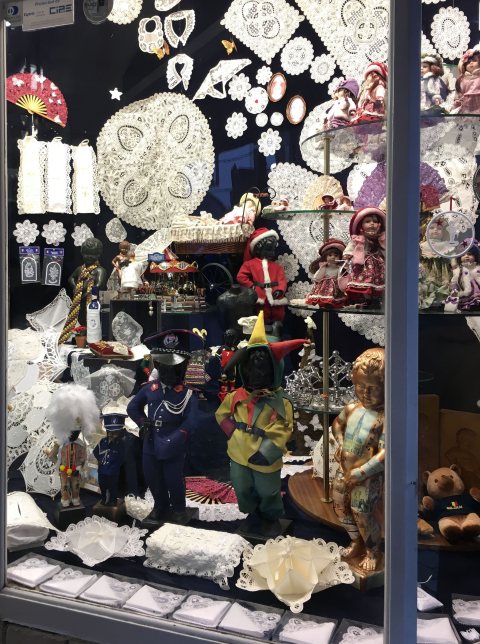
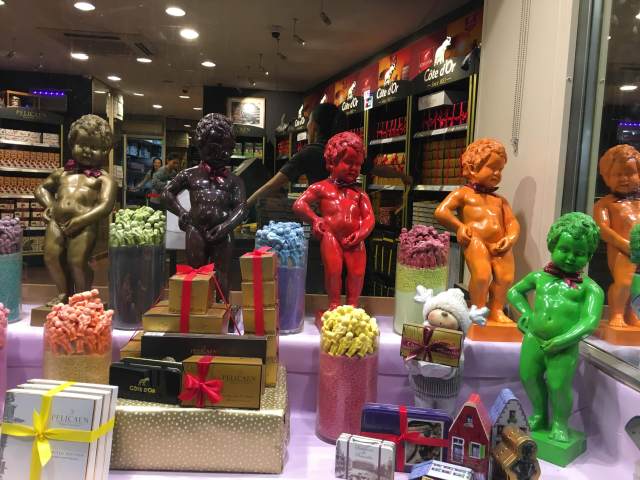
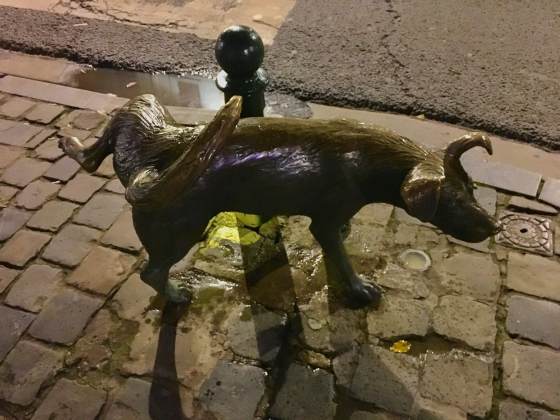
You can see the more underwhelming female counterpart to him, Jeanneke Pis, at the Fidelity Alley close by. She is a much more recent addition (late 1980s), and is probably amongst the few ladies to have barely any clothes compared to her male counterpart! A statue of a dog peeing- Het Zinneke or Zinneke Pis (which can be found at the corner of Rue des Chartreaux and Rue de Vieux-Marche) also exists a slightly longer walk away, but we wouldn’t recommend going just for it. You can simply have a look at it below!
4. The EU complex: The EU parliament complex is certainly worth a visit (don’t forget to carry your passport for entry). There are free audio guided tours available in various languages; you are however allowed in only at specific times, so find out the exact time slots and reach there at the right time. The tour will take you through the EU Parliament building, including an impressive arrangement of EU flags, and to the famous Hemicycle (the main debating chamber), where you can watch the Parliament in action if the session is on; access during the plenary sessions is however limited in number. You can also attend more detailed briefings if interested (check out their website for more details). You can also explore the Parliamentarium, their visitor center, and the House of European History, both free as well. Don’t miss the statue of Europe close by to the Parliament complex.
5. Parc du Cinquantenaire (Jubelpark): A large 30-hectare park situated close to the EU complex, it hosts an impressive central triumphal arch along with a host of museums (Military museum, Art and History museum, and a museum of vintage cars-Autoworld). You can enjoy a fantastic view of Brussels from the top of the central arch; the entry to the viewing arcade is through the Military museum (you can purchase a ticket to the arcade at half the price if you do not want to explore the rest of the museum).
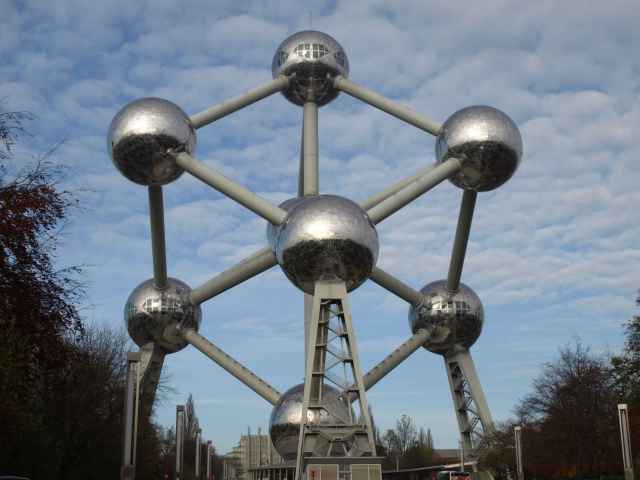
6. Atomium: This is a landmark structure created for the World’s Fair in 1958 (Eiffel Tower for example is another structure created for the World’s Fair in 1889 in Paris). There are both temporary and permanent exhibits in each sphere, including a restaurant with a nice panoramic view in the top sphere. Although a beautiful structure, we are not sure whether it is worth the 15 Euro ticket for getting in; enjoying the structure from outside is probably its best experience. (Note that the image below is from Wikimedia Commons.)
7. Mini Europe: Situated next to the Atomium, it has miniatures (scale of 1:25) of various important European monuments, with over 300 monuments being depicted. Although its definitely a fun thing to do with several interesting photo-ops, we decided to skip it.
8. Basilica of the Sacred Heart, Koekelberg (Koekelberg basilica): In the list of the 10 biggest churches in the world, it is a beautiful structure with probably the best panoramic view of Brussels and the adjacent region given its location atop the Koekelberg Hill (for 5 Euros per person at the time of writing this blog). It is about 7 km from Grand Place and can be reached by cab or public transport.
9. The comic book route: Brussels literally shows off its comic strips on its walls. For the comic book aficionados, there is a comic book route where you can see a number of delightful comic book characters beyond just Tintin and Smurfs. There is also a Comics Art Museum for those interested.
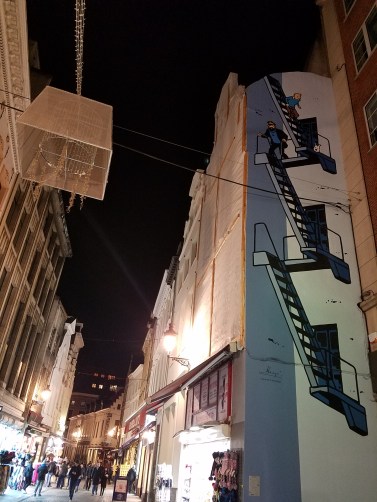
10. Food!!: We usually list places to eat at the end of the blog, but in Brussels, food is a big attraction, if not THE attraction! So we thought we’d rather talk about it here. By no means exhaustive, here are the places we tried and recommend.
Chocolates: Ubiquitous across Brussels, some of the best chocolate stores can be found at the Royal Gallery. Neuhaus Chocolates boasts of being the inventor of the praline. The original Mr Neuhaus was actually a chemist who made chocolate coated pills to sweeten their taste. This eventually led to his grandson creating the original filled chocolate praline, and his wife creating the first (and patented) chocolate gift box! This first store is still there at the Gallery. Adjacent to it is the Pierre Marcolini store, a chocolate couture store filled with chocolates so ornately made that it feels more like a stylish jewelry boutique. Mary, the third store in this list, was started by Europe’s first woman chocolatier and the first holder of the royal warrant for making chocolates. Other popular stores include Leonidas and Laurent Gerbaud, amongst many others. Quite frankly, you cannot go wrong with chocolates in Brussels. We would recommend avoiding Godiva though. If more interested, you can also go to one of many chocolate making workshops and learn to make your own pralines!
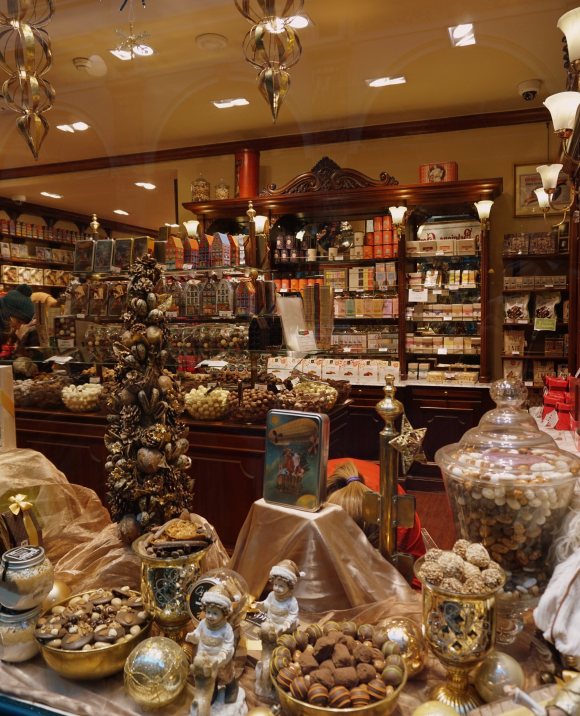
Window shopping cannot get better than this!
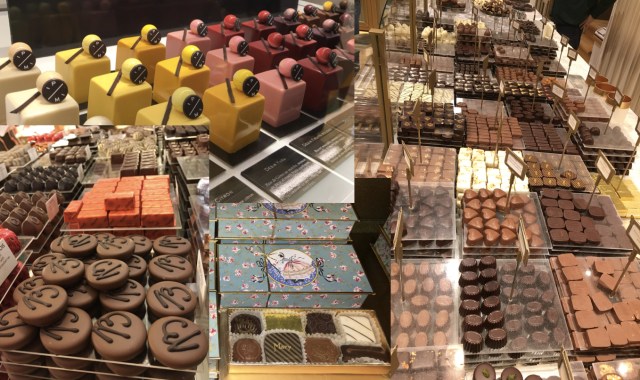
Some of the various offerings! The top left gourmet chocolates are by Marcolini
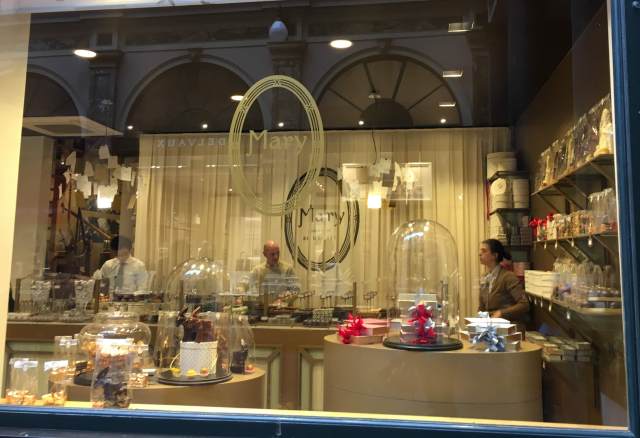
This is not a jewelry story; this is Mary’s at the Gallery!
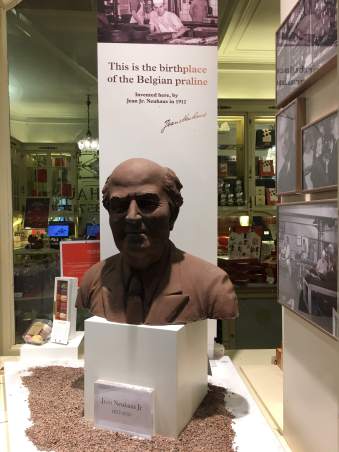
The chocolate bust of Monsieur Neuhaus say’s it all!
Fries: Fritland and Friterie Tabora are two popular fries outlets that we liked, but be prepared for a 10-15 min queue!
Beer: You can hardly ever go wrong with beer in Brussels; you can try it in various local pubs and breweries, or take a dedicated beer tasting tour as well.
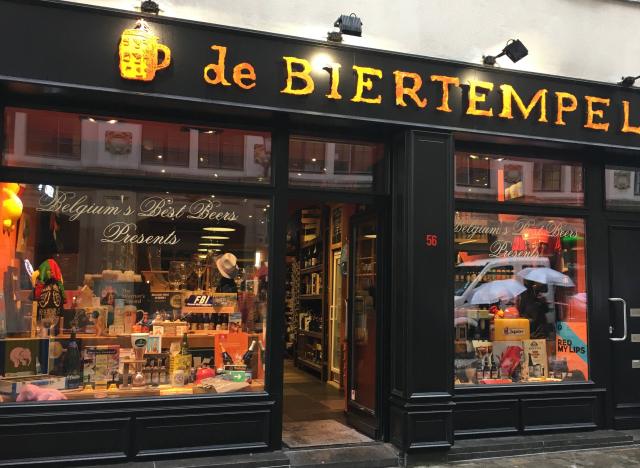
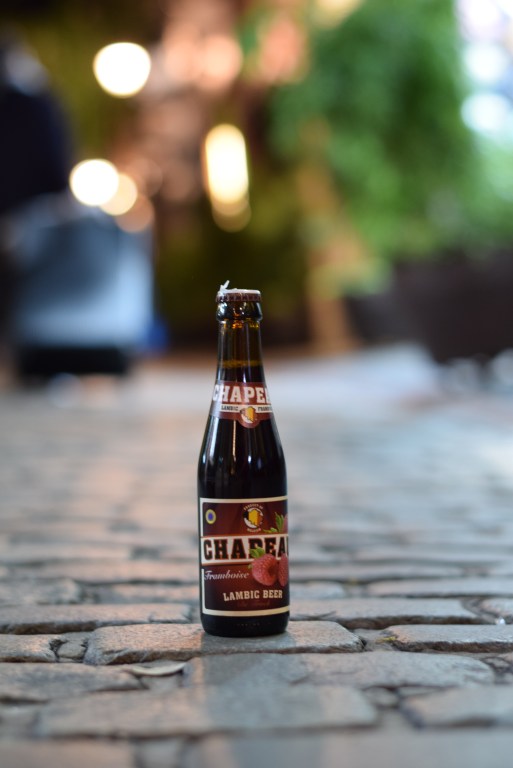
Lighting a candle to the temple of beer!
Waffles: You will find waffle stores literally in every corner of the Grand Place region. Maison Dandoy is a store particularly popular amongst the locals and we enjoyed its waffles; other popular outlets which we didn’t try include Vitalgaufre and Le Funambule. There is actually no ‘Belgian’ waffle on offer at all in any outlet; you will have to opt between the lighter and rectangular Brussels waffle with deep holes (similar in appearance to the American version) and the heavier and thicker Liege waffle, which has uneven edges unlike the regular rectangular margin of the Brussels waffle, and an extra dose of pearl sugar. Both are fantastic; but many would prefer the Liege waffle over the Brussels. A tip: Rather than trying the waffles with various toppings like fruits, whipped cream or chocolate (see how spoilt you will get for choices in the photo below!), try having a waffle with just powdered sugar. That’s how the locals eat it, and it is simply the best.
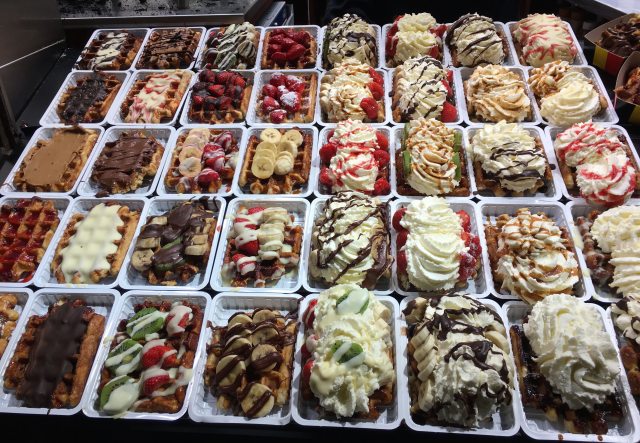
If you could eat with your eyes, you would never get hungry in Belgium!
Restaurants: Some that we would recommend for regular dining include Peck 47, a café with excellent breakfast and brunches (and waffles!). Exci is a vegetarian and vegan friendly chain which you could also try. But quite frankly, we unabashedly filled our tummies more with the chocolates and the waffles than with regular food and dining.
BRUGES
Bruges, called the Venice of the North (but perhaps far more beautiful), is the quintessential picture postcard stop in Belgium (and Europe per se), having one of the best-preserved pre-motorized landscapes you can hope to see, with canals, boats, swans, cobbled streets, and medieval buildings et al. Usually done as a day trip from Brussels, we would actually strongly recommend staying there overnight, as the beauty of Bruges multiplies many times over at night.
Getting there is easy, and you can either use a bus or the train (there are luggage lockers available at the train station from 6am – 9.30 pm for those who need them), or take a guided tour from Brussels. We rented a car and drove the Bruges, stopping at Ghent en route.
Where to stay: To be close to all of the major attractions, the best area to stay in Bruges is in the historic city center. The other option that might be lesser expensive is to stay just outside the center, from where you can still walk to most locations.
A little bit of history: Bruges was a well-developed city in the 12th and 13th centuries, but then lost its way once Antwerp and bigger ports developed to become one of the poorest cities in Belgium. This accounts for its lack of development and its visible medieval heritage, but this turned out to be a blessing in disguise as it is now is a major tourist destination for the very same reason.
Things to do: Once in Bruges, the main thing to do is explore its beautiful canals and scenic setting. A boat trip along the canal is perhaps mandatory (costs 10 Euros for half an hour), with the guide explaining the local history and introducing popular landmarks. A more expensive option is a horse drawn cart, while taking a walking tour or renting a bike are other great options. Amongst many interesting folklore, the story about how the swans were introduced originally in Bruges is very interesting- it involves a tale of the murder of Pieter Lanchals (literal translation: long-necked), the right-hand man of Emperor Maximilian of Austria, who then decreed that the city must keep long-necks in its lakes and canals forever as a sign of regret, and that continues to date.
A must visit is the picturesque Minnewater Lake, the Lake of Love, a romantic park with a lake full of swans and beautiful scenery. Just relax along one of the lawns or enjoy the beauty from one of the many cafes.
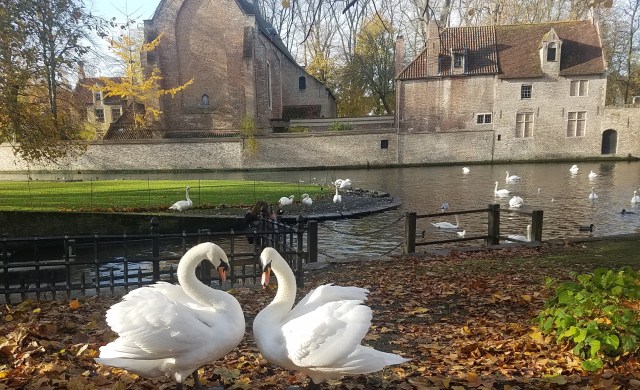
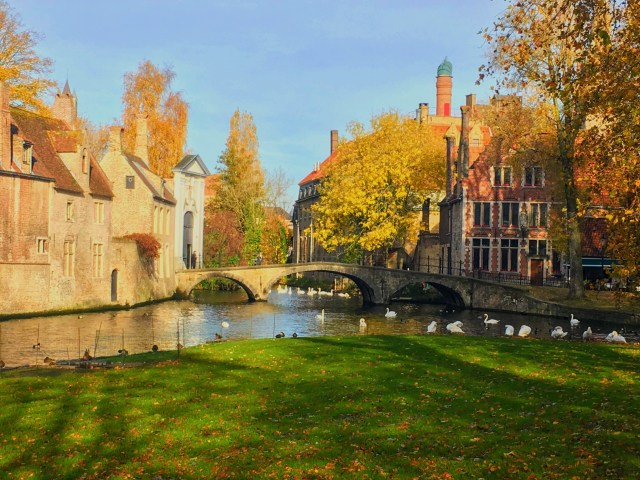
The Lake of Love
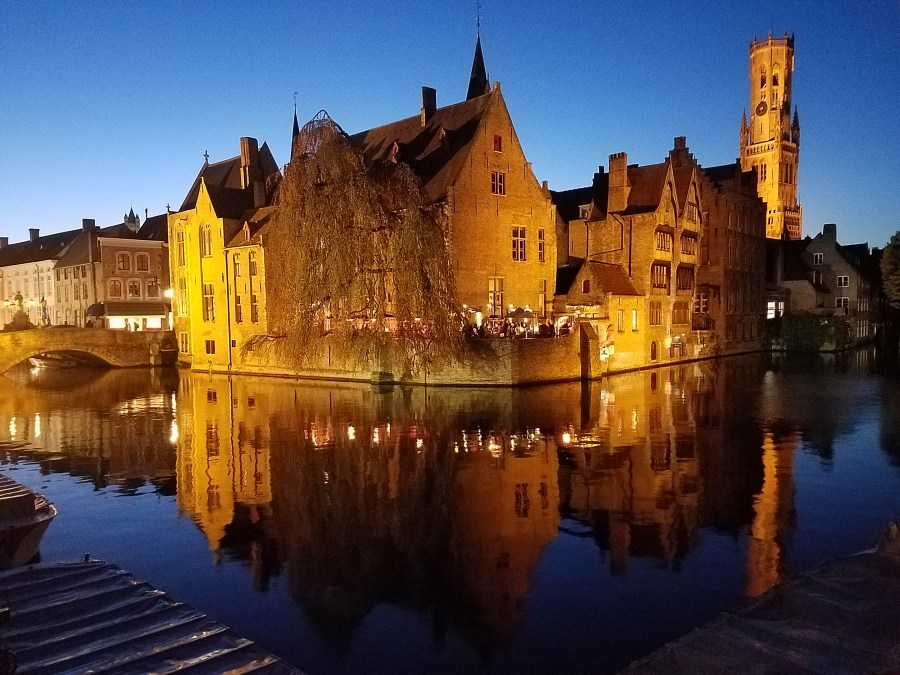
The town gets even more beautiful after it gets dark, with everything lit up in yellow and the canal waters getting still, as the boat rides stop, and giving great reflections. One of our favorite spots was at Rozenhodekaai – definitely drop by the place in the evenings for the lovely view in the photo below.
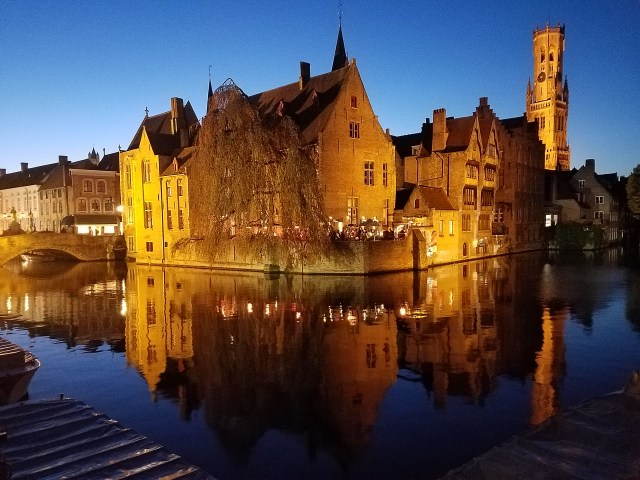
Bruges at night is a sight to behold!
You should also explore the Grote Markt (central square) area, perhaps climb the Belfry (tower), and walk along the Begijnhof.
The Central Square, the Belfry, and the peaceful landscape at the Begijnhof
The most enjoyable thing to do in Bruges is to just walk along the canals while enjoying more waffles and taking a pause to enjoy a charming bridge or cute little boutiques every few meters.
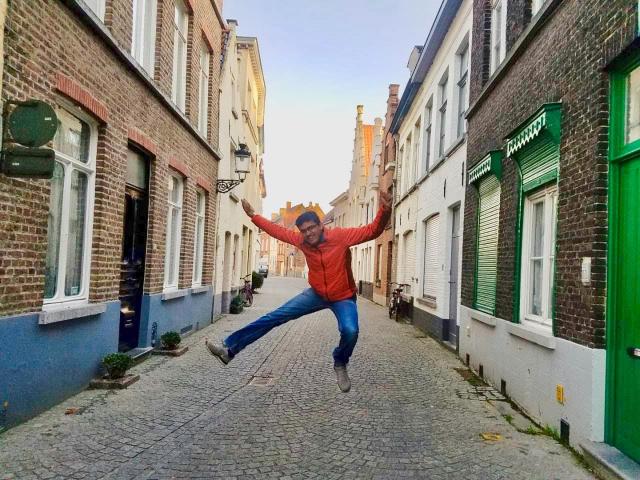
A store we particularly recommend is the most beau-TEA-ful boutique Het Brugs Theehuis; it hasthe most exotic collection of tea-pots we have ever come across. Interestingly, Bruges is the favorite Christmas market destination in Europe. There are absolutely gorgeous all-year-round Christmas stores that will transport you to a medieval age Christmas celebration- the most popular ones are Kathe Wohlfahrt, Kerstfeeërie and De Witte Pelikaan.
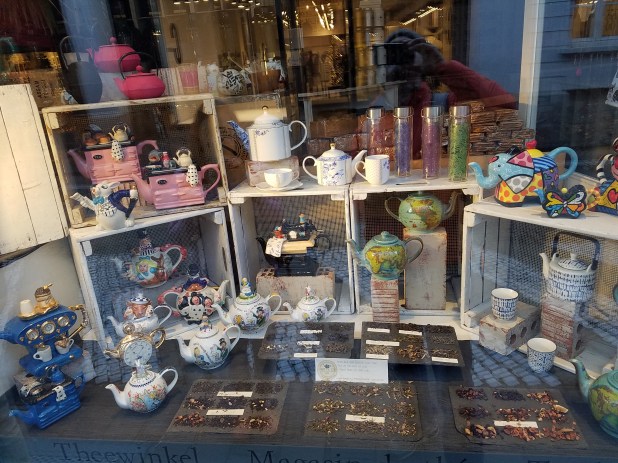
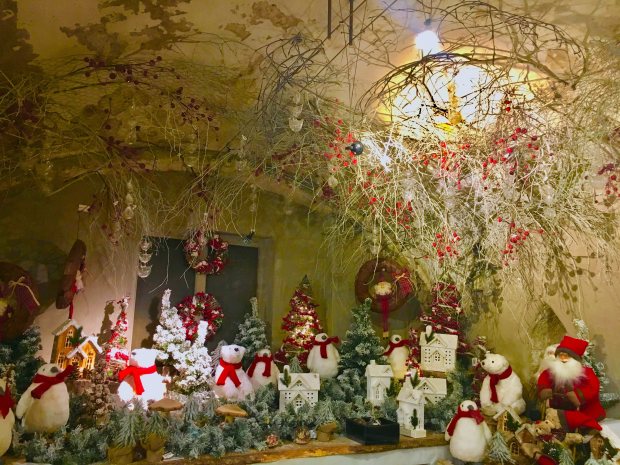
An often missed location is the Windmills of Bruges which is near the city centre and is a great location to get away from the busy city especially during peak seasons. Dating back to the 17th century, these 4 windmills offer a beautiful spot to just relax on the grass or have a picnic.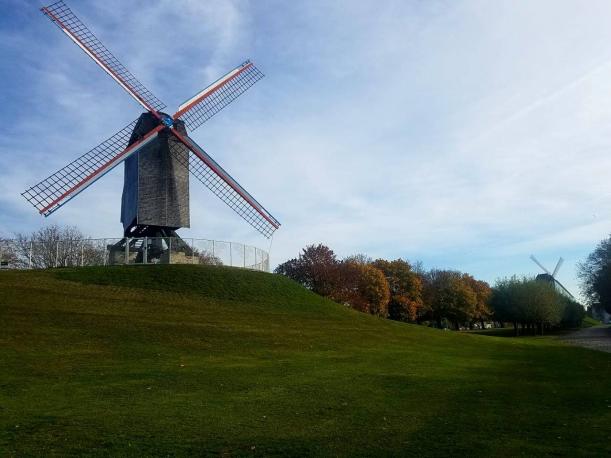
GHENT (or GENT in Dutch)
Midway between Brussels and Bruges, this is an ideal stop en route. A large city with a significant student population, Ghent was once the second largest city north of the Alps, after Paris, and a significant trading city. You can thus see some beautiful structures such as large trader houses, grand churches and the highest Belfry in Belgium.
Vehicles are not allowed at the city center; there is however a free (albeit slow moving) Wondelbus which does the rounds of the car-free zone every 15 minutes or so, in case you needed it. If you are driving, we would recommend searching for the closest parking garage to the city center (one of them being Parking Sint-Michiels- P7) and putting it up on the GPS, and then walking from there.
We would highly recommend taking a walking tour to understand more about Ghent’s history and culture; a canal cruise is another option.
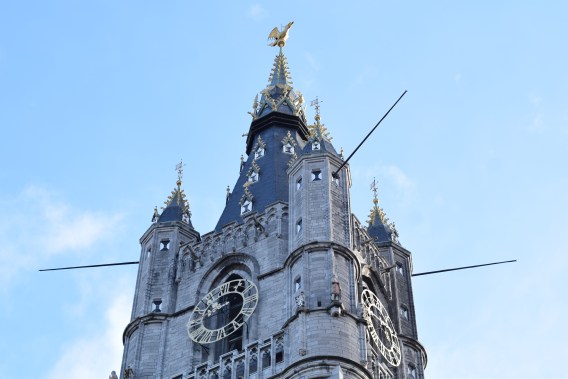
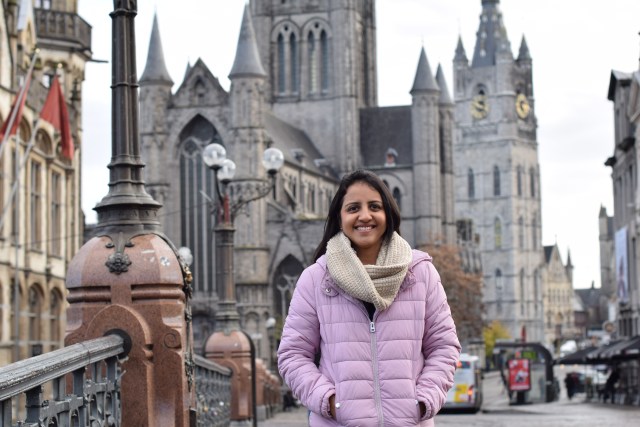
The Ghent city center is dominated by three imposing towers next to each other, the Belfry, St Bravo’s cathedral (which houses the famous painting ‘Adoration of the Mystic Lamb’), and St Nicholas’s church.
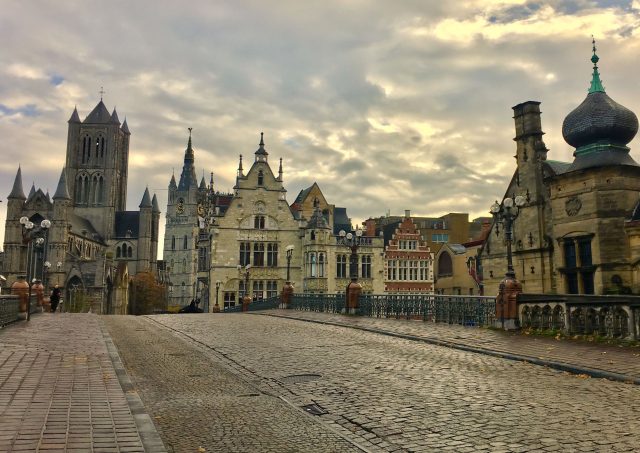
You can climb up the Belfry for a fee to enjoy a beautiful view of the city; notice the golden dragon at the top of the Belfry which is supposed to be guarding the city (this was way before Game of Thrones!).
Do not miss the picturesque St Michael’s bridge to gaze at the surrounding architecture and down the river. This is great photo spot to get all the three towers in a single frame.
Graavensteen, the Castle of the Counts, is an incredible structure and now houses the Museum of Arms and Judicial Objects. Then go around the Patershol, a beautiful little walk-only neighborhood to grab a snack.
You can also take a walk along the Leie river with multiple old trade building on either side, including the beautiful Graslei (grass quay) and Korenlei (corn quay). You will notice that these buildings are all stooped at a slight acute angle to the ground; this was deliberate so that when the produce was being pulled up the buildings on levers and pulleys, it did not graze along the walls of the building.
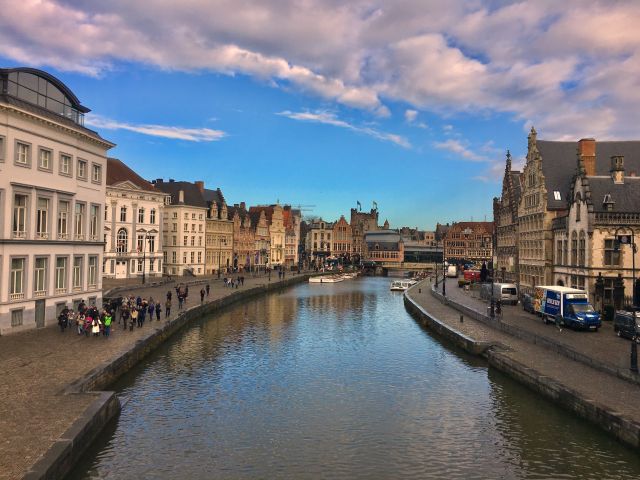
Along the Leie river
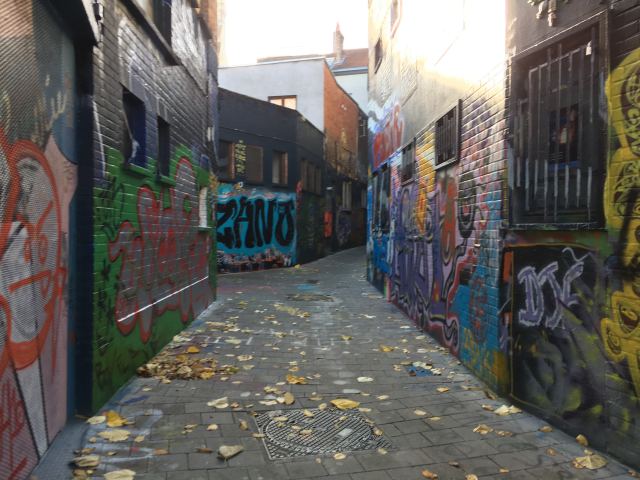
Ghent is a creative city- you will find walls covered in graffiti at several places. Some of these works are truly artistic and will make you stop to watch them twice. Werregarenstraatje is a little alley in the student residential area with the walls covered with graffiti that keeps changing every few days.
Another interesting fact is that whenever a baby is born in Ghent, the parents can press a button in the maternity hospital which is connected to the streetlights of Ghent and makes them flash, subtly announcing to the world the welcome arrival of the little one. We were lucky to have witnessed this lovely experience when we were in Ghent. A small stone in Sint-Veerleplein square written in three languages explains this concept too. So do keep an eye on the streetlights when you visit Ghent!
Whenever we next visit this country, we would love to visit Antwerp, Liège, Leuven, Dinant or any other place you would recommend. Until then, the waffles and chocolates from Brussels and the mesmerizing charm of Bruges and Gent will be our fondest memories from Bewitching Belgium.
Our itinerary:
Day 1: Land in Amsterdam in the morning; go to Rotterdam and start the Dutch experience right away!
Day 2: Explore Rotterdam; catch evening bus to Brussels
Day 3 and 4: Explore Brussels
Day 5: Rent a car in the morning and reach Gent in time for the morning 10 am walking tour; drive to Bruges after a leisurely lunch and reach there before dark. Explore Bruges in the evening.
Day 6: Walking tour/Canal cruise in Bruges; drive to Kinderdijk (2 hours drive) to enjoy the sunset there. Reach Geithoorn by night (another 2 hours drive).
Day 7: Enjoy Geithoorn; depart for Naarden after lunch (1.25 hours drive) and visit the Fortress museum (advantage of staying in Naarden at night is the free parking and relatively cheaper lodging)
Day 8: Reach Amsterdam in the morning and return the car (3 day rental); start exploring Amsterdam
Day 9-10: Amsterdam. Depart on day 10 or 11.
We found renting a car very convenient to be able to visit places like Ghent, Bruges, Kinderdijk (at sunset time), Geithoorn (reaching at night and be able to explore it early next morning before the day trip batches from Amsterdam crowd the place) and Naarden, and would recommend doing that if feasible. However, all these places are easily reachable with buses and public transport as well.
 Travelously yours
It’s a wonderful blog.
I have also visited Amsterdam, Bruges and Brussels in 2018.
This beautiful blog has reminded me of my trip. I enjoyed/re-lived my trip again through this blog.
My trip was of only 5 days with Veena World.
But your itinerary looks more nice.
5 days trip was too short.
Best Wishes.
– Akshay R.
LikeLiked by 1 person
Thanks a lot Akshay for your encouraging words! Even a couple of weeks is probably too short, but we can only go so long!! Hopefully the times will improve and we’ll be traveling again soon!
LikeLike
Pingback: Going Dutch: The Perfect Amsterdam Itinerary – Travelously yours
Pingback: Day-trips from Amsterdam: Exploring the Dutch countryside – Travelously yours