The Veermata Jijabai Udyan or Mumbai / Byculla Zoo (previously called Victoria Garden) is one of the oldest zoos in the country. What makes this sprawling 50 acres place special is that it is a zoo + botanical garden + museum all rolled into one! Indeed, it’s current official name is Veermata Jijabai Bhosale Vanaspati Udyan va Pranisangrahalaya (that’s a mouthful, isn’t it?!). Locals though more commonly call it Ranicha Bagh or Ranibaug (Marathi for ‘Queen’s Garden’ – for Queen Victoria).
The ‘Zoo’ actually started first as a botanical garden in 1862. Dr Bhau Daji Lad Museum, Mumbai’s oldest museum, was added to its premises in 1872. The zoo was actually the last to be added in 1890, with Sir David Sassoon (more on him later) handing over his private zoo to the government.
While exploring the zoo does not require much research, the museum would ideally require a guided tour. We would highly recommend taking the tour offered over the weekend by the museum.
There is, however, a large and fascinating section which is essentially open for individual exploration, including the entrance premises and the garden. It has quite a few structures with rich stories attached. Understanding their history will make your trip more memorable. So beyond the museum interiors and the zoo, here is what you should be looking out for when at Ranibaug.
1. The David Sassoon clock tower: Sir David Sassoon was a prominent banker-merchant Jew who had moved to Mumbai from Baghdad. He and his family were generous donors who have helped in the establishment of numerous buildings in Mumbai and Pune, including the David Sassoon Library, David Sassoon and Masina Hospitals, Sasoon Docks, Bhau Daji Lad museum, this clock tower, and a particular statue which we’ll discuss ahead!
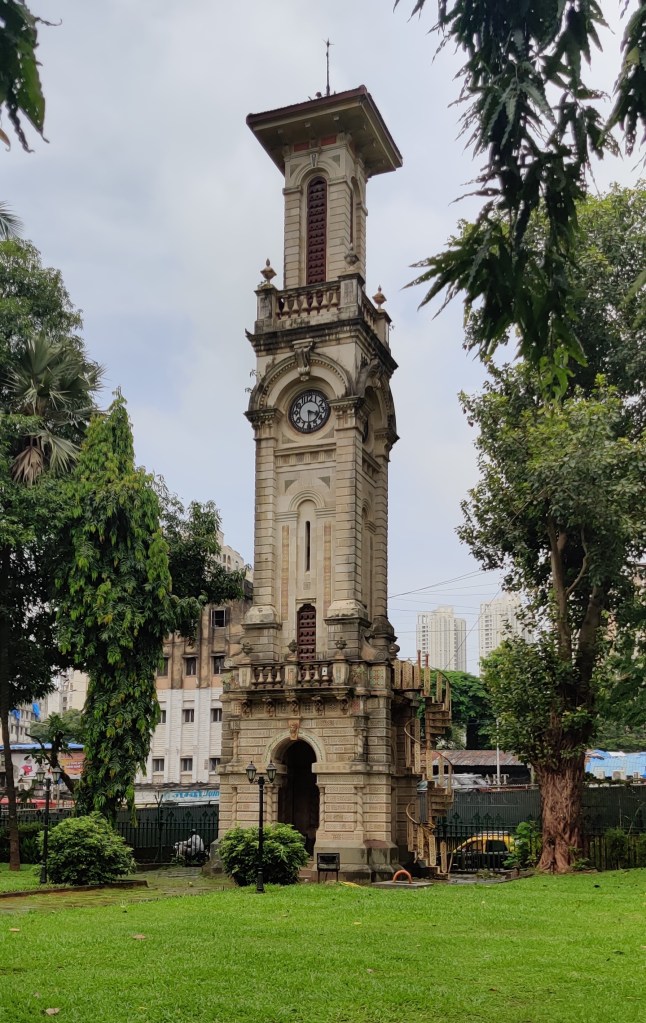
Located close to the entrance, this 75-feet tall clock is over 150 years old, completed in 1865! It is a beautiful structure built in Italian style, with a beautiful staircase and balcony on the four sides of the tower.
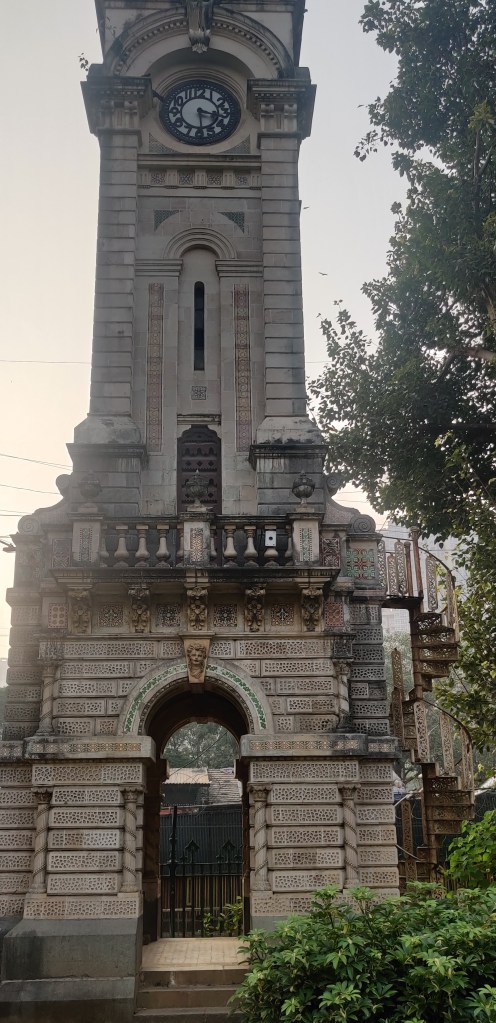
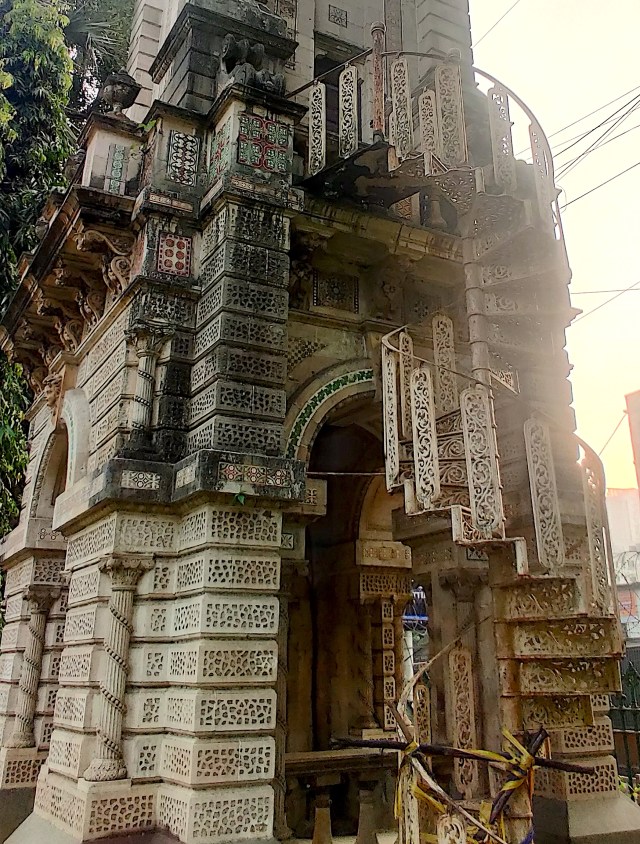
An interesting tidbit is that the clock tower was originally built outside the zoo gates. It was shifted inside brick by brick in 1926 to facilitate road widening work happening outside. Despite its rich history and beauty, it is alas no longer functional, with the hands stuck at 3.30. Given how even the British preserved the structure with considerable efforts during the road widening, one can only hope that the BMC will do something about this soon.
2. The Elephant of Elephanta Caves: The Zoo has two historic statues which lent their name to the places housing them. This is one of them, standing adjacent the entrance of Dr Bhau Daji Lad Museum (can you guess the other one?). The stone elephant is a 6th century structure carved out of a single rock, probably by the same people who sculpted the Elephanta Caves. This symbol of royalty stood at the entrance of Rajabunder Jetty to the Elephanta Island, used only by the local kings.
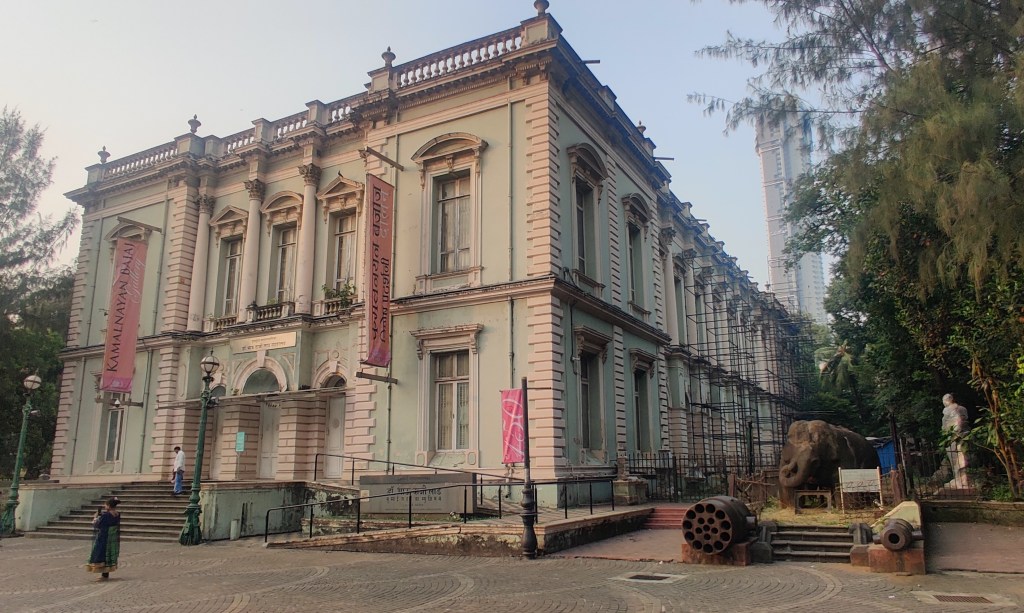
The island’s original name is Gharapuri (the city of caves), but the Portuguese were quite impressed with the elephant statue when they discovered it in the 16th century and started calling the island as the ‘ilha do elefante’ (the island of the elephant)! The British were in fact so fascinated that they tried shipping it to the UK for the Queen in 1864. Unfortunately, this is when disaster struck. The crane loading the elephant on to the ship was able to lift the elephant, but only for it to snap and break, crashing the elephant into multiple pieces. The fragments were brought to Sir George Birdwood, curator of the Dr Bhau Daji Lad (then called Victoria and Albert) Museum, who pieced them back together, and that is where it lies since then.
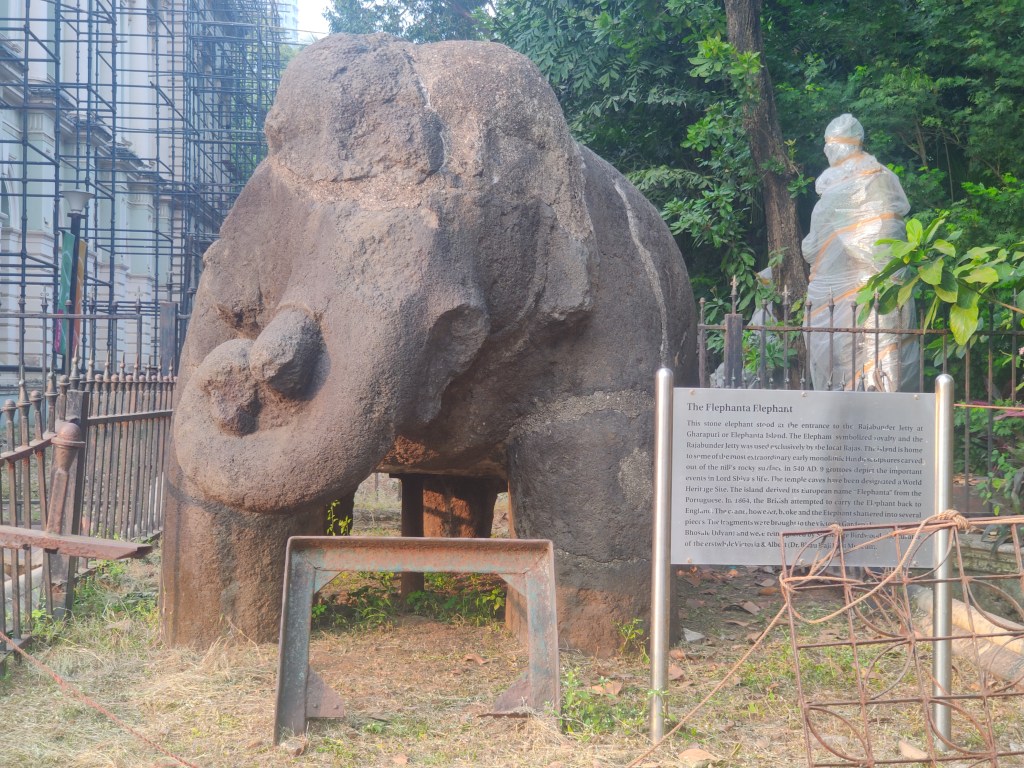
joints where the stone fragments were put back together
From early local kings to awestruck foreigners to the current predominantly indifferent Mumbaikers, this elephant has seen it all. And while elephants remember everything, somehow the current lot of tourists seem to have forgotten the majestic story behind Elephanta. Let’s hope that things change, both for the non-functional clock tower and our good old Appu!
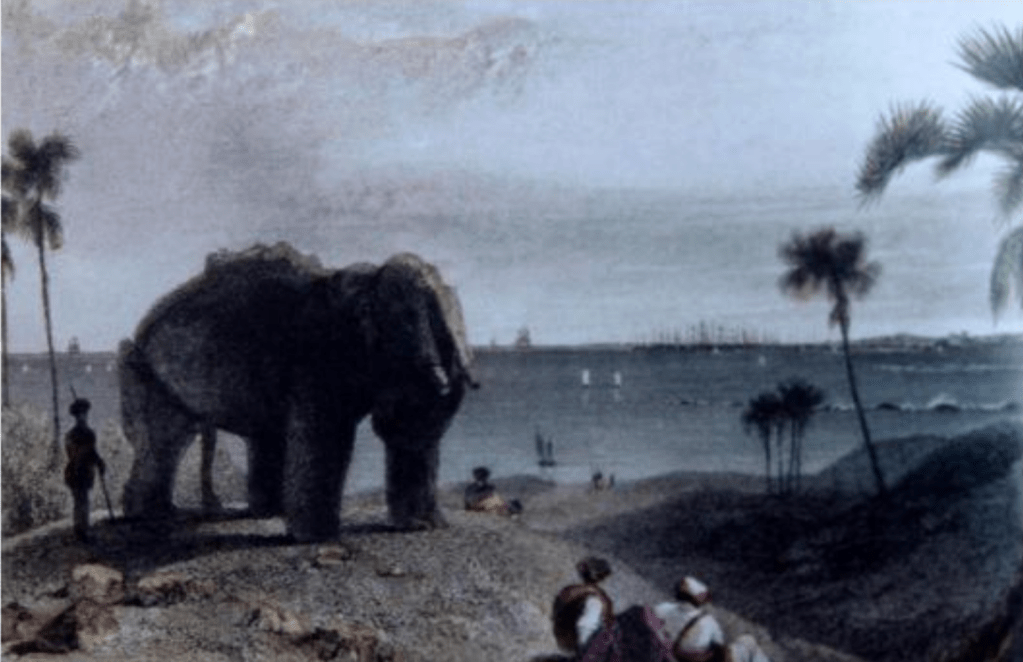
The original Elephant statue at Elephanta. Aquatint of the Stone Elephant by Thomas Daniell and William Daniell, 1786. Photo Courtesy: Elephanta by George Michell. Obtained from https://issuu.com/sqwlab/docs/mumbai_studies_print_edition_2019_march
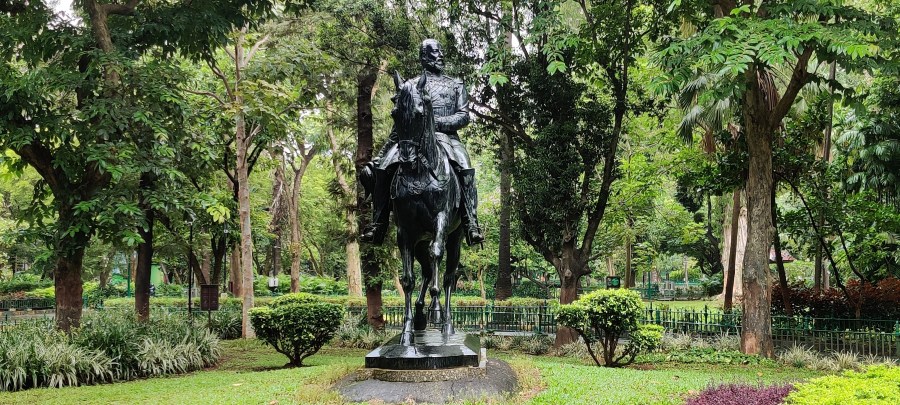
3. The Original Horse Statue of Kala Ghoda: You will come across this imposing statue of the Prince of Wales Edward VII (later King Edward VII) on a black horse immediately after you cross the entry point to the Botanical Garden. (Trivia: the famous KEM Hospital – King Edward Memorial Hospital – is also named after him).
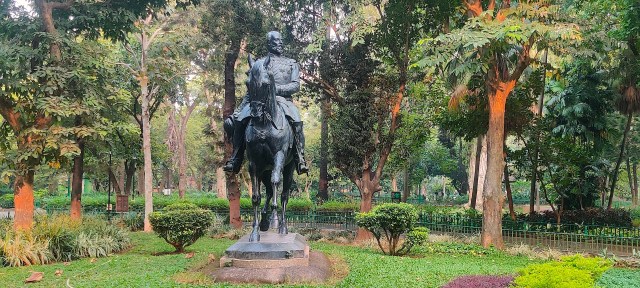
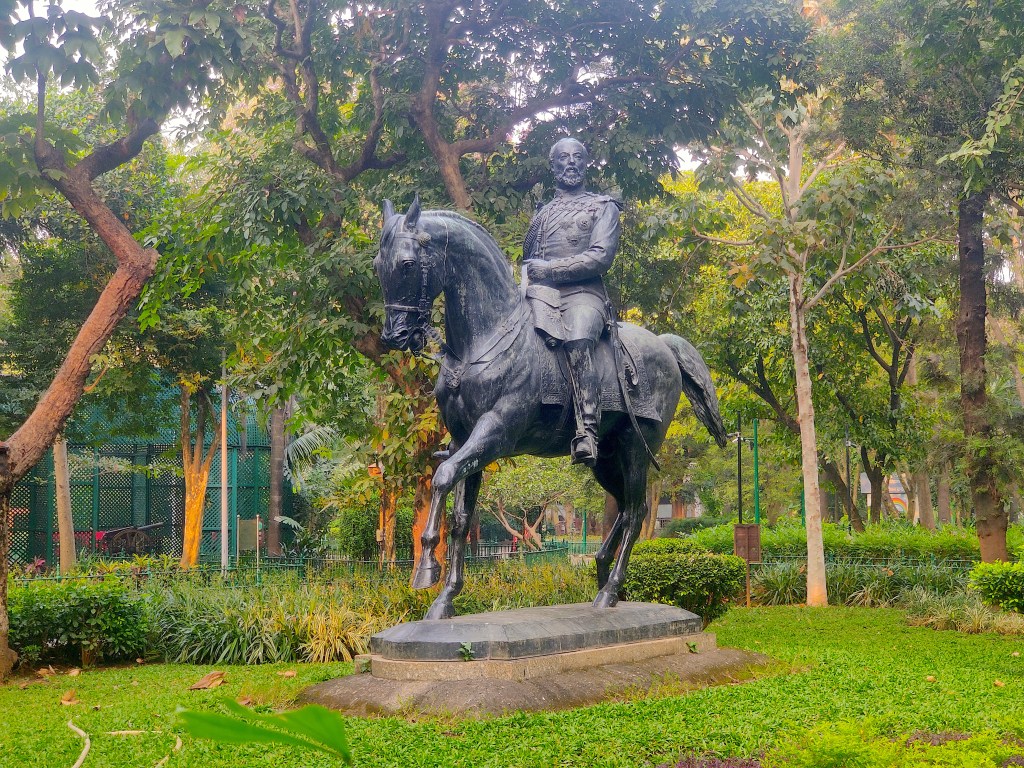
The statue was originally present at Kala Ghoda (‘black horse’ in Hindi), which is how Mumbai’s famous art district got its name. It was commissioned by Sir Albert Sassoon, son of David Sassoon, and was sculpted by a famous London-based sculptor for INR 12500. While made from bronze, it was polished to a black finish and was installed in 1879. Post independence though, this regal statue of the Prince of Wales in military clothes and a sword, looking imperiously as the master of all he surveyed, was considered inappropriate for Mumbai’s prime location. It was hastily relegated to the Zoo in an overnight operation in the 1960s after vandalism threats from political parties. It stands there ever since, still looking majestic but with the locals overlooking it in their eagerness to watch the zoo animals. Appropriate or not, the move has clearly worked!
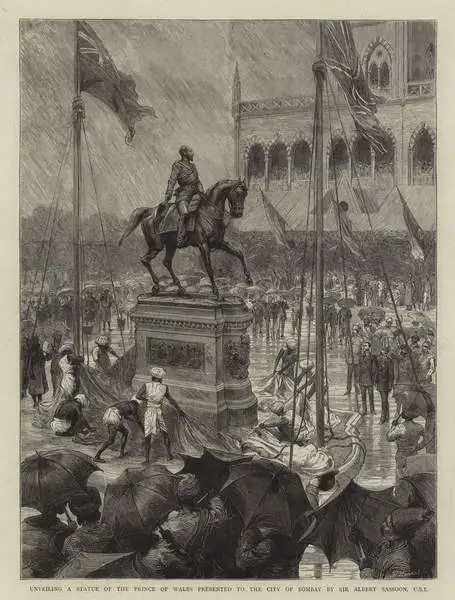
Unveiling a statue of the Prince of Wales presented to the city of Bombay by Sir Albert Sassoon, CSI (engraving), Durand, Godefroy (1832-1896) / Private Collection / Look And Learn. https://www.lookandlearn.com/history-images/U224469/Unveiling-a-Statue-of-the-Prince-of-Wales-presented-to-the-City-of-Bombay-by-Sir-Albert-Sassoon-CSI?t=2&q=Prince+of+Wales&c=45&n=439
As a post script, the ‘Spirit of Kala Ghoda’, a status of a black horse sans any rider, now adorns Kala Ghoda since 2017, symbolizing the free flow of art, culture and ideas which makes Mumbai’s art district what it is.
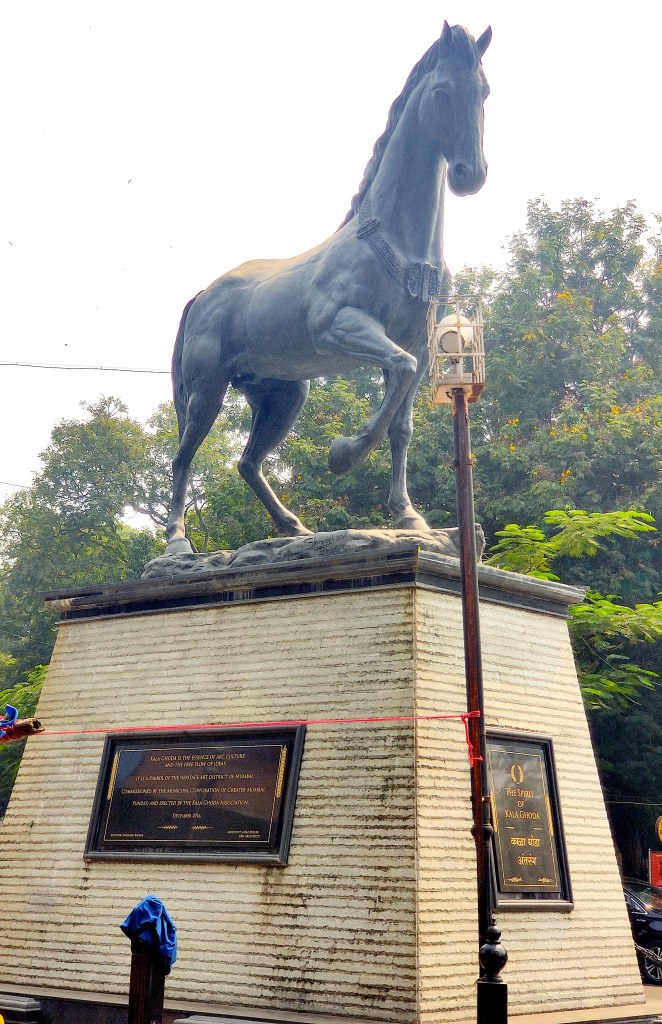
The Spirit of Kala Ghoda
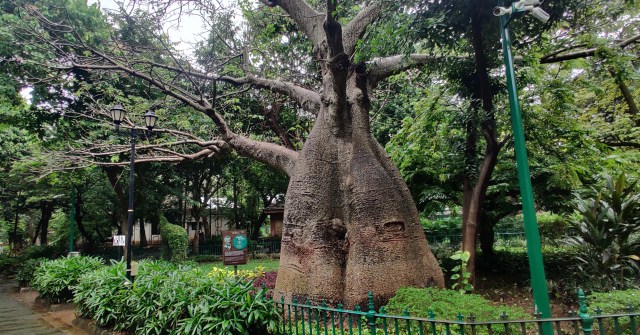
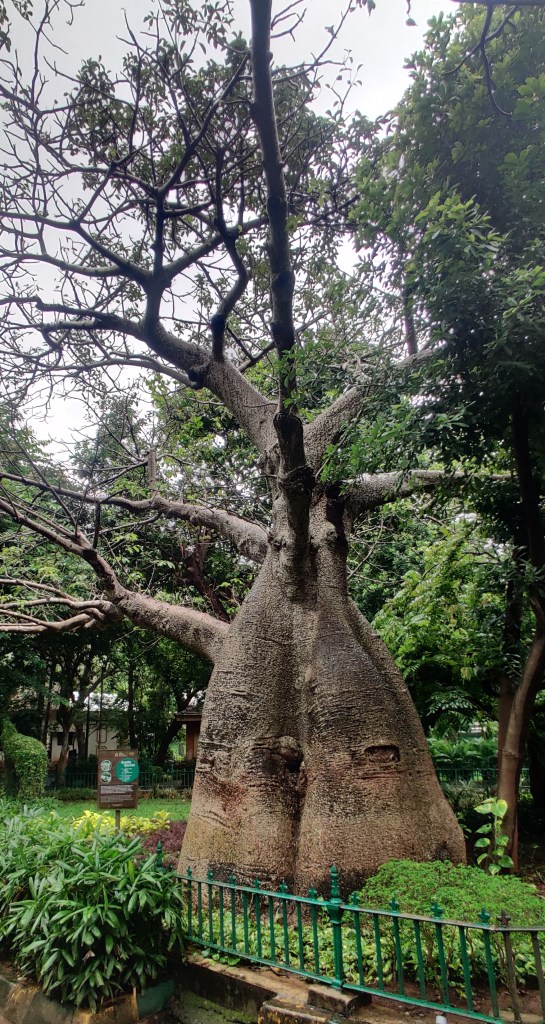
4. The Botanical garden: The Mumbai Zoo park has more than 3000 trees and 850 species of plants, encompassing over 80% of Mumbai’s overall flora. This includes some very interesting varieties including the Tree of Heaven (from Myanmar), Beggar’s bowl, rubber tree, the White wood tree, the ghost tree (due to its white bark), and our personal favorite, the Baobab tree or the tree of life.
Native to Africa, the Baobab was probably carried over to India by one of the merchant ships sailing from UK and stopping over at the Cape of Good Hope. Baobabs absorb and store water in their vast trunk, and produce one the most nutrient-dense fruits in the world in the dry and arid Africa, thus becoming “The Tree of Life”. In fact, they can live upto 5000 years old! You will see two Baobabs at the beginning of the path adjacent the Kala Ghoda statue. They are also called ‘upside down’ trees because of the broad stem and the relatively narrow top. In fact, some enterprising people in Africa have created a small door and space to sit within some wide Baobabs (they can go upto 50 m in circumference), where they sell juices or some treats!
The reason why the British started a botanical garden first rather than a zoo or museum is also interesting. The Victoria Garden was originally in Sewri right since 1835. It was shifted to its current location to make way for a European cemetery at Sewri, and was inaugurated in 1862. The colonial rulers started botanical gardens across their territories in order to scientifically evaluate local flora and understand the best way to harness their potential for trading and making UK and its colonies self-sufficient. The biggest example of the importance of botanists in the colonial era is of Robert Fortune, a Scottish botanist who stole a great stock of tea from the best tea gardens in China and got them to India for the East India Company to grow. So great was the impact of this original corporate espionage, that India surpassed China as the world’s largest tea grower within his lifetime! This decimated the Chinese stranglehold on tea exports and made UK self-reliant in tea production and trade.
As a side note, you can also see a ‘green’ house on the other side of the Kala Ghoda statue, which served as the office of Birdwood and where much of the research on tropical plants was conducted.
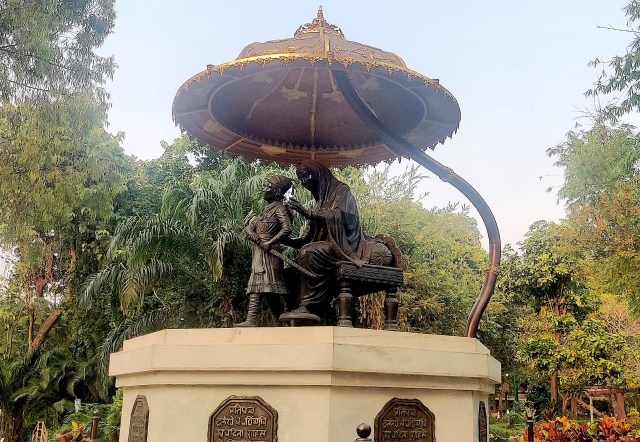
5. Statue of Shivaji and his mother Jijamata: You cannot complete the trip without paying homage to the lovely bronze statue of Bal Shivaji with his mother Jijamata, after whom the zoo is named. Erected in 1992, a bronze Meghdambari (umbrella) covering the two was recently added.
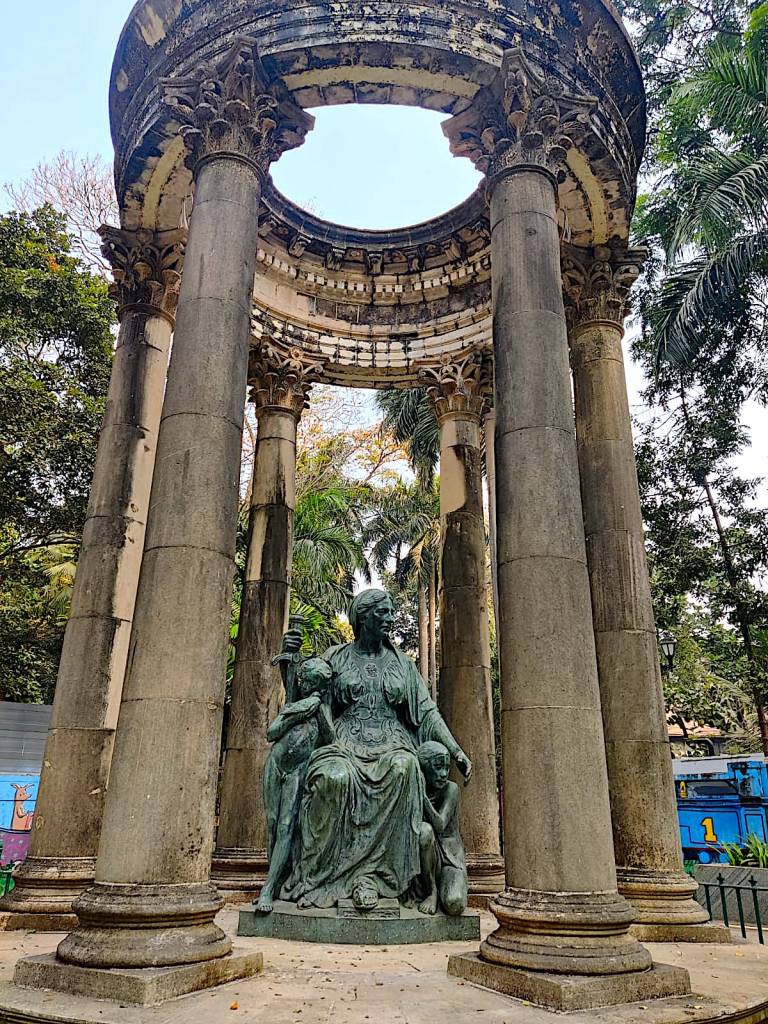
As a bonus, also do have a look at the Frere Temple. While not the exact equivalent of the statue above, it used to hold a statue of Lady Frere, wife of the then Governor Sir Bartle Frere to commemorate the opening of the zoo. Of note, Sir Bartle Frere is supposed to be the one under whom the transformation of Bombay into today’s elegant modern city began. The temple is an elegant structure consisting of six Corinthian columns , and used to house Lady Frere’s bust in the center. We could not find any details on why this was conscripted as a temple instead of a regular bust; perhaps Sir Bartle worshipped his wife deeply! Unfortunately, her statue was subsequently vandalized and had to be replaced by a bronze statue representing ‘Charity’, holding the sword of justice. A body holding a dove of peace and a girl nestled in the folds of the lady, depicting the need for care and shelter for the needy, are also present. It is indeed an apt ‘temple’ for the spirit of Mumbai!
We hope that you enjoy these beautiful works of art and the fabulous history attached to them the next time you visit the zoo! Do comment on the blog with any more trivia or tidbits you can add to these, and please do ask any questions you may have!
 Travelously yours
Great article! Loved it! Didn’t know the story of the elephant at all! Looking forward to more!
Anmol
LikeLike
It’s a wonderful description of things we did not pay much attention to during routine visits to this place. Would enjoy seeing these things again with this interesting background
LikeLiked by 1 person
V well written! Thanks for sharing
LikeLiked by 1 person